May 28, 2026
Learn about the power of marketer-driven surveys, plus, get actionable tips and proven marketing strategies for launching surveys that drive higher engagement and stronger completion rates.
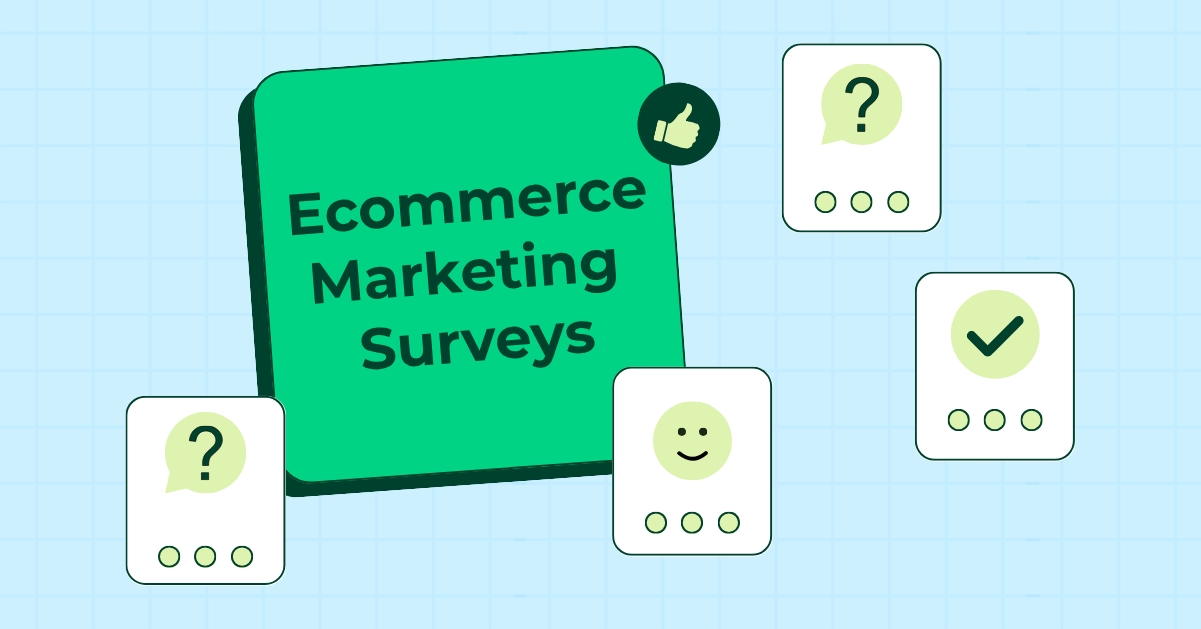
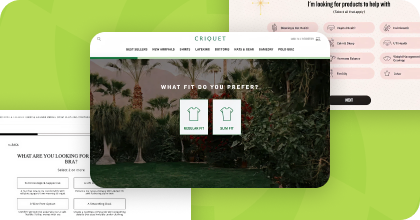
Build Your Own Product Quiz For Free Right Now
Simply give us your website URL and we will build you a completely on-brand product recommendation quiz for free.
The best marketing surveys start with a real business question.
Maybe shoppers are abandoning full carts before checkout. Maybe site visitors browse multiple product pages and leave without taking action. Maybe subscription customers are canceling earlier than expected. Brands invest significant time and budget into acquisition, so losing potential revenue at key points in the customer journey can quickly become expensive.
That’s where surveys become valuable. Instead of guessing why customers leave, hesitate, or disengage, brands can collect direct feedback that reveals what’s actually happening beneath the surface.
Strong surveys help uncover the gaps affecting conversion, retention, and overall customer experience. They can reveal friction in the checkout flow, pricing concerns, product confusion, shipping issues, trust barriers, or mismatches between messaging and customer expectations.
Surveys are equally valuable when things are going well. Brands can use them to better understand their target market, identify what’s driving purchases, learn how customers discovered the business, and uncover what shoppers are actually looking for throughout the buying journey.
Those responses often lead to stronger personalization, smarter segmentation, and more informed marketing strategies built around real customer behavior rather than assumptions.
The real value comes from the customer insights collected through the process. A well-designed survey doesn’t just gather feedback for the sake of reporting. It helps brands identify actionable opportunities to improve acquisition, retention, messaging, product discovery, and overall customer experience.
The challenge is building surveys people actually want to complete. The difference between effective and ineffective surveys usually comes down to timing, relevance, length, and how clearly the value exchange is communicated to the customer.

Digital marketing strategies often integrate surveys to gather real-time feedback, optimize campaigns, and enhance user experience.
In the sections below, we’ll break down how to create marketing surveys that collect actionable data while still creating a positive experience for shoppers.
Marketing surveys give brands a direct way to understand what customers are thinking, feeling, and experiencing throughout the buying journey. Instead of relying on assumptions or surface-level analytics, surveys help uncover the motivations, frustrations, preferences, and behaviors driving real customer decisions.
For ecommerce brands, surveys are especially valuable for understanding both a specific target audience and the broader target market. Instead of relying solely on analytics or assumptions, brands can gather direct feedback about what customers want, what influences purchasing decisions, where friction exists, and what’s preventing conversions.
That feedback becomes incredibly valuable when shaping stronger marketing strategies. Brands can use surveys to identify friction points, validate messaging, improve product positioning, refine audience segmentation, and better understand what customers actually want from the experience.
Surveys are also useful for testing ideas before making larger investments. Whether a brand is launching a new product, exploring a campaign direction, evaluating customer satisfaction, or trying to understand changing shopping behavior, direct customer feedback helps reduce guesswork and improve decision-making.
The strongest survey strategies don’t just collect responses for reporting purposes. They generate actionable insights that help brands improve personalization, optimize customer experiences, strengthen retention, and create more effective marketing across channels.
Marketing surveys give brands direct access to the feedback, opinions, and behaviors shaping the customer experience. Instead of relying on assumptions, brands can use survey data to better understand what customers want, where friction exists, and what’s influencing purchasing decisions across the customer journey.
One of the biggest advantages of surveys is the ability to measure customer satisfaction in real time. Brands can identify pain points in the shopping experience, evaluate product perception, understand loyalty drivers, and uncover opportunities to improve retention and conversion performance.
Surveys are also valuable for validating a new business idea, testing messaging, exploring customer demand, or gathering feedback before launching a new product, campaign, or experience. Direct customer input helps reduce guesswork and gives brands more confidence in strategic decisions.
Over time, survey data insights help shape stronger personalization, more informed marketing strategies, and better customer experiences overall. They also make it easier to spot shifts in customer preferences and buying behavior early, allowing brands to adapt more quickly as markets and expectations evolve.
Survey data is often thought of as a form asking a customer “How did you hear about us?” (the HDYHAU survey) or “How satisfied are you with your experience?” (customer feedback surveys).
Key types of marketing surveys include brand awareness surveys, customer experience surveys, product development surveys, segmentation surveys, customer satisfaction surveys, pricing surveys, and customer persona surveys. These marketing surveys are designed to gather data that helps businesses understand consumer habits, improve products, and enhance marketing strategies.

But they can be so much more. We define a survey as any form that helps you:
Survey questions can be structured in different ways depending on the type of feedback a brand wants to collect. Closed-ended questions help gather quantitative data that’s easier to measure and compare at scale, while open-ended questions provide more detailed customer feedback and context that can uncover deeper motivations, frustrations, or preferences.
The strongest surveys often combine both formats. Quantitative responses make data analysis more efficient, while qualitative feedback helps brands better understand the reasoning behind customer behavior and decision-making.
Surveys are also a key tool brands use to conduct market research and better understand their audience. Questions around demographics, shopping habits, product preferences, satisfaction levels, and purchase intent can help businesses refine targeting, improve personalization, and shape stronger marketing strategies over time.
Different research methods serve different goals depending on the type of insight a brand is looking for:
The most effective survey strategies combine multiple research methods to create a clearer picture of customer behavior, preferences, and opportunities for growth.
The word survey often brings up one of two pictures: creating a form to answer all the gaps in your business and sending it out in cold mass communication, hoping someone will feel motivated enough to fill it out. Or, inserting an often-missed section after a customer checks out asking them a few questions about their experience or where they found you.
Here are a few struggles we see with these two common methods.
Mass-sent surveys: Often, getting enough results requires an incentive. Something like “Answer a few quick questions for 25% off your next purchase!” The struggle here is: are you truly getting valuable customer feedback? Or are you only getting random answers from people who want 25% off?
Post-purchase surveys as an afterthought: When done strategically, post-checkout surveys can generate valuable customer feedback and high-quality qualitative data. The problem is that many brands treat them as an afterthought, adding a few generic questions to an order confirmation page where customers are likely to ignore them.
Timing and placement matter. Surveys embedded naturally within the shopping experience, such as pop-ups triggered after specific actions or post-purchase moments, tend to see much higher response rates and more actionable feedback.
The goal isn’t just to collect responses. It’s to analyze data that helps improve retention, customer experience, checkout flow, and future marketing decisions. Brands that consistently gather feedback throughout the customer journey often gain much deeper insights than those relying on a single survey at the very end of the transaction.
Surveys can be incredibly valuable marketing tools when they’re designed thoughtfully and used strategically. In many cases, the issue isn’t the survey itself. It’s the timing, structure, question flow, or how brands analyze data after responses come in.
Small improvements to survey design and delivery can lead to higher completion rates, better feedback quality, and more actionable customer insights over time.

The most effective surveys balance research goals with real marketing outcomes. Surveys built purely from a research perspective often collect interesting information, but not always the kind of insights that improve personalization, conversion rates, retention, or customer experience.
A marketer-driven survey focuses on collecting actionable feedback that can directly influence campaigns, segmentation, messaging, product positioning, and customer journeys while still following strong research principles and best practices around survey design and data collection.
The defining characteristic of a marketer-driven survey is relevance. The questions are tied closely to real business decisions, customer behavior, and opportunities for optimization rather than collecting information simply because it might be interesting to know.
That approach also helps brands stay more connected to changing customer expectations, emerging industry trends, and shifts in the broader competitive landscape. Instead of relying solely on assumptions or internal opinions, surveys provide direct feedback that can help brands adapt faster and make more informed strategic decisions.
Marketer-driven surveys are embedded organically in the shopping experience as a way to extract meaningful insights.
These surveys come up organically in the marketing experience. They walk beside the shopper through their experience, offering assistance when needed while making a note of every choice the customer makes and obstacles they may encounter. By collecting behavioral data throughout the customer journey, marketers can design more personalized and targeted survey questions that resonate with individual preferences and actions.
Questions like “How did you hear about us?” and “How was your shopping experience?” still have value, but they work best when they feel like a natural extension of the customer journey rather than the first interaction a brand has with a shopper.
The strongest surveys are part of an ongoing conversation happening across multiple touchpoints, including onsite experiences, post-purchase flows, email campaigns, and interactions with the customer service team. Collecting feedback throughout the journey helps brands gather more meaningful qualitative insights while creating a clearer picture of how customers actually experience the brand.
Those insights can directly improve personalization, messaging, retention, and broader marketing efforts by helping brands better align campaigns and customer experiences with real customer expectations and perceptions.
This continual conversation with the customer is the vibrant ecosystem we build for Digioh customers. In fact, 91% of consumers are more likely to buy from a brand that listens to them and fulfills their needs, highlighting the importance of ongoing feedback collection.
From start to finish, online shoppers deserve to have a concierge-like experience. And surveys are one piece of the entire machine, not to be siloed as an afterthought.
Here are some quick best practices and tips for creating surveys and feedback surveys:
How are you creating a concierge experience for your target customers? Are you guiding customers toward the right products, helping them when they get stuck, and personalizing the experience based on their behavior and preferences? Are you continuing the conversation after they leave your online store through email, SMS, and retargeting?
Marketing surveys are one piece of that larger customer experience strategy. They help ecommerce brands collect direct customer feedback, uncover purchasing patterns, understand customer sentiment, and identify opportunities to improve personalization, messaging, and conversion performance.
Integrated thoughtfully across the customer journey—from onsite experiences to post-purchase flows and paid campaigns—surveys can help brands gather more actionable insights at key moments. Analyzing survey responses also helps businesses identify trends, validate assumptions, better understand customer motivations, and create more targeted marketing strategies based on real customer behavior rather than guesswork.
We are a full marketing platform building a vibrant marketing ecosystem through forms, surveys, product recommendation quizzes (PRQs), and more for customers. Do you have a problem to solve? A marketing question to get answered? We help you collect the right data, connect it to your existing marketing technology (i.e. your CRM or ESP) and converge your data to make actionable marketing decisions going forward.
Collecting survey responses is only the first step. The real value comes from how brands interpret and apply the insights gathered throughout the customer journey.
Strong survey analysis helps businesses identify patterns in customer behavior, uncover friction points, measure satisfaction, evaluate campaign performance, and better understand what customers actually want from the experience. Techniques like segmentation, text analysis, trend monitoring, and data visualization make it easier to turn raw responses into actionable business insights.
Over time, ongoing survey analysis can help brands refine messaging, improve personalization, optimize customer experiences, and identify new opportunities for growth. It also gives teams a more direct understanding of how customer expectations and behaviors are evolving, allowing marketing strategies to adapt more quickly and effectively.
Modern survey tools make it easier for brands to collect, analyze, and act on customer feedback at scale. Instead of relying on disconnected spreadsheets or delayed reporting, marketers can gather insights in real time across email, onsite experiences, mobile, SMS, and social channels.
The biggest advantage isn’t just faster data collection. It’s the ability to connect survey responses directly to personalization, segmentation, retention, and broader customer experience strategies.
Advanced analytics and automation also help brands identify patterns faster, surface meaningful trends, and turn large volumes of customer feedback into more actionable insights without requiring extensive manual analysis.
Just as importantly, today’s best survey experiences feel more conversational and integrated into the customer journey. Personalized survey flows, dynamic question paths, and mobile-friendly formats help reduce friction and improve completion rates while creating a better overall experience for your target audience.
Successful marketing surveys are built around clear goals and measurable outcomes. Metrics like response rates, completion rates, customer satisfaction scores, and feedback quality help brands understand not only how people engage with surveys, but also how those insights impact broader marketing and customer experience efforts.
The most valuable survey programs connect customer feedback directly to business decisions. Brands use survey insights to improve personalization, evaluate campaigns, identify friction points, test messaging, strengthen retention strategies, and uncover opportunities to improve conversion performance over time. Together, these create a highly valuable competitive advantage.
Every survey should have a specific purpose, whether that’s measuring customer sentiment, validating a new concept, gathering post-purchase feedback, or understanding why shoppers abandon the buying journey.
Ongoing measurement and optimization matter too. Reviewing survey performance regularly helps brands improve question flow, increase completion rates, refine targeting, and collect higher-quality insights that become more actionable over time.
When used strategically, surveys become more than a research tool. They become an ongoing source of customer intelligence that helps brands make smarter marketing decisions and create better customer experiences.
Don’t settle for siloed tools. With Digioh, you get one powerful platform for pop-ups, product quizzes, onsite identification, and more—everything you need to personalize every step of the customer journey. Identify more traffic. Collect more zero-party data. Turn insights into revenue.