May 5, 2026
Many shoppers exit your site before they add a single item to their cart. In fact, only 14% of ecommerce site visitors will add items to their cart. So how do you convert the rest of these shoppers?

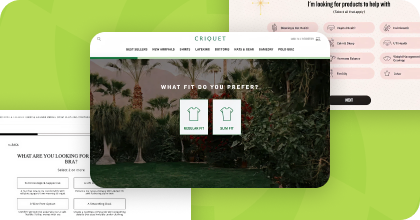
Build Your Own Product Quiz For Free Right Now
Simply give us your website URL and we will build you a completely on-brand product recommendation quiz for free.
For an ecommerce store, cart abandonment gets a lot of attention, and for good reason. The average shopping cart abandonment rate sits around 70%, representing trillions in lost revenue for online retailers.
But if your strategy starts at the shopping cart, you’re already behind, and there's a likelihood of lost sales. Only a small percentage of visitors ever add products to cart. That means the majority of your traffic is leaving your ecommerce site long before traditional abandoned cart recovery tactics even have a chance to work.
The brands reclaiming the most lost sales aren’t just optimizing their checkout process. Shopping cart abandonment doesn't just happen at the final step - it can happen while a customer is browsing or even getting ready for the payment process.
Proactive ecommerce brands are finding ways to reduce shopping cart abandonment across the entire customer journey, from early browse abandonment to high-intent drop-off at the checkout page.
Each stage reflects different customer behavior, different pain points, and requires a different recovery approach. The foundation for all of it is the same: understanding who your visitors are.
Before you can reduce shopping cart abandonment, you need to understand who you can actually recover.
An unknown visitor is someone you can’t identify. They browse your online store, view product pages, and leave. There's no email, no customer data, and no way to follow up.
A known visitor is different. They’ve opted in, created an account, or engaged in a way that allows you to continue the conversation after they leave. That distinction determines your entire marketing strategy.
Unknown visitors can only be influenced while they’re still on your site. Known visitors can be re-engaged through abandonment emails, push notifications, and personalized follow-ups across channels.
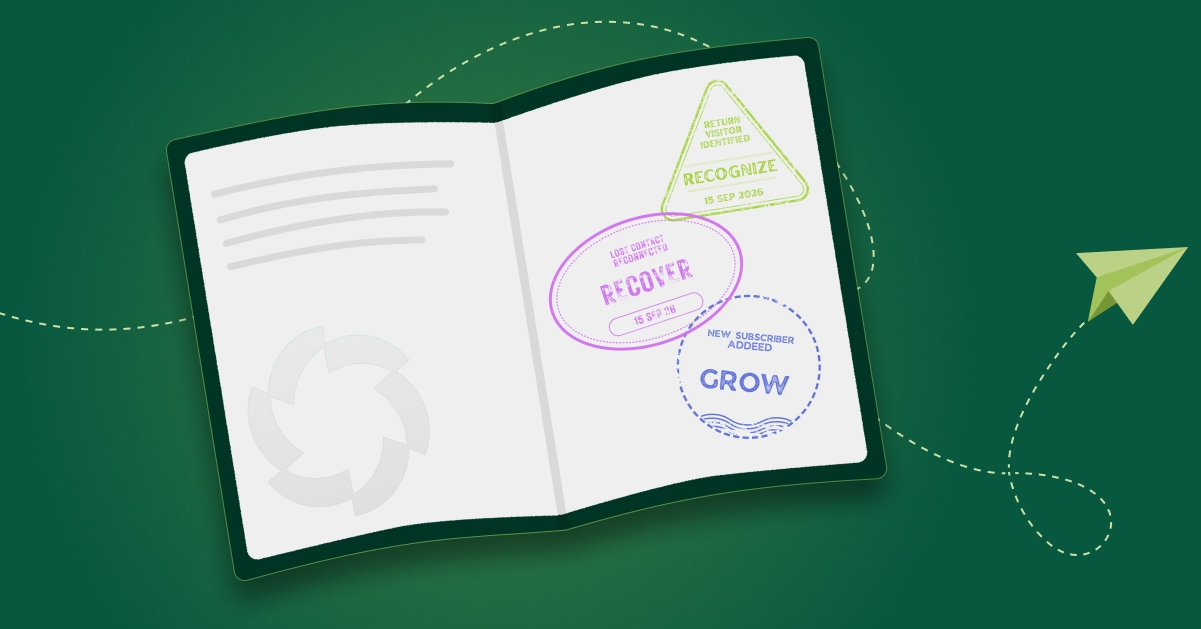
The more visitors you identify early, the more opportunities you have to reclaim lost sales later. Digioh Passport extends this further, recognizing returning visitors even after cookies have expired and meaningfully expanding the pool of known visitors available for recovery across all five abandonment types.
This is the largest and most overlooked segment. These are online shoppers who visit your ecommerce store, explore a few product pages, and leave. Again, with no cart, no sign-ups, and no way to follow up.
Most brands treat this as “window shopping.” It’s not; it’s more like early-stage purchase intent that wasn’t captured. The goal here isn’t immediate conversion. It’s turning anonymous visitors into known ones before they leave.
What works:
A visitor browsing skincare doesn’t want a random discount code. They want help finding the right product. The more relevant the experience, the higher the opt-in rate and the likelihood of long-term conversion.
These visitors show clear purchase intent. They add items to their shopping cart, then leave without identifying themselves. This is where most ecommerce businesses miss out on high-value opportunities.
You know what they wanted. You just can’t reach them.
What works:
Timing matters here. A well-placed offer before they leave can outperform delayed abandonment emails. This is one of the fastest ways to turn abandoned carts into recoverable revenue.
Mandatory account creation is one of the biggest friction points in the checkout process, especially for first-time and unknown visitors.
At this stage, shoppers are ready to buy. Forcing them to stop early in the checkout flow, create an account, and share additional information interrupts momentum and introduces hesitation. Many online shoppers don’t want to commit to a brand before completing their first purchase, and requiring it can quickly deter customers and increase shopping cart abandonment.
Offering a guest checkout option removes that barrier. It allows visitors to complete transactions quickly, without unnecessary steps, leading to more completed transactions and helping reduce shopping cart abandonment.
You can always encourage account creation after the purchase, once trust has been established, and the customer has already experienced value.
These are returning visitors, often loyal customers, who browse but don’t take action. You already have their customer data. Now it’s about using it to encourage shoppers.
What works:
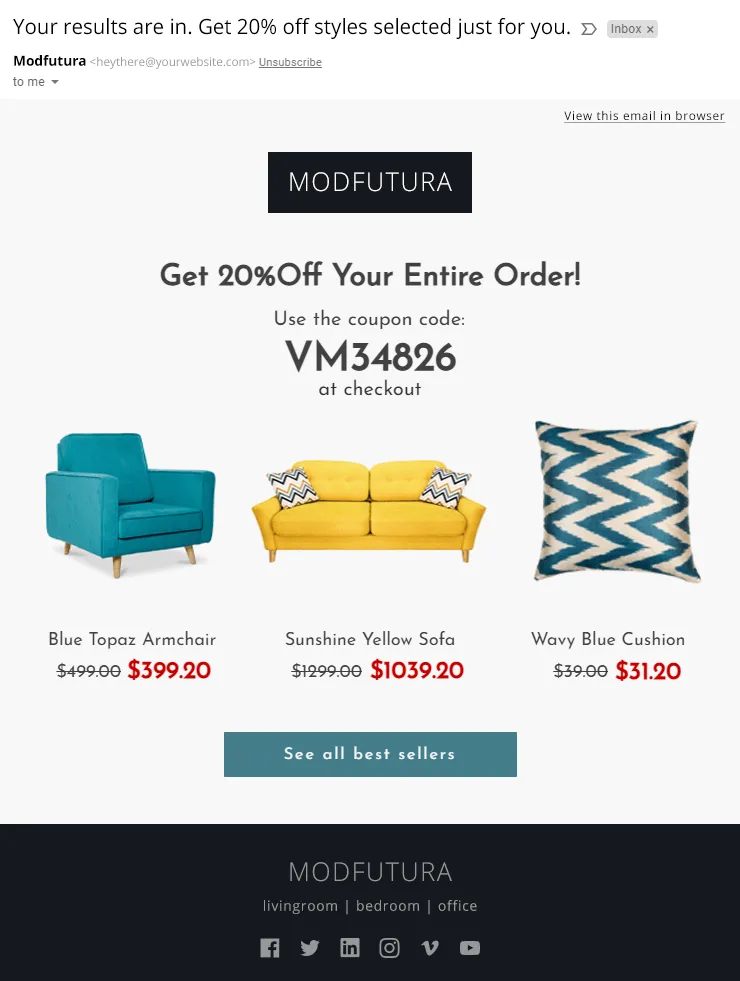
Generic follow-ups don’t work here. Relevance does. If someone viewed the same product multiple times, they’re not casually browsing; they’re evaluating. Your job is to remove the hesitation as they move through the checkout flow.
This is where strong cart recovery strategies make a measurable impact.
What works:

A simple reminder can recover a meaningful percentage of customers abandon shopping carts scenarios and adding urgency or incentives can further boost conversion.
-%252520tiny.webp)
This is the highest-intent group and often the most frustrating. These visitors reach the checkout page but still don’t complete the purchase.
Why? Because something breaks in the checkout flow. Common causes include:
These are not small issues. They directly deter customers from completing transactions.
What works:
When friction is removed, completed transactions increase immediately.
Every recovery tactic improves when you know who your visitors are.
Without identification, you’re limited to on-site interventions. With it, you unlock:
This is what turns window shoppers into potential customers, and potential customers into repeat buyers. More importantly, it increases lifetime value.
Cart abandonment isn’t just about a single lost transaction; it reflects the entire buying journey.
Digioh Passport extends that journey by recognizing returning visitors even after cookies expire, using first-party identity signals to maintain recognition across sessions.
For ecommerce brands where a large share of returning traffic is effectively anonymous, Passport expands the known visitor pool and increases the number of abandonment moments you can actually recover through email, SMS, and personalized on-site experiences.
The brands driving the most revenue from site abandonment treat visitor identification as a strategic priority, not just at checkout, but from the very first visit.
Most online stores lose the majority of their traffic before conversion. Not because the product isn’t right, but because the buyer's journey and experience breaks somewhere along the way.
Digioh helps you capture more of that lost opportunity by turning anonymous traffic into identifiable visitors and guiding them back to purchase. With the right systems in place, you can:
Digioh is built to support every stage of ecommerce site abandonment, not just the checkout.
For unknown visitor recovery, the focus is on capturing identity before they leave.
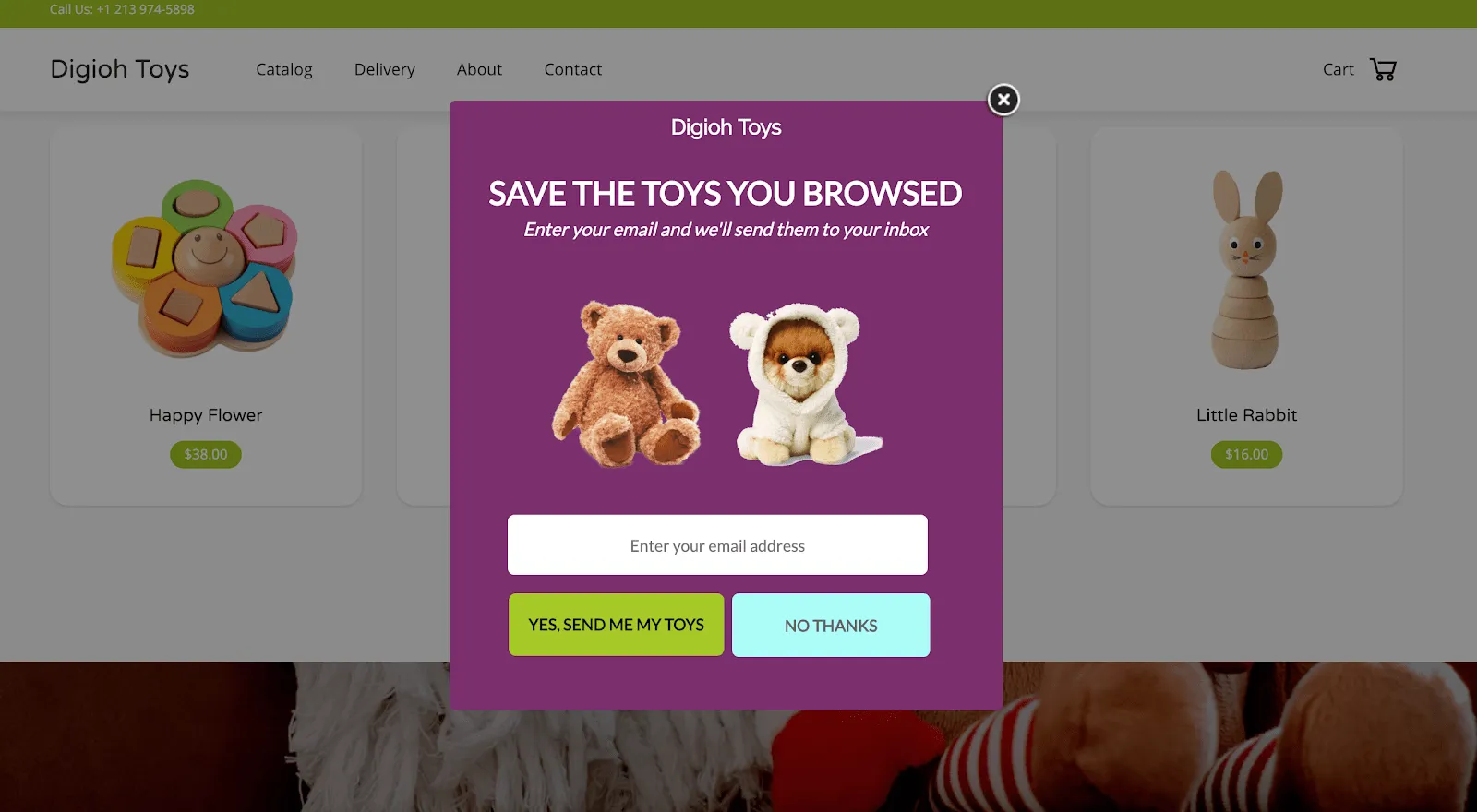
That includes exit-intent pop-ups and lightboxes with behavior-based personalization, product recommendation quizzes that guide shoppers while capturing email and SMS, and save-cart-to-email functionality that turns anonymous cart abandoners into known visitors.
For known visitor recovery, the strategy shifts to follow-up and personalization.
Behavioral targeting triggers on-site experiences based on browsing history, cart contents, and quiz responses. Native integrations with platforms like Klaviyo, Attentive, and Salesforce ensure your abandonment data flows directly into your email and SMS sequences. Digioh Passport extends this further by recognizing returning visitors even after cookies expire, expanding the pool of visitors you can actually recover.
Across all abandonment types, Digioh provides the tools to continuously improve performance, enabling customers to browse, shop, and buy what works best for them. You can run A/B tests across every pop-up, form, and quiz, and track revenue-level impact instead of relying on surface-level engagement metrics.
The result is a more complete approach to abandonment recovery. One that doesn’t just react at checkout, but captures, identifies, and converts visitors across the entire customer journey.
Don’t settle for siloed tools. With Digioh, you get one powerful platform for pop-ups, product quizzes, onsite identification, and more—everything you need to personalize every step of the customer journey. Identify more traffic. Collect more zero-party data. Turn insights into revenue.