April 18, 2026
Up your marketing game with gamification! Gamified popups, quizzes, and widgets are entertaining, engaging, and effective.

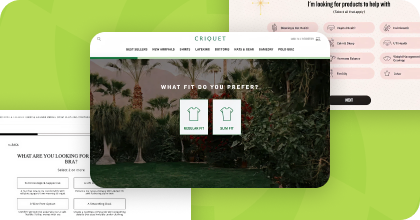
Build Your Own Product Quiz For Free Right Now
Simply give us your website URL and we will build you a completely on-brand product recommendation quiz for free.
Shoppers leave quickly if there’s nothing guiding them. Most ecommerce sites follow the same basic flow, so the difference comes down to how effectively you engage and direct the experience.
Some brands use interactive elements — like quizzes, rewards, or simple challenges — to make it easier for customers to participate and move through the journey. When used thoughtfully, these elements reduce friction, encourage engagement, and keep shoppers moving toward a decision.
The impact comes from structure, not novelty. Done well, these approaches help increase retention, improve conversion rates, and create more consistent customer experiences across the funnel.
Ecommerce gamification adds gaming elements to the online shopping journey to increase interaction and keep customers engaged. Adding game features such as points, badges, leaderboards, and challenges—examples of game mechanics and gamification techniques—creates an engaging environment that entertains users and drives them to specific behaviors.
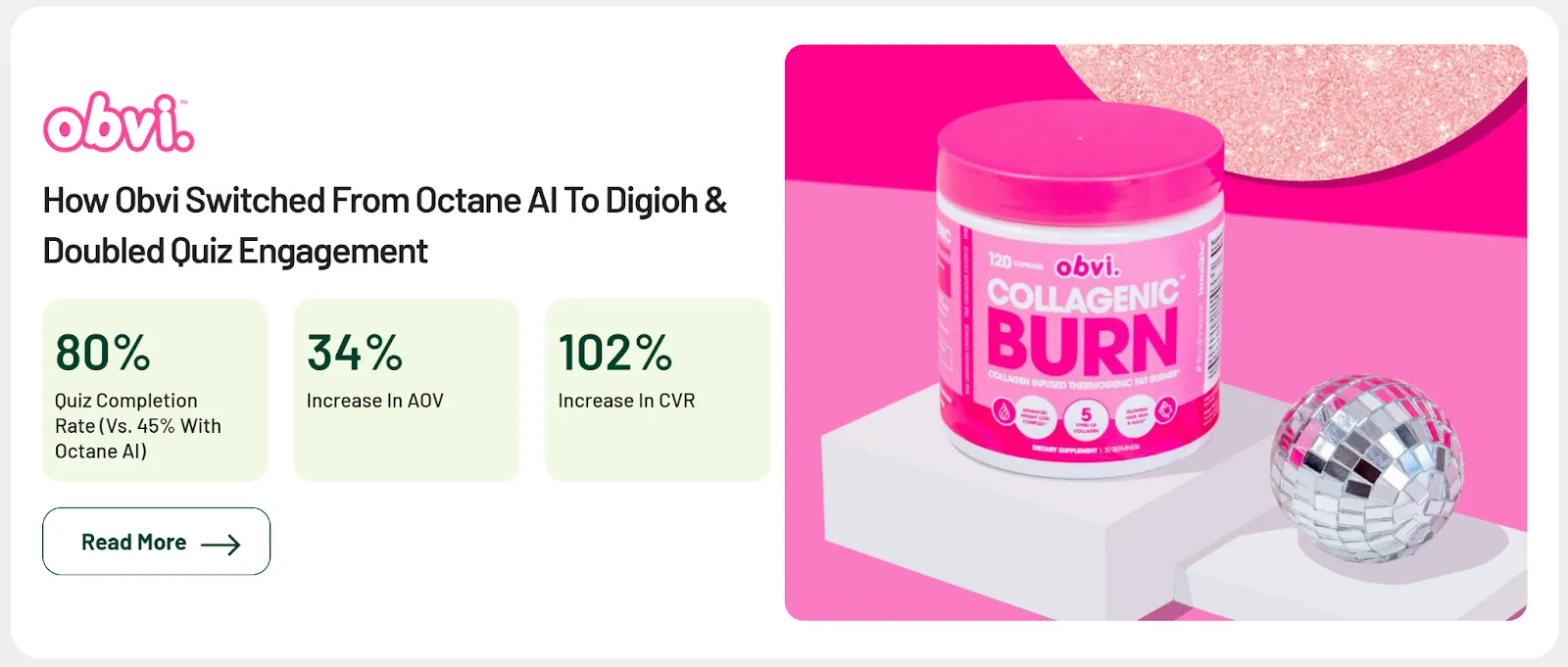
Interactive quizzes are one of the most powerful gamification tools available to ecommerce stores today, as seen with brands like Obvi, which achieved an 80% quiz completion rate and a 102% increase in conversion rate after implementing guided selling quizzes. Gamified quizzes can also enhance the customer experience by making product discovery more enjoyable and personalizing recommendations based on user responses.
The quiz’s user-friendly design, prominent placement, and fun messaging that aligns with the company’s brand make it a natural part of the customer journey. Gamification can be implemented at various stages of customer journeys to increase engagement and foster loyalty.
The rise of gamification as a trend among ecommerce stores can be attributed to its ability to inject adventure into routine buying activities. Attention spans are shortening, so gamification stands out by capturing attention and keeping customers engaged through our innate human tendencies towards achievement and competition, resulting in a more enjoyable and memorable shopping experience.
Ecommerce gamification relies on a few core elements that shape how customers interact with your site. Reward mechanisms — like points or badges — recognize participation and completion. Challenges or leaderboards can add a competitive layer, while interactive formats like quizzes or spin-to-win experiences encourage engagement.
These elements are often used within loyalty programs to motivate repeat actions. When structured well, they help increase participation, encourage return visits, and support repeat purchases without adding unnecessary complexity.
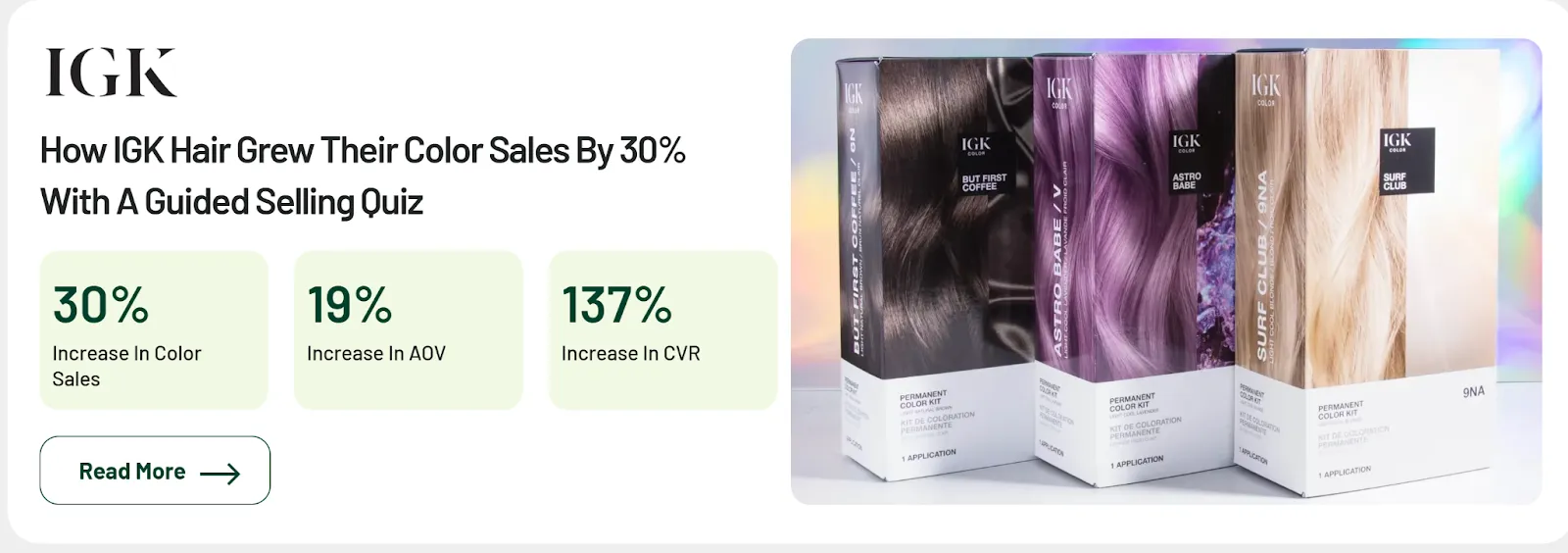
Product recommendation quizzes can address specific customer needs while driving measurable results. For example, IGK Hair used a quiz to guide shoppers to the right products, resulting in a 30% increase in color sales.
Gamified elements can improve engagement when they’re placed at the right points in the customer journey. Simple mechanics like progress indicators, quizzes, or rewards can guide shoppers, reduce friction, and keep them moving toward a purchase.
The goal isn’t to add complexity — it’s to make the experience easier to navigate. When these elements are structured around how customers actually shop, they support higher conversion rates and encourage repeat engagement over time.
Seamless integration between gameplay experiences and regular retail operations on digital platforms enables ecommerce businesses to harness powerful marketing approaches based on game design that attract and retain customers better than older approaches would allow. We’ll get into the many benefits for your business.
Actionable tip: Start small by adding a gamified quiz or points-based loyalty program. Using clear progress indicators and rewarding users for completing tasks to boost engagement, improve the customer experience, and revolutionize shopping habits.
Gamification can increase engagement by giving customers a more active role in the shopping experience. When shoppers participate — rather than passively browse — they’re more likely to stay engaged and return.
Incentives like rewards, promotions, or exclusive offers can encourage specific actions, such as completing a purchase or coming back to the site. When tied to meaningful behaviors, these elements help improve conversion rates and repeat purchases.
The key is to keep it relevant and easy to understand. Clear rewards and straightforward interactions are more effective than complex systems, especially when the goal is to drive consistent engagement over time.
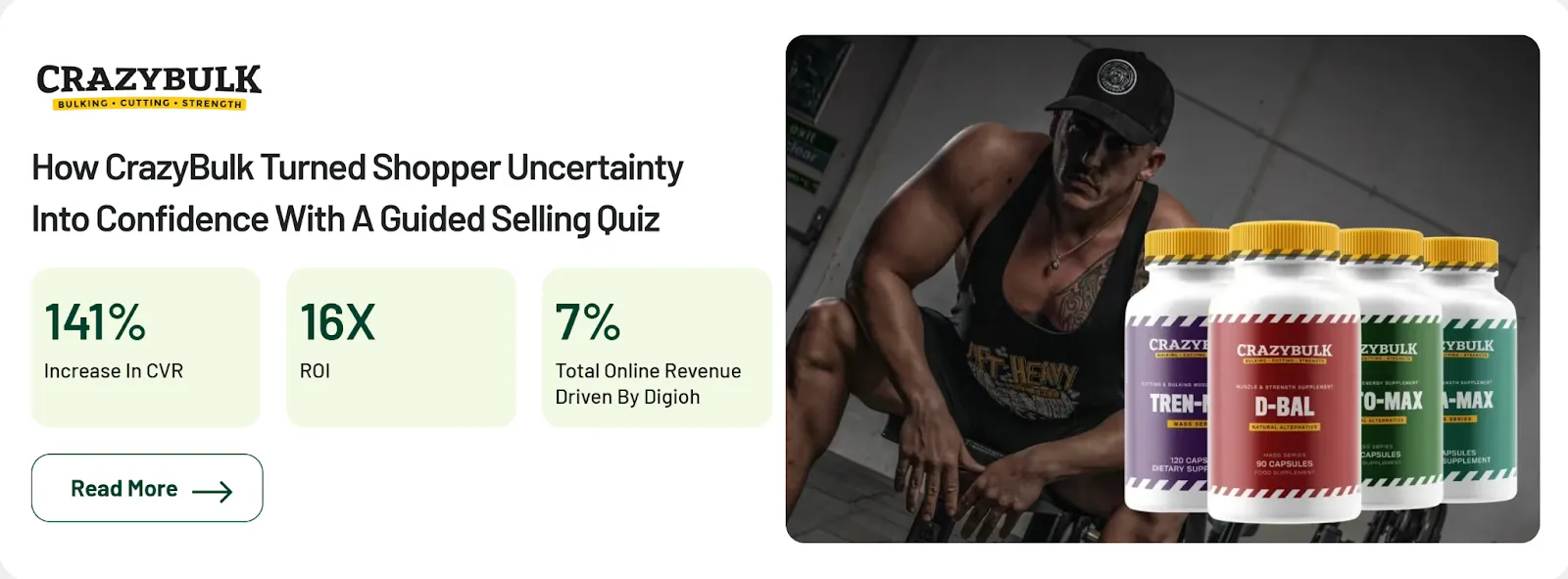
Guided selling quizzes are among the most effective forms of ecommerce gamification. CrazyBulk’s implementation of a product recommendation quiz turned shopper uncertainty into confidence, resulting in a 141% increase in conversion rate and 16X ROI on their quiz investment.
Gamification marketing can turn occasional buyers into loyal customers by creating campaigns that stick in memory. Loyalty happens when brands reward customers and encourage social engagement, leading to positive experiences that keep customers coming back and recommending the brand to their social circle.
Gamification drives customer engagement by delivering personalized experiences based on individual preferences. The insightful analysis of customer data allows businesses to create campaigns that are spot-on for their demographic, thus increasing satisfaction and refining the overall shopping journey. These strategies keep customers coming back and keep users engaged throughout the shopping process.
Epic Gardening’s quiz is a clear example of this approach in practice. It asks shoppers about their garden type, size, sun exposure, and other key factors to guide recommendations.
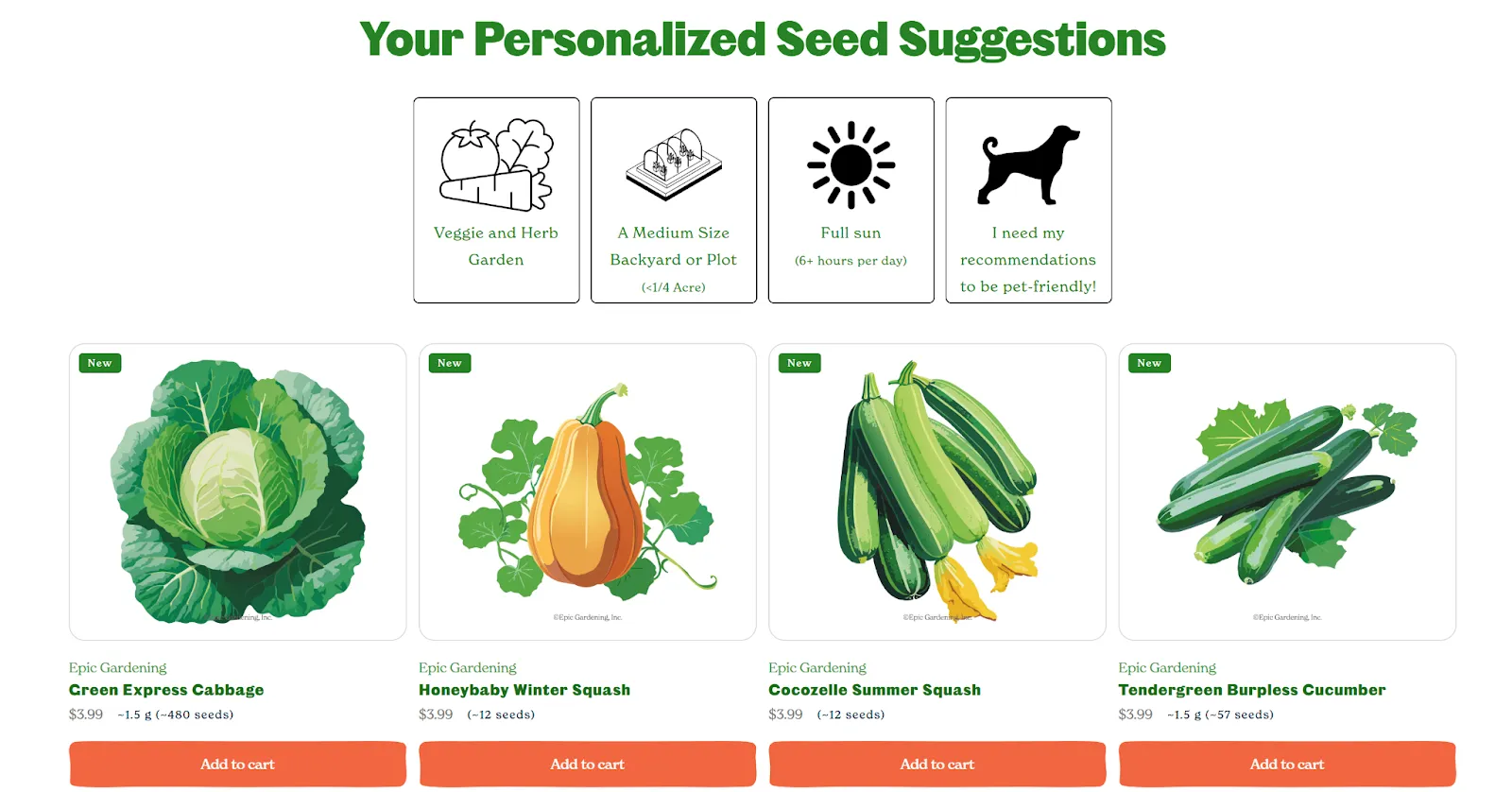
Instead of recommending a single product, the quiz suggests a set of relevant items based on the shopper’s responses. This approach fits the category — where customers often purchase multiple seeds at once — and helps increase average order value.
In summary, incorporating gamification in ecommerce offers:
This approach helps retailers attract new customers while keeping them engaged and more likely to return.
Gamification can help address low engagement by giving shoppers a reason to interact, not just browse. Elements like quizzes, rewards, or challenges can turn anonymous traffic into more engaged, higher-intent visitors.
Sephora’s Beauty Insider program is a strong example. Its tiered rewards — including birthday gifts, early access, and exclusive offers — create clear incentives for repeat purchases. Combined with quizzes and time-based promotions, it keeps customers engaged across multiple touchpoints.
When structured well, these strategies support higher average order value and repeat engagement. The impact comes from making the experience easier and more rewarding to navigate — not from adding complexity.
In a crowded ecommerce environment, interactive elements can help differentiate your experience and encourage customers to come back.
Improving customer engagement starts with using data you can act on. When you understand customer preferences, behaviors, and purchase patterns, you can build experiences that feel relevant — not generic.
Personalization goes beyond basic tactics. It means aligning rewards, offers, and messaging with what customers have actually shared or done. For example, Nike connects activity data from its app to rewards and milestones, reinforcing engagement through ongoing interaction.
Over time, these insights help you refine what works. You can identify which incentives drive participation, which experiences lead to repeat purchases, and where to simplify the journey.
Bottom line: When customer data is used effectively, gamified experiences become more targeted, more useful, and more likely to drive repeat engagement.
Here are some examples of successful gamification in ecommerce brands:
Spin-to-Win Engagements: These campaigns engage customers by letting them win prizes or receive discounts by spinning a digital wheel. Participants can earn rewards such as free shipping, discount vouchers, or free products, which not only increase interaction but also prompt them to make a purchase to claim their prize.
Actionable tip: Add a spin-to-win pop-up on your site to reward users instantly and boost conversions.

Points Accumulation and Incentives Schemes: Gamified loyalty programs take traditional loyalty programs further by using tiered systems, such as beauty insider tiers, to reward users with progressively better perks as they engage more. A leading example is Sephora's Beauty Insider program, which features Insider, VIB, and Rouge tiers that incentivize customer spending and engagement through exclusive rewards and social proof of status.
Many brands now also award loyalty points for customer engagement with interactive content, such as quizzes, creating additional incentives for participation. This strategy encourages repeat buying behavior and nurtures long-term customer loyalty. As customers accumulate more points through both purchases and quiz participation, they are more likely to come back to your online store.
Actionable Tip: Implement a tiered loyalty program to reward users at different engagement levels and encourage repeat visits.
Tailored Quiz Interactions: Gamified quizzes are interactive tools that help customers find products tailored to their preferences and needs by using answers from the questionnaire. These quizzes reward users for participation, often with points or personalized offers, making the discovery process enjoyable and game-like. Such personalized recommendations increase customer satisfaction with purchase decisions and, in turn, increase sales, as customers feel more confident in their choices.
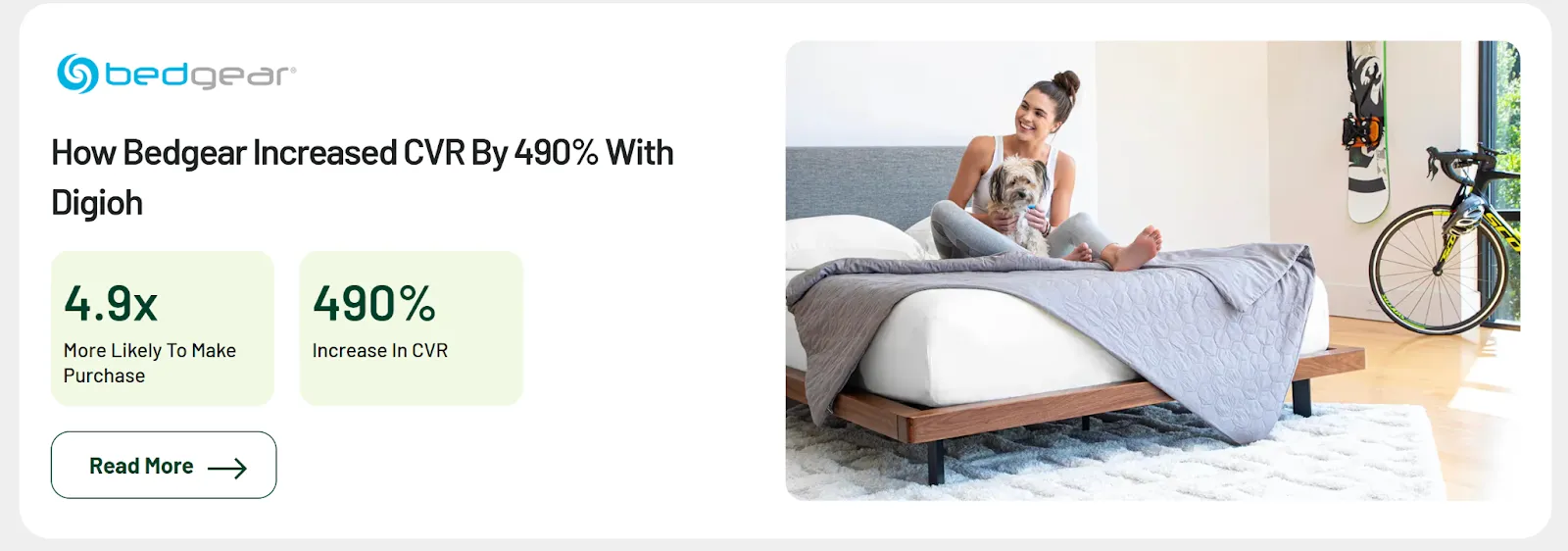
Bedgear’s implementation of guided selling quizzes made customers 4.9x more likely to purchase and increased conversion rates by 490%, demonstrating the approach's remarkable effectiveness.
Actionable Tip: Use gamified quizzes to collect data and reward users with discounts or loyalty points for completing them.
The above scenarios show how gamification tactics increase user engagement and drive ecommerce transactions. Spin-to-win mechanisms create excitement around buying experiences, point systems and tiered rewards align customer behavior with long-term business patronage, and customized quizzes increase perceived value given to customers—all powerful motivators in a retail context.
These work because they create memorable, fun experiences that tap into our natural human tendencies towards competition and winning, thereby changing traditional concepts in the online commerce space and driving significant impact on business performance.
Gamified elements turn regular browsing into adventures that invite frequent returns over new introductions, thus keeping shopper interest piqued over time.
Measuring the impact of gamification comes down to tracking the right metrics. Focus on engagement rates, participation in rewards or interactive elements, average order value, and retention. These indicators show whether your experience is influencing behavior — not just getting attention.
Analytics should help you understand what’s working and where to adjust. Instead of broad dashboards, look for clear signals: which elements drive participation, where users drop off, and which experiences lead to repeat visits or purchases.
Social sharing and reviews can extend reach, but they’re most valuable when tied to meaningful engagement. If customers are interacting with your experience and choosing to share it, that’s a sign it’s resonating.
The key is consistency. Regularly review performance and refine your approach based on the data. Over time, this helps improve engagement, increase order value, and support long-term retention.
To get real impact from gamification, focus on experiences that are simple, relevant, and easy to engage with. Elements like progress indicators, challenges, or tiered rewards can guide behavior — but only when they’re clearly tied to customer actions.
Incentives should align with what your audience values. Exclusive offers, early access, or personalized rewards are more effective when they reflect customer preferences and fit naturally into the experience. Integration with your existing tools is just as important, so data flows cleanly across channels without adding friction.
Sharing and referrals can extend reach, but they work best when the experience itself is worth sharing. If customers find value in the interaction, they’re more likely to engage again and bring others with them.
Bottom line: Effective gamification is structured, not complex. When it’s aligned with how customers shop, it supports higher engagement, repeat purchases, and more consistent growth.
Gamification can improve engagement, but it only works when the fundamentals are in place.
Prioritize clarity over complexity
If customers don’t immediately understand how to participate, they won’t engage. Keep mechanics simple and easy to follow.
Make incentives meaningful
Rewards need to match what your audience values. Weak or irrelevant incentives reduce participation and limit impact.
Ensure visibility without overwhelming users
Promote your interactive experiences so customers know they exist, but avoid adding too many options or steps that create friction.
Measure and refine performance
Track participation, conversion, and retention to understand what’s working. Use that data to make ongoing improvements rather than treating gamification as a one-time setup.
Bottom line: When executed well, gamification supports engagement and conversion. When it’s unclear or overly complex, it becomes easy to ignore.
Digioh has helped thousands of ecommerce brands increase conversion rates with our pop-ups and product quizzes. Businesses can use the tools provided by Digioh, such as spin-to-win games and guided selling quizzes, to deploy gamification strategies.
For Spin-to-Win Campaigns, Digioh provides fully customizable wheel interfaces that brands like Savage X Fenty use to capture emails while creating excitement through variable rewards. Our targeting ensures these wheels show up at the right moment in the customer journey to maximize conversion.
For Interactive Product Quizzes, Digioh's conditional logic creates sophisticated guided selling experiences. Melissa and Doug's toy finder quiz, built with Digioh, helps parents navigate their huge catalog by age, interest, and educational value—creating a personalized shopping journey that converts 3x their standard rate.
For Points and Rewards Programs, Digioh's forms can collect and display loyalty information and integrate with your existing rewards platform for a seamless experience across touchpoints.
Digioh allows brands to collect rich, first-party and zero-party data from site visitors — giving you a clearer view of who your customers are and what they want. This enables tailoring interactive experiences and recommendations based on real data, not assumptions.
That data can be used to personalize experiences across your site, email, and SMS, helping improve relevance and conversion rates.
Digioh also integrates with your existing tech stack, including ecommerce platforms like Shopify and BigCommerce, so data flows cleanly across your marketing tools without added complexity.
Book a demo today to see how we help brands gamify their shopping experience with interactive quizzes, spin-to-win pop-ups, and more.
Don’t settle for siloed tools. With Digioh, you get one powerful platform for pop-ups, product quizzes, onsite identification, and more—everything you need to personalize every step of the customer journey. Identify more traffic. Collect more zero-party data. Turn insights into revenue.