May 27, 2026
Increase your product recommendation quiz engagement rate dramatically by following these tips for quiz promotion.

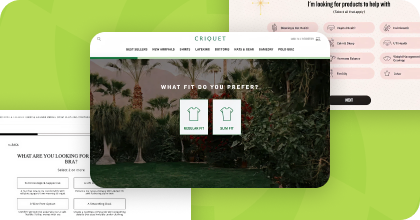
Build Your Own Product Quiz For Free Right Now
Simply give us your website URL and we will build you a completely on-brand product recommendation quiz for free.
Product recommendation quizzes aren’t a trend. They’ve become one of the most effective ways for ecommerce brands to personalize the buying experience, collect zero-party data, and drive higher conversions.
The impact goes beyond immediate sales. A well-built quiz helps shoppers navigate decisions, discover the right products faster, and feel more confident about what they’re buying. That kind of personalized guidance creates a stronger customer experience and leads to better long-term relationships with your brand.
But even the best quiz won’t perform if visitors never see it.
Too many brands bury their quiz in navigation menus or tuck it into a small corner of the site. The highest-performing quizzes are treated like a core part of the customer journey. They’re surfaced prominently, integrated into landing pages, promoted through pop-ups and email campaigns, and positioned as a helpful shopping tool rather than just another marketing asset.
That visibility matters.
Across Digioh quizzes, the average engagement rate is 20–25%, meaning roughly one in four site visitors starts the quiz. Brands with the strongest performance regularly see engagement rates above 35% because they reduce friction, clearly communicate value, and make the quiz impossible to miss.
Completion rates are high because quizzes feel interactive and personalized in a way static content doesn’t. Instead of asking shoppers to search through product pages on their own, quizzes guide them toward the right fit, routine, or product recommendations based on their needs.
And when the quiz solves a meaningful problem, performance improves even further.
If shoppers are overwhelmed by options, unsure about sizing, or trying to understand which product fits their goals, a quiz becomes more than an engagement tool. It becomes part of the sales process itself.
The most effective quizzes are fast, focused, and easy to complete. In most cases, shoppers should be able to finish in two to three minutes or less. Keeping the experience low-friction while delivering genuinely useful recommendations is what drives stronger engagement, higher conversion rates, and more qualified customer data over time.
Interactive quizzes work because they turn a target audience's passive browsing into active participation.
Instead of asking shoppers to sort through products on their own, quizzes guide them toward recommendations that reflect their preferences, goals, and needs. Each answer helps create a more relevant experience, which keeps shoppers engaged and increases the likelihood they convert.
The value goes beyond engagement.
Quizzes help brands collect zero-party data directly from shoppers while building trust through personalization. A visitor who receives recommendations that actually feel useful is more likely to continue exploring, return later, and purchase with confidence.
That’s what makes quizzes so effective for ecommerce. They don’t just capture attention, they create a more guided, personalized path to purchase that turns a browsing target audience into buying and first-time visitors into long-term customers.
Strong quiz strategy starts with understanding your audience.
The more you know about your shoppers—their preferences, goals, behaviors, and buying patterns—the more relevant and effective your quiz data becomes. Quiz responses give you direct insight into what customers are looking for, what’s influencing their decisions, and where they may be getting stuck in the buying process.
That quiz data is valuable far beyond the quiz itself.
It helps you create more personalized experiences across your site, email campaigns, SMS flows, and product recommendations. Instead of relying on assumptions, you’re using real customer inputs to guide messaging, segmentation, and merchandising decisions.
The result is an online quiz experience that feels more relevant to shoppers and performs better for the business. Higher engagement, stronger personalization, and more qualified conversions all start with understanding what your audience is actually telling you.
Linking to your online quiz in your navbar is a simple way to increase quiz engagement rates quickly, and prominent placement in the navbar can also improve your conversion rate.

Digioh customers like Andie and Bedgear earn some of the highest quiz engagement rates, in part because they include their quiz in their navigation.

Not only does this make the quiz easy to find, it signals that the quiz is a core part of the shopping experience rather than a secondary feature buried on the site. That’s why creating a quiz that’s easy to discover and easy to complete is so important. Good quiz marketing does more than increase engagement. It gives brands a way to collect leads, learn what shoppers actually want, and turn more of that traffic into customers.
First impressions matter, especially at the top of the quiz marketing funnel. If your quiz is central to how shoppers discover products or make decisions, it should be visible from the moment they land on your site.
Promoting your quiz on the homepage with an embedded inline widget makes it part of the shopping experience instead of something visitors have to hunt for. The easier it is to discover, the more likely shoppers are to engage, complete the quiz, and move deeper into the funnel.

If your site uses dynamic content in its hero section, you can set conditions to only display the quiz CTA to visitors who haven't taken it yet. After quiz completion, personalize the site experience by dynamically showcasing products from their quiz results.
Not every site visitor will enter through your homepage, so to get your quiz in front of as many users as possible, teasers are the way to go.

Sidebars and pop-up teasers are great for promoting your quiz on any—or every—page of your website. Target high-traffic pages, or set specific conditions for teasers to appear.

Banners are a useful way to get important messages out to all of your site visitors. Savvy shoppers and regular web users know to check banners for sales, free shipping and other important messages. Add a line of text and promote your quiz across your entire site without taking up a lot of real estate.

Bedgear uses a banner across their entire website to drive visitors to their quiz—which makes sense since quiz takers are almost 5 times as likely to make a purchase.
For specialty retailers, one of the biggest challenges is helping customers navigate products they may not fully understand yet. That’s where the quiz marketing funnel becomes especially valuable. Instead of forcing shoppers to sort through products on their own, quizzes guide them toward the right fit while naturally moving them from discovery to conversion.
Acting as an ecommerce concierge, a product recommendation quiz bridges the gap between customer needs and brand expertise. Placing the quiz prominently on a product listing page helps answer questions early, reduces decision fatigue, and points shoppers toward the products most relevant to them.

This strategy increases quiz engagement while reducing support requests. PartyMachines carries DIY home machines alongside professional foam machine rentals, and they were getting a lot of support calls from overwhelmed customers trying to sort through all of the options. Their “Find the Perfect Foam Machine” Quiz walks customers through the same steps a support representative would, starting with light personal questions to build engagement and trust, without having to pick up the phone or wait for regular business hours.
In addition to reducing support requests, collecting customer data through an engaging and personalized experience provides valuable insights for the business. The data collected from quizzes can help businesses create detailed customer profiles, allowing for more personalized marketing strategies and improved customer engagement.
If shoppers browse your catalog without finding what they need, there’s a good chance they’ll leave before taking action. An exit-intent pop-up promoting your quiz gives you one more opportunity to re-engage them before they abandon the site.
Instead of letting visitors bounce, you can redirect them into a more guided experience that helps narrow options, answer questions, and surface the products most relevant to their needs.

Scrolling endlessly through product listings can cause decision fatigue. That’s especially a challenge for brands that offer products that may be a brand-new experience for their audience. When brands create quizzes, they make it easier for shoppers to narrow options, understand what fits their needs, and find the right product before frustration causes them to leave the site.
AgaveLux has built an extensive education section on its website to help customers learn about Mexican spirits, which plays an important role in its overall quiz marketing strategy. But not every shopper wants to spend time researching before making a decision.
Their product recommendation quiz shortcuts that process by guiding shoppers directly to the right products based on their preferences and tastes. Instead of asking visitors to study first and shop second, the quiz helps them get to answers faster while creating a more engaging path to conversion.
Even loyal customers can miss new experiences if they’re only promoted on your website. When brands create quizzes, they should treat them like a core part of the marketing strategy, not a hidden feature buried on the site.
Look at where your traffic is coming from—email, SMS, paid ads, social, or organic search—and promote your quiz across those channels to maximize visibility, engagement, and return on your quiz investment.
Treat your quiz like you would any other big piece of news. After launching your quiz, send a message to your entire list that encourages them to give it a try. Quizzes are fun and interactive so expect a high click-through rate.
You can also promote the online quiz in other email campaigns by adding a banner to marketing emails or including it in your welcome series. Including a lead capture step in your quiz allows you to collect contact information from participants, making it easier to follow up with targeted marketing efforts after they complete the quiz.
Announcing your online quiz across social media is a great way to break up the feed with something different.
Interactive content like personality quizzes and trivia quizzes can significantly boost engagement and sharing on social media platforms. It’s easy to scroll past the same types of posts on social media, so a quiz with an intriguing CTA might be just the thing to elicit a click.
Go beyond your existing followers by encouraging quiz takers to share their results on social media. Trivia quizzes are designed to test knowledge in a specific area and are highly shareable, making them effective for boosting engagement and brand awareness. Personality quizzes engage users by allowing them to discover their personality type, which helps build loyalty and collect valuable data. Quizzes are fun, especially when you can compare results with friends.
Video is one of the most underused ways to promote a quiz, especially when you’re trying to show shoppers the value of completing it. Instead of just telling visitors about your quiz, show them what the experience actually looks like and the kind of personalized quiz results they’ll receive at the end.

Even a simple screen recording can work. Walk through the quiz, highlight how recommendations are generated, and show the final results page so shoppers understand what they’ll get before they start. Seeing the outcome makes the experience feel more tangible and can significantly increase engagement and quiz starts.
Create something quick and snappy, or produce a more informative explainer video that shows potential customers how your quiz solves a problem, simplifies decision-making, or delivers personalized value. Either way, you’re showing shoppers how easy and engaging the experience is before they even start.
Promote the video across TikTok, Instagram Reels, Facebook, or wherever your audience spends time to drive more quiz engagement and reach more potential customers.
Refresh your performance marketing campaigns by promoting your quiz. The interactive nature of quizzes makes them highly effective for turning ad clicks into engagement, lead capture, and conversions while improving overall quiz performance.
A strong quiz funnel guides shoppers from the initial click through each stage of the experience, helping reduce drop-off and move users naturally toward conversion. At the same time, quizzes help brands build stronger customer relationships by delivering personalized recommendations and collecting insights that make future interactions more relevant.
A product recommendation quiz is great for helping hesitant shoppers make a decision. A retargeting campaign that invites recent visitors to take a quiz may be the missing piece you needed to make the sale. A well-designed marketing quiz delivers value by providing tailored recommendations and a seamless user experience on the results page, increasing engagement and driving conversions.
If you’re fortunate enough to have an enthusiastic audience around your niche or brand, quizzes can become a powerful driver of organic engagement. This is especially true for personality quizzes, which naturally encourage sharing and discussion because shoppers enjoy comparing results and seeing how they align with their preferences or identity.
A well-designed recommendation or personality quiz gives people a reason to engage beyond the purchase itself. Shoppers try it, share their results, and invite others to participate, which can quickly turn a targeted campaign into word-of-mouth momentum.
The more relevant and entertaining the experience feels, the more likely people are to share it across social channels, group chats, and communities. That’s part of what makes quizzes so effective: they combine personalization, entertainment, and product discovery in a format people genuinely want to interact with.
With almost a third of shoppers reporting that influencer recommendations are more important than friends and family suggestions, it’s no surprise that marketers are increasingly collaborating with content creators.
That can be as simple as asking an influencer to take your quiz and talk about the process and the results. A quick, fun quiz with useful recommendations can make great content that’s easy to produce and consume.
Better yet, ask an influencer to take your quiz on a live stream together with your audience.
Integrating quizzes into your content marketing strategy can amplify reach and engagement through influencer partnerships, as quizzes provide valuable, interactive content that fits seamlessly into a broader content marketing approach.
We’ve seen what quizzes can do as both a data capture tool and a sales tool. We’ve also seen how quiz promotion directly impacts engagement rates and lead generation. The more people see your quiz, the more people will take it, and the more successful it will be.
If you’d like to chat about some ways to promote your quiz using Digioh, feel free to reach out! In addition to helping you build a recommendation quiz, we can help you implement an entire on-site promotion strategy using tactics proven to convert more shoppers into customers.
Quiz analytics give you a clear view into how shoppers are interacting with your experience. Instead of guessing what’s working, you can see exactly where users engage, where they drop off, and which questions drive the strongest completion rates.
That visibility makes optimization much easier.
If shoppers consistently abandon the quiz at a certain question, it may be too complex, too personal, or not delivering enough value early in the experience. If certain answers or product paths lead to higher conversions, you can use that data to refine recommendations, messaging, and follow-up campaigns.
The best-performing quizzes aren’t built once and left alone. They improve over time through ongoing testing and analysis. Looking at metrics like engagement rate, completion rate, time spent per question, and conversion performance helps you create a smoother experience that keeps shoppers moving from start to finish.
The result is a quiz that feels more intuitive for customers and performs better for the business.
Quiz optimization is about creating an experience that feels intuitive, engaging, and easy to complete from start to finish. Small adjustments can have a major impact on completion rates, engagement, and overall quiz performance.
Visual design plays a big role. Image-based answers help shoppers move through questions faster and make the experience feel more interactive, especially on mobile. Conditional logic is equally important because it allows quizzes to adapt in real time based on user responses, creating a more personalized path for each quiz taker.
Mobile optimization should also be a priority in your broader marketing strategy. Most shoppers are taking quizzes on their phones, so every part of the experience—from answer selection to progress bars to calls-to-action—needs to feel seamless on smaller screens.
Strong calls-to-action help move users naturally into the next stage of the customer journey. Whether that’s a newsletter signup, a personalized product recommendation, or a discount offer, the goal is to keep the experience feeling relevant and helpful rather than transactional.
The best quizzes also create opportunities for ongoing engagement beyond the initial interaction. Quiz responses can power more personalized communications across email, SMS, and on-site experiences, helping brands continue the conversation after the quiz is complete.
Just as importantly, quizzes generate valuable feedback about customer preferences, shopping behavior, and decision-making patterns. Looking at analytics like completion rates, drop-off points, and engagement trends helps brands identify friction, refine questions, and improve the experience over time.
The result is a great quiz experience that feels better for shoppers, helps brands engage customers more effectively, and drives stronger long-term performance.
Quizzes work because they do more than drive engagement. They help brands collect data directly from shoppers while guiding them toward products that actually fit their needs.
When promoted across channels like email, paid ads, social, and on-site experiences, quizzes become a powerful driver of lead capture, personalization, and conversion. Instead of sending shoppers through a generic buying journey, quizzes create a more guided experience that helps move visitors from browsing to purchase faster.
They also give brands access to valuable zero-party data—information customers intentionally share about their preferences, goals, habits, and purchase intent. That data is far more actionable than assumptions based on clicks alone.
The ability to collect data directly from shoppers changes how brands communicate. Quiz responses can power more personalized email campaigns, smarter segmentation, tailored product recommendations, and more relevant on-site experiences.
The result is stronger engagement, better customer relationships, and marketing that feels more helpful and relevant to the shopper.
Don’t settle for siloed tools. With Digioh, you get one powerful platform for pop-ups, product quizzes, onsite identification, and more—everything you need to personalize every step of the customer journey. Identify more traffic. Collect more zero-party data. Turn insights into revenue.