May 5, 2026
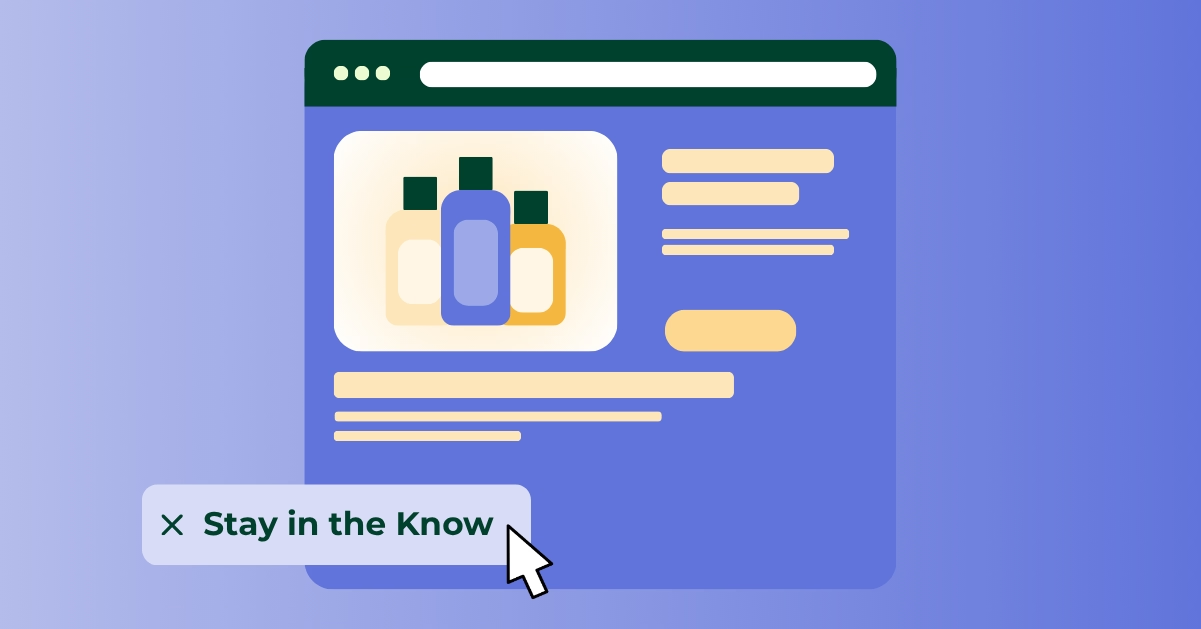
Add a pop-up teaser to your site to promote discounts, upcoming events, or your website's quiz without impacting the user experience.
Build Your Own Product Quiz For Free Right Now
Simply give us your website URL and we will build you a completely on-brand product recommendation quiz for free.
When used as a powerful tool by ecommerce businesses, well-timed, effective popups can boost engagement, improve user engagement, and drive meaningful conversions.
But timing is everything.
Modern ecommerce brands are moving away from intrusive popups, such as full-screen popups and aggressive overlays, that disrupt the browsing flow. Instead, they’re prioritizing popup strategies that are well-timed, targeted, and aligned with a user-friendly experience. Poor timing is what causes friction, increases bounce rate, and reduces conversion likelihood, especially with mobile popups, where limited screen space makes interruptions even more disruptive.
For many ecommerce businesses, the solution is the website popup teaser.
A popup teaser surfaces your offer without forcing it. It appears as a small, persistent element on your site, capturing attention without interrupting the experience. When visitors are ready, they engage. When they’re not, it stays out of the way.
This guide breaks down how to implement user-friendly website pop-up teaser formats as part of your marketing strategy to engage users, increase sign-ups, and drive more sales.
A website popup teaser is a minimized version of traditional popups. Instead of taking over the entire screen, it appears as a small, clickable element that expands when a user chooses to interact.

Unlike full-screen popups or spin-to-win wheels, a popup teaser doesn’t interrupt the customer journey when they're on your site. It gives users control over when they engage, leading to stronger engagement and a higher opt-in rate.

This format works especially well for collecting emails, capturing phone numbers, and encouraging sign-ups without disrupting the site experience.
Most ecommerce popups are designed to trigger immediately, and that’s the problem.
When trigger popups appear too early, before a high-intent visitor has explored the online store, they create friction instead of value. Visitors haven’t had time to understand your product interest, evaluate your featured products, or connect with your brand.
The result is predictable:
This is especially true for cart abandonment popups and aggressive exit-intent overlays that rely on interruption rather than timing.
While these formats can still play a role, relying on them as a default setting often leads to poor performance. Poor timing is one of the biggest reasons popup campaigns fail.
A popup teaser works because it aligns with how people actually browse. Instead of interrupting, it supports the natural, user-friendly browsing flow. Visitors can explore your site, engage with interactive elements, and build intent before taking action.

When they’re ready, the teaser is there to guide them. That shift leads to:
It also creates a better overall experience for potential customers, which directly impacts lifetime value and long-term growth.
The flexibility of a website popup teaser makes it valuable across multiple popup campaigns.
Teasers are ideal for surfacing personalized offers based on users’ interests, purchase history, or product interest. Instead of forcing a discount code, you can introduce a specific discount code or limited-time discounts at the right moment.
Teasers work well for launching survey popups or quizzes that collect preference data. This helps gather actionable insights about customer preferences, which can be used to improve targeting and segmentation.
Instead of aggressive cart abandonment popups, teasers can gently re-engage users with free shipping, a discount code, or reminders based on what the customer bought or added to cart.
Teasers can highlight upsells or bundles that increase average order value and average order, helping boost sales without disrupting the experience.
Not all ecommerce popups perform equally. The difference comes down to execution.
Your teaser should communicate real value immediately. Whether it’s free shipping, a specific discount code, or access to educational content, clarity drives action.
Your messaging should reflect the traffic source, specific pages, and where users are in the customer journey. High-performing popup strategies use different messaging for new visitors and returning users.
The best trigger popups rely on behavior, not guesswork. Use signals such as scroll depth, time on page, or interaction patterns to determine the best timing.
With limited screen space, mobile popups need to be lightweight and user friendly. Teasers should never block key content or disrupt navigation.
A website pop-up teaser isn’t just a design choice. It’s part of a broader marketing strategy focused on relevance and timing, and works to create a bridge between passive browsing and active conversion.
Instead of relying only on aggressive popup integration or traditional high converting ecommerce popups, teasers give you a more flexible way to engage users without friction.
When combined with personalization, segmentation, and b testing, teasers can significantly boost conversion rates while improving overall experience.
They also help you:
Not all popup campaigns drive meaningful results, and looking at surface-level metrics won’t tell you what’s actually working.
A popup that gets seen isn’t necessarily one that converts. The real value lies in how well your popup teaser moves users from passive browsing to action, and how that interaction affects the broader customer journey.
To understand performance, you need to look beyond impressions and focus on metrics that directly tie to behavior, intent, and revenue. These signals show whether your popup strategies are aligned with user expectations, properly timed, and contributing to real business outcomes.
Focus on the metrics that matter:
Visibility shouldn't be the only goal. It’s also about creating interactions that drive action and improve conversion likelihood.
The role of ecommerce popups is evolving. It’s no longer about interrupting users to capture attention, but about meeting them at the right moment with the right message.
For modern ecommerce businesses, that means moving away from intrusive popups and toward formats that respect the user experience, and a website popup teaser does exactly that.
It allows you to create high-performing experiences without overwhelming visitors, often with no coding required, and integrates seamlessly into your existing site.
The best popups don’t force action. They guide it. By meeting users at the right moment with the right level of intent, they remove friction from the customer journey and make it easier to move forward. That’s what drives more sales, higher conversion rates, and stronger long-term growth.
Ready to turn more visitors into subscribers and buyers? Book a demo to see Digioh in action.
Don’t settle for siloed tools. With Digioh, you get one powerful platform for pop-ups, product quizzes, onsite identification, and more—everything you need to personalize every step of the customer journey. Identify more traffic. Collect more zero-party data. Turn insights into revenue.