May 27, 2026
What if you could 3x your ad retargeting conversion rates? Discover how quizzes can lead to irresistible, scroll-stopping ads your customers will love.

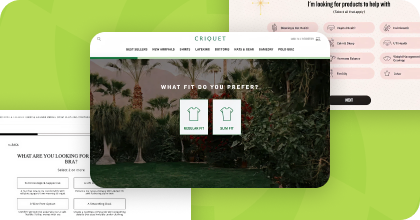
Build Your Own Product Quiz For Free Right Now
Simply give us your website URL and we will build you a completely on-brand product recommendation quiz for free.
Digital advertising costs continue to rise while attribution becomes harder to trust. Between signal loss, privacy changes, cookie deprecation, and increasingly fragmented customer journeys, many ecommerce brands are struggling to maintain efficient return on ad spend.
The result is a growing gap between media spend and measurable revenue performance. Brands are paying more to acquire traffic while getting less visibility into which campaigns, audiences, and customer interactions are actually driving conversions.
An ad spend optimization quiz helps close that gap by turning passive traffic into a more interactive, data-rich experience. Instead of sending visitors to a static landing page, the quiz guides users through questions about budget, channels, goals, performance challenges, and current strategy to surface more personalized recommendations and actionable next steps.
At the same time, the quiz acts as a lead qualification tool by capturing valuable zero-party data that can be used for segmentation, follow-up campaigns, and sales conversations. Whether a brand spends $5,000 or $100,000+ per month on advertising, this type of quiz can work across landing pages, paid social campaigns, email flows, and lead generation funnels.
The most effective ad spend optimization strategies rely on better targeting, stronger attribution visibility, and smarter allocation of budget toward the channels and campaigns driving the highest return. A quiz helps uncover those gaps while creating a more engaging experience for potential customers.
Here’s what an optimize ad spend quiz helps you improve:
An optimize ad spend quiz is an interactive quiz that assesses a brand’s current media mix, tracking setup, and funnel performance, then delivers personalized recommendations based on quiz responses. Unlike generic audits that spit out templated advice, this quiz uses conditional logic to adapt questions to each user’s answer—showing TikTok questions only to advertisers running TikTok ads, for example.
Quiz funnels are interactive tools that ask users a series of targeted questions and use their responses to guide them toward a specific outcome, creating a more personalized experience than traditional landing pages.
The typical flow works in five steps:
For a DTC skincare brand spending $30k/month on Meta and Google, the quiz might flag underused retargeting, poor creative testing cadence, and misconfigured GA4 purchase events. The quiz results become a roadmap, not a report card.
Static audit forms collect four fields, generate templated responses, and hit completion rates below 10%. Interactive quizzes flip that dynamic entirely.
Quiz funnels work because they shift the experience from passive to active, allowing marketers to ask their target audience directly what they want, which helps in personalizing messaging and driving conversions. When website visitors engage with interactive content rather than static content, they invest attention. That investment converts.
A well-designed lead generation quiz can significantly increase conversion rates, with some reports indicating a 743% increase when switching from a simple contact form to a multi-step quiz funnel. Quiz funnels gather zero-party data directly from users—voluntarily shared insights on budgets, pain points, and channel mix that no pixel can capture.
Interactive quizzes make complex advertising concepts easier to understand and engage with. Topics like multi-touch attribution, attribution windows, creative fatigue, audience overlap, and channel performance become much more approachable when presented through a guided question-and-answer experience instead of a static wall of information.
Rather than overwhelming visitors with jargon or technical explanations, quizzes break complicated topics into smaller, more conversational steps that help users self-identify challenges and uncover opportunities within their current strategy.
One performance agency replaced a standard four-field contact form with an interactive quiz and saw qualified lead volume increase by 48% within a single quarter.
The difference wasn’t just higher engagement. The quiz captured richer customer data around budget, goals, channels, and performance challenges, which made segmentation more accurate and follow-up conversations more relevant. Better lead qualification ultimately led to stronger close rates and more efficient sales conversations.
Using quiz funnels in marketing leads to higher completion and conversion rates compared to static landing pages, particularly for product recommendation quizzes and diagnostic assessments.
The best quiz for ad spend optimization covers distinct diagnostic areas, each functioning as a chapter in the quiz taker’s journey. These sections gather the quiz data needed to generate actionable insights rather than generic tips.
Core sections to include:
Design each section with conditional logic so advanced users see nuanced questions about Marketing Mix Modeling (MMM) or lift tests, while beginners stay on strategic fundamentals. One question per screen. Mobile-first. Tap-friendly buttons.
Map monthly ad spend across brackets: $0–$5k, $5k–$20k, $20k–$100k+. Then break down allocation by platform—Meta, Google, TikTok, YouTube, Pinterest, programmatic.
The 70/20/10 budget allocation model offers a proven framework: allocate 70% to proven channels, 20% to emerging opportunities, and 10% to experimental ideas.
Key questions to include:
Quiz results should benchmark allocation against typical ecommerce brands at similar scale. WordStream 2025 data shows Meta typically commands 50–70% of ecommerce budgets, Google 20–40%. If branded search falls below 10%, flag it—branded terms often deliver 3x ROAS lift over non-brand.
Quality Score ensures ads are high-quality, which can reduce costs in auction-based systems. Include a question probing whether users actively monitor and improve their Quality Scores.
Broken tracking means misallocated ad spend. A 2025 Stape.io survey found 80% of brands misconfigure GA4 purchase values post-iOS changes. Server-side tracking through CAPI recovers 15–35% of lost events.
Essential questions:
Conversion tracking is essential and should focus on high-value actions, not just clicks. Using UTM parameters helps track the performance of ads in analytics software—ask whether users apply them consistently.
Multi-Touch Attribution (MTA) models provide insights into all customer touchpoints before conversion, allowing marketers to allocate budgets more effectively based on performance. Lift testing, a form of A/B testing, compares the behavior of a group exposed to a campaign against a control group to measure the campaign’s impact. Marketing Mix Modeling (MMM) analyzes the effectiveness of various marketing strategies across different channels and touchpoints to optimize ad spend.
Score users on a “data readiness” scale. Those with broken tracking get foundational fixes. Advanced users get guidance on incrementality testing.
Creative fatigue is real. Ads lose 50% efficacy after two weeks without rotation. Yet most brands run the same assets for months.
Quiz questions should assess:
Classify quiz takers into maturity stages: “minimal testing,” “weekly iterations,” or “always-on creative lab.” Results should show how stronger creative testing typically lowers CPA by 10–30% without increasing total ad spend.
Focus questions on real formats: Meta Reels, TikTok Spark Ads, YouTube in-stream, responsive search ads. Match diagnostic depth to platform usage via conditional logic.
Where your ads send traffic matters just as much as the ads themselves. Many brands still direct paid traffic to generic homepages, category pages, or static product grids that force shoppers to figure everything out on their own.
Higher-performing campaigns often route visitors into a more guided experience, whether that’s a dedicated landing page, a multi-step form, or a personalized quiz funnel designed around product discovery and lead capture.
Interactive quizzes are especially effective for re-engaging visitors who show interest but aren’t ready to purchase immediately. For example, a skincare brand might use a quiz to recommend a personalized routine in exchange for an email address, turning anonymous ad traffic into known leads while collecting valuable zero-party data in the process.
That approach tends to outperform static landing experiences because the quiz creates engagement while helping shoppers narrow options and identify the right products faster.
Industry benchmarks consistently show stronger conversion performance from quiz-driven experiences. Many ecommerce brands report quiz landing pages converting 3–5x higher than traditional product grids because the experience feels more personalized, interactive, and relevant to the shopper.
Evaluate key elements:
Product recommendation quizzes transform passive browsers into engaged potential customers who reveal purchase intent through their answers.
A/B testing is the most widely used method for optimizing ad spend, with over 59% of companies employing it for Pay Per Click (PPC) ads. Yet most marketing teams test sporadically, if at all.
Quiz questions:
Calculate a “testing discipline score.” Low scorers get starter checklists. High scorers get advanced experiment frameworks.
Regular A/B testing on ad creatives, headlines, and landing pages is important for optimization. Example experiments: Test two hooks in a Meta campaign for 14 days with equal budget. Test two quiz intros on your landing page. Monthly A/B tests yield 15% ROAS gains according to VWO’s 2025 meta-analysis.
Regular budget reallocation from low-performing to high-performing channels improves ad spending efficiency. Smarter testing enables smarter reallocation.
The quiz experience must capture attention instantly. One question per screen. Full-width buttons. Progress bar showing “Question 4/10.” Clear promise: “Find hidden wasted spend in 5 minutes.”
To create a successful lead generation quiz, it is recommended to keep the quiz length between 5-10 questions, starting with easy questions to build momentum before asking more detailed ones. Cap total time under four minutes to maintain completion rates above 55%.
Mobile optimization is non-negotiable—65% of paid traffic comes from smartphones. Use simple visuals (icons, minimal charts) and plain-language explanations. Offer optional tooltips for advanced concepts like MMM or lift testing.
Design priorities:
Quiz tools and quiz builders like Typeform, Outgrow, and Digioh make this achievable without custom development. Create interactive experiences that feel premium and personalized.
The best quiz funnels utilize conditional logic to adapt in real time, changing the questions based on previous answers to create a more personalized experience for users.
Logic flows route quiz takers to relevant paths:
Personalized paths make the quiz feel tailored—not templated. High-intent leads stay engaged longer, improving capture rates at the email gate. Seamless integrations between quiz platforms and CRMs ensure this lead data flows automatically into nurture sequences.
Placement determines performance. Quiz funnels work differently at each funnel stage.
Top-of-funnel (TOF): Use the quiz as the primary CTA in Meta or LinkedIn ads. “Find your wasted ad spend in 3 minutes—free quiz.” This approach captures consumer interest early while qualifying leads by budget and pain point. Expect 15-25% opt-in rates versus 5% for generic “book a call” pages.
Mid-funnel: Retarget quiz abandoners with “Finish Your Audit” messaging. Serve ads to users who started but didn’t complete, recovering high-intent leads.
Email/SMS nurture: Deploy quizzes to existing lists for upsell diagnostics. “Are you under-investing in high-LTV cohorts?” This turns customer data into actionable segmentation.
Landing page hero: Make the quiz the centerpiece of dedicated pages—especially effective for agencies and B2B SaaS tools selling analytics, attribution, or media buying services.
A well-designed lead generation quiz is one of the easiest ways to capture leads and generate leads from new website visitors, as it offers value first before asking for contact information.
Place the lead form immediately before quiz results. Keep fields minimal: name, email, optional company size or ad budget. Explain the value exchange clearly: “Enter your email to receive your full audit report with prioritized fixes.”
Quiz responses enable automatic lead qualification. Higher budgets plus broken tracking plus strong intent signals equals hot lead—route directly to sales. Lower budgets with solid fundamentals get nurture sequences. Lead scoring happens automatically.
Add integrations to CRM and email tools so quiz outcomes trigger tailored flows. Example: Brands overspending on broad match search without negative keywords receive a sequence focused on search term management.
Maintain trust. Double opt-in where required. Privacy transparency builds confidence when collecting detailed marketing data from potential customers.
The quiz is only valuable if responses generate structured next steps. Generic tips waste everyone’s time.
Categorize quiz takers into distinct profiles based on answers:
Each profile receives a prioritized 30-60 day roadmap:
Aggregate quiz data also guides your own marketing strategy. If 62% of quiz takers lack creative testing discipline, create content addressing that gap. Valuable insights flow both directions.
Quiz outcomes must tie directly to performance indicators. Customer Acquisition Cost (CAC) ensures that the cost to acquire a customer does not exceed their value. Return on Ad Spend (ROAS) measures revenue generated per dollar spent. Monitoring the Media Efficiency Ratio (Total Revenue / Total Paid Media Spend) is crucial for assessing overall ad spending efficiency.
Click-Through Rate (CTR) and Conversion Rate identify which creatives and landing pages are most effective. Connect quiz findings to these metrics:
Key strategies for ad spend optimization include setting strict, data-driven bid caps, conducting frequent A/B testing on creatives, using retargeting, and adopting a 70/20/10 budget allocation model.
Advise tracking improvements first (consistent UTMs, unified naming conventions). Then progress to advanced tactics (multi-touch attribution, marketing mix modeling) for high-spend brands. The ultimate goal: every quiz drives concrete changes in how and where ad dollars deploy.
Different advertisers face different challenges. Conditional logic ensures each quiz taker sees relevant questions and receives applicable advice. The customer journey through the quiz should mirror their actual marketing reality.
Here’s how two common advertiser types experience an optimize ad spend quiz differently.
Starting situation: MER around 1.8, rising CAC, weak email capture, no interactive quizzes on-site. Most traffic lands on product pages with 2.5% conversion rate.
Quiz path highlights:
Quiz results recommend:
Starting situation: Mid-market SaaS with $40k/month ad spend, long sales cycle, lead gen focus using whitepaper and webinar offers. LinkedIn commands 60% of budget.
Quiz path highlights:
Quiz results recommend:
Both paths demonstrate how conditional logic and branching create relevant experiences. High converting quizzes meet users where they are—and show them exactly where to go.
An optimize ad spend quiz transforms passive audience members into engaged participants who reveal their challenges, budgets, and gaps. The quiz format creates interactive experiences that boost engagement, capture leads, and nurture leads through personalized recommendations—all while gathering the data needed to drive real results.
The formula works: smart conditional logic, mobile-first landing pages, and clear actionable insights tied to metrics like ROAS, CAC, and MER. Add quizzes to your funnel this week. Start with 8-10 focused questions covering budget allocation, tracking health, creative velocity, and funnel efficiency.
Interactive quizzes are quickly becoming a core part of how ecommerce brands and performance marketers optimize advertising and customer acquisition. As attribution becomes less reliable and customer journeys become more fragmented, brands need better ways to collect actionable customer data directly from users.
Quizzes help solve that problem by turning lead capture into a more engaging, personalized experience. Instead of relying on static forms and limited tracking signals, brands can gather richer zero-party data about customer preferences, goals, behaviors, and purchase intent through interactions that feel more conversational and useful.
That data leads to better segmentation, smarter targeting, stronger personalization, and ultimately more efficient ad spend over time.
The brands that understand their customers best will make better marketing decisions. Interactive quizzes are becoming one of the most effective ways to start collecting those insights directly from the source.
Don’t settle for siloed tools. With Digioh, you get one powerful platform for pop-ups, product quizzes, onsite identification, and more—everything you need to personalize every step of the customer journey. Identify more traffic. Collect more zero-party data. Turn insights into revenue.