May 28, 2026

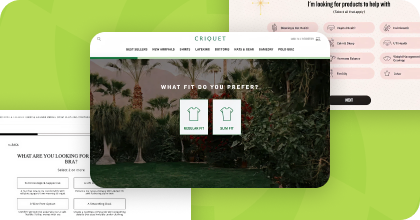
Build Your Own Product Quiz For Free Right Now
Simply give us your website URL and we will build you a completely on-brand product recommendation quiz for free.
For many ecommerce brands, cart abandonment is one of the biggest sources of lost revenue. That’s why more brands are using AI-powered quizzes and interactive product recommendation experiences to re-engage shoppers before they leave. By guiding customers toward products that better match their preferences and needs, quizzes create a more personalized shopping experience that can improve engagement, increase customer satisfaction, and drive higher conversion rates.
Brands like BedGear have already shown the impact quizzes can have on ecommerce performance, reporting a 490% increase in conversions after implementing a guided product recommendation experience.
As personalization expectations continue to rise, AI-driven and quiz-powered shopping experiences are quickly becoming a core part of modern ecommerce strategy.
AI-powered quizzes help ecommerce brands create more personalized shopping experiences while collecting valuable zero-party data directly from customers. With modern quiz builders, AI quiz generators, and customizable product recommendation flows, brands can launch interactive quizzes that integrate seamlessly with ecommerce and marketing platforms.
These quizzes help shoppers find the right products faster while giving brands deeper insight into customer preferences, behaviors, and purchase intent. The result is stronger personalization, more targeted marketing strategies, and higher engagement throughout the buying journey.
Many brands are also seeing measurable conversion gains from quiz-driven experiences, with some case studies reporting conversion rate increases of more than 300% after implementing personalized product quizzes.
One of the main reasons shoppers abandon their carts is unexpected costs or feeling prices are too high. When customers get to checkout and see shipping fees, taxes, or other charges they weren't expecting, they often leave without completing the purchase. AI quizzes can identify price sensitivity early in the customer journey and offer promotions or bundle options to address this concern.
Many shoppers abandon their carts because they aren’t confident they’re choosing the right product. This is especially common with complex or highly personalized categories like supplements, skincare, wellness, and technical products where too many choices can quickly create decision fatigue.
That’s where a guided product quiz becomes valuable. Interactive quizzes help simplify product discovery by guiding shoppers toward products that match their goals, preferences, and needs, making the buying process feel more personalized and less overwhelming.
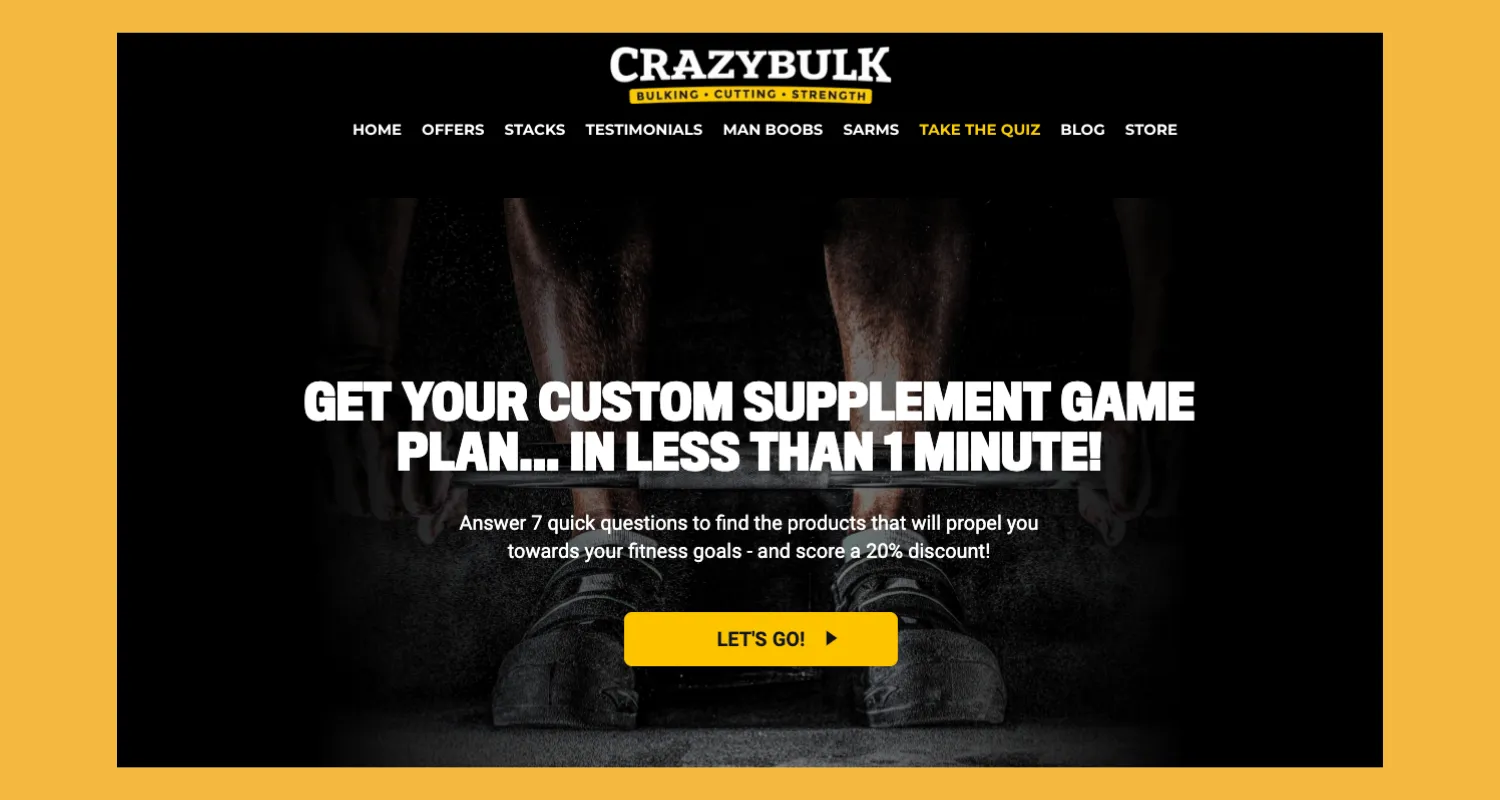
CrazyBulk saw this firsthand in the supplement space. Customers were overwhelmed by product choices and the site was converting at around 2%.
After launching a Digioh-powered product quiz built to function like a “digital personal trainer,” quiz takers went on to generate 7% of total company revenue by helping shoppers make more confident buying decisions.
Lengthy or complicated checkout experiences create friction that causes many shoppers to abandon before purchasing.
AI quizzes help reduce that friction by guiding customers toward the right products earlier in the journey, narrowing choices, and creating a more streamlined path to purchase. By using intelligent quiz logic and personalized recommendations, the buying experience feels faster, more relevant, and easier to complete.
Without a reason to buy now shoppers often defer decisions, intending to come back later – but many never do. AI quizzes can create urgency by offering limited time incentives based on quiz responses, prompting immediate action.
AI quizzes help ecommerce brands create more personalized shopping experiences while collecting valuable customer data that improves segmentation, targeting, and conversion performance. By guiding shoppers toward products that match their preferences, behaviors, and goals, quizzes reduce choice overload and make purchasing decisions easier.
These personalized experiences often lead to higher engagement, stronger customer satisfaction, increased average order value, and better long-term loyalty. Product recommendation and high converting quizzes also tend to significantly outperform standard browsing experiences, with quiz takers frequently converting at much higher rates than non-quiz visitors because the shopping journey feels more relevant and tailored to their needs.
AI quizzes help reduce the decision paralysis that often leads to cart abandonment by narrowing product choices based on customer preferences, goals, and behaviors.
By asking targeted questions and using personalized quiz logic, brands can present more relevant recommendations, build shopper confidence, and segment customers based on their responses for more effective follow-up marketing and personalization.
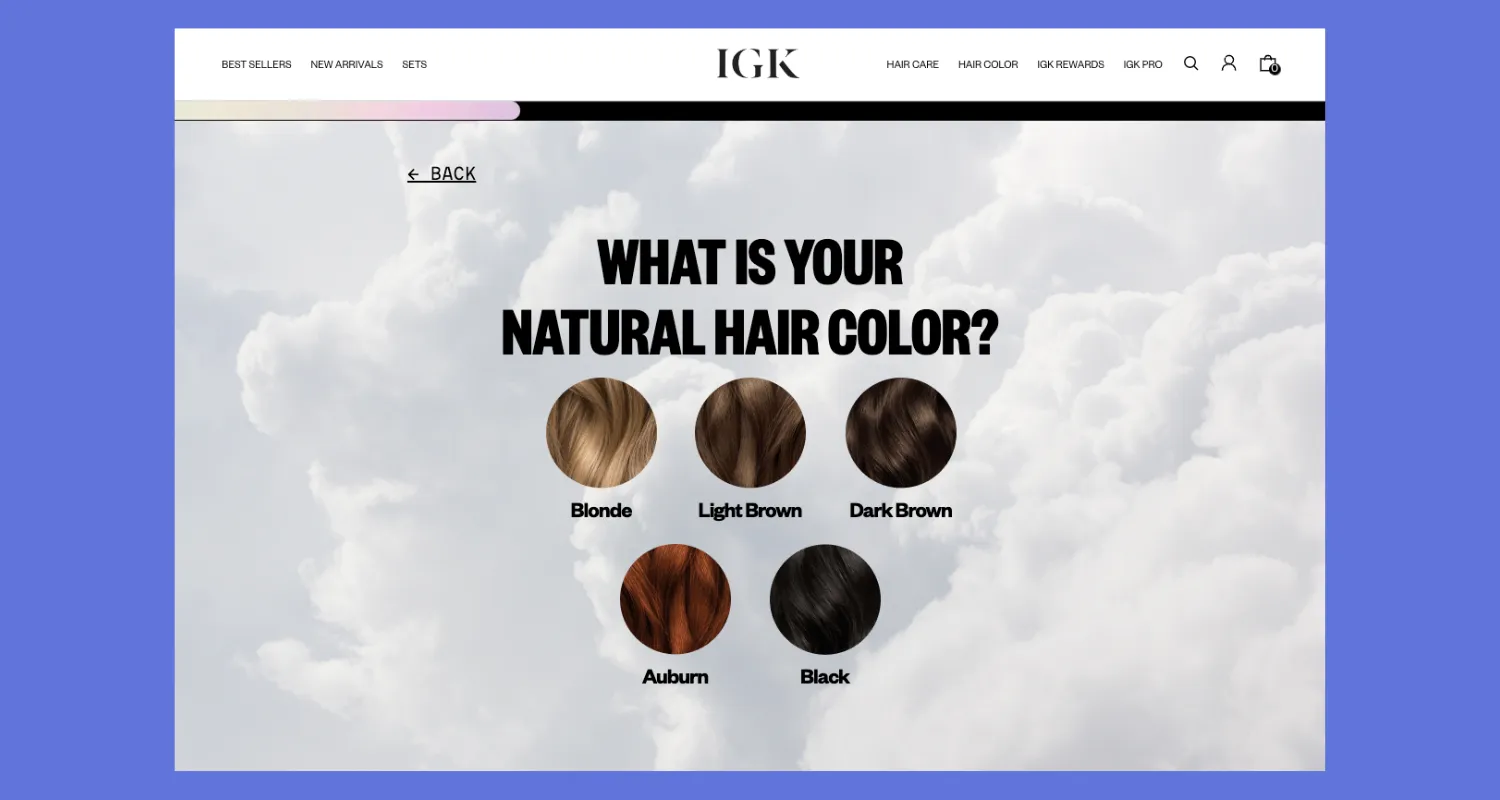
For example IGK Hair transformed their color selection process with a Digioh quiz builder that guides shoppers through a personalized journey based on their current hair color, past dye jobs and hair type. This led to a 30% increase in color sales and 19% increase in average order value (AOV). The quiz’s branching logic ensures customers get tailored recommendations that build confidence in their purchase decisions.
One of the most valuable AI features in product quizzes is the ability to identify and address buying objections before shoppers abandon the journey.
Through intelligent branching logic and adaptive follow-up questions, quizzes can detect concerns around price, product fit, goals, or hesitation in real time and respond with more relevant recommendations, education, or reassurance that keeps customers moving toward purchase.
When Whisker implemented its “Cat Parent Quiz,” they saw a 388% increase in conversion rates within 30 days. The quiz identified customer objections early and guided them to solutions, providing hyper-personalized results that increased average order value by 100%.
AI quizzes can analyze user responses to determine when a price-related incentive will convert a hesitant shopper. By using quiz responses for customer segmentation, brands can deliver more personalized offers, targeted messaging, and even customized pricing or incentives based on individual shopper needs, preferences, and purchase intent.
For example a fitness brand could use a quiz to ask about their customer’s fitness goals and offer personalized bundle options based on their responses.
Peak Wellness USA uses their sauna finder quiz to identify price sensitive customers and offer bundle options, resulting in a 37X return on investment (ROI). This personalized approach to discounting targets incentives only to those who need them, preserving margins while reducing abandonment.
Even if shoppers don’t convert immediately after taking a quiz, the information customers intentionally share enables powerful retargeting campaigns and lead generation.
By integrating quiz responses and syncing quiz data with email platforms, real time analytics, and other marketing tools, businesses can create highly personalized follow-up messages that speak directly to each customer’s unique needs and concerns. Syncing quiz data in real time is essential for stronger retargeting, personalization, lead generation, and customer segmentation across email, SMS, paid media, and onsite experiences.
For example, Andie Swim leveraged email segmentation to grow flow revenue by 55% with Klaviyo and Digioh
Andie Swim’s team worked with Digioh to create a new, 12-question Fit Finder quiz—and integrated Digioh with Klaviyo. Customer profiles are automatically tagged based on quiz responses and individual customer needs. Whether shoppers prefer one-pieces or two-pieces, high-cut or low-cut styles, brands can use that data to build more targeted segments and deliver more personalized marketing experiences.
Quizzes introduced early in the shopping journey help shoppers discover products that better match their customer needs while improving quiz completion and reducing the friction that often leads to abandonment.
These pre-purchase quizzes act as digital shopping assistants, asking questions about preferences, needs and personal attributes to recommend the perfect products. With intuitive drag and drop interfaces, building and customizing these quizzes is simple and requires no coding, making it easy to create dynamic, personalized experiences that drive engagement.
Andie Swim’s quiz is a great example of this. Their personalized quiz helped overcome the challenges of online swimwear shopping by guiding customers to styles that would work best for their body type and preferences. The result was a 296% increase in conversions and 96X ROI, showing how well designed pre-purchase quizzes can dramatically reduce cart abandonment by building purchase confidence.

Exit-intent quizzes trigger when a visitor shows signs of leaving the site without purchasing, giving brands one final opportunity to engage the shopper, capture lead information, and potentially recover the sale. When designed well, these experiences can also improve quiz completion by creating a more relevant, lower-friction interaction at a critical decision point in the customer journey.
Obvi uses this strategy with an exit-intent pop-up that prompts visitors to take their quiz before leaving. This has resulted in an 80% quiz completion rate (compared to 45% with their previous solution) and 102% increase in conversion rates for quiz takers. Even if visitors don’t buy immediately the captured data enables targeted follow up campaigns.

Bundling recommendations based on quiz responses can help justify price points by increasing the perceived value of a product recommendation. AI-powered drag and drop quizzes leverage the product catalog to suggest complementary products that enhance the customer’s primary selection, address price concerns and increase AOV.
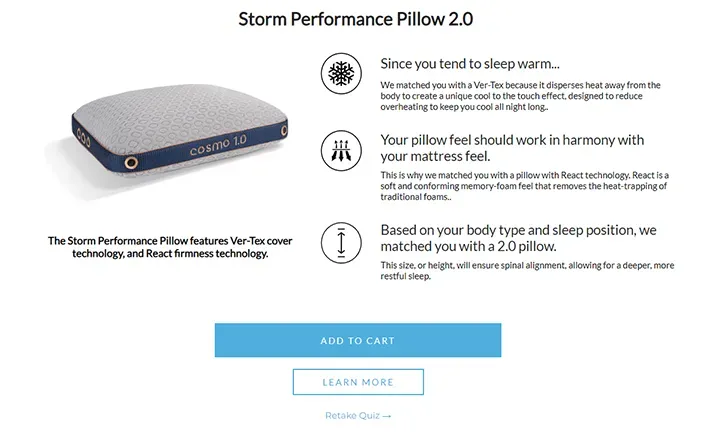
BedGear’s PillowID quiz is an example of this. By recommending complementary products based on sleep preferences they saw a 146% increase in conversions. The quiz creates logical product pairings that feel personalized, not pushy, so customers see the value in spending more.
When shoppers do abandon their carts, the data collected through AI quizzes enables highly targeted retargeting campaigns.
Integrating quiz data with marketing tools further enhances the effectiveness of these follow-up efforts by allowing seamless syncing with email marketing, advertising, and analytics platforms. By knowing exactly what the customer was looking for and why they might have hesitated, follow up communications can address specific concerns. And having a responsive support team can address any lingering concerns and encourage customers to complete their purchase.
Digioh is an AI quiz maker compatible with leading e-commerce platforms, allowing seamless integration with Shopify, WooCommerce, Magento, BigCommerce, and more. With no coding required, you can launch personalized product recommendation quizzes in just a few hours. Our platform offers:
The key metric to measure AI quiz success is the conversion rate improvement for quiz takers vs non-quiz takers. Successful implementations show significant uplifts, many Digioh customers see 100%+ increases in conversions. There may be a learning curve to implementing AI quizzes but the conversion rate improvement makes it worth it.
Quiz completion rates show how engaging and valuable customers find the experience. Higher completion rates correlate with better abandonment reduction as customers are finding the quiz helpful enough to finish.
Obvi saw a major increase in engagement after switching to Digioh, improving quiz completion rates from 45% to 80%—one of the highest completion rates in the industry. Higher engagement also translated into stronger conversion performance and increased average order value.
The long-term value of AI quizzes goes beyond immediate conversions to the revenue generated through retargeting campaigns based on the results page. By measuring the performance of these campaigns, businesses can see the full impact of their quiz investment.
AI-powered product quizzes help ecommerce brands reduce cart abandonment by personalizing product discovery, addressing objections in real time, and collecting valuable zero-party data throughout the shopping journey.
Product recommendation quizzes also help guide shoppers toward more relevant products and can increase conversions even further when paired with a strong results page that highlights a clear hero product.
The results from brands like BedGear (490% increase in CVR), Whisker (388% increase in CVR) and RANAVAT (294% increase in CVR) show that AI driven personalization is key to ecommerce success in today’s competitive landscape. AI also calculates the best moment to send recovery messages for each individual, maximizing engagement and improving recovery rates.
Ready to reduce cart abandonment and increase conversions with product recommendation quizzes? Book a demo with Digioh today to see how our next-gen quiz platform can transform your customer experience and drive real value.
Don’t settle for siloed tools. With Digioh, you get one powerful platform for pop-ups, product quizzes, onsite identification, and more—everything you need to personalize every step of the customer journey. Identify more traffic. Collect more zero-party data. Turn insights into revenue.