August 19, 2026
Learn how to optimize your free shipping threshold and promote it onsite with dynamic banners, cart abandonment pop-ups, and other conversion tactics.

Build Your Own Product Quiz For Free Right Now
Simply give us your website URL and we will build you a completely on-brand product recommendation quiz for free.
Few offers motivate online shoppers more than free shipping.
For online retailers, however, offering free shipping isn't always as simple as it sounds. While customers increasingly expect it, absorbing shipping costs on every order can quickly eat into profit margins, especially for brands with lower-priced products or higher fulfillment costs.
That's where a free shipping threshold comes in. By requiring customers to spend a minimum amount before qualifying for free shipping, ecommerce brands can encourage larger purchases while protecting profitability. When set strategically, a free shipping threshold can increase average order value (AOV), reduce cart abandonment caused by unexpected shipping costs, and improve overall conversion rates.
But what is a good free shipping threshold for ecommerce? And how do you calculate free shipping thresholds without sacrificing margins?
This guide explains how free shipping thresholds work, how to calculate the right free shipping threshold for your ecommerce store, and how to increase the number of qualifying orders with tactics like progress bars, banners, pop-ups, and personalized onsite messaging.

A free shipping threshold helps ecommerce brands balance customer satisfaction with profitability. With a free shipping policy, customers qualify for free shipping once they reach a minimum cart value, encouraging higher-value orders that help offset shipping costs. That creates a win-win: customers receive an incentive to spend more, while your business protects margins and generates larger orders.
When implemented strategically, a free shipping minimum can help you:
Choosing the right free shipping threshold is a balancing act. Set it too low, and shipping costs can eat into your profit margins. Set it too high, and customers may abandon their carts before reaching the minimum purchase amount.
While every ecommerce store is different, the goal is the same: choose a free shipping threshold that encourages customers to spend more while remaining profitable for your business.
A practical starting point is to set your free shipping threshold 20–30% above your typical order value. For example, if your average order is $50, consider testing a threshold between $60 and $65. If your average order value is $75, you might start by testing a threshold between $90 and $100.
Before choosing a threshold, review at least 12 months of order history. Shopify recommends looking at your median order value, since it reflects what a typical customer spends and isn't skewed by unusually large purchases. Comparing your median and average order values gives you a more complete picture of customer purchasing behavior before setting your threshold.
As you evaluate different threshold amounts, consider factors such as:
Once you've established a starting point, validate it through A/B testing.
Test different free shipping thresholds while monitoring metrics such as average order value, conversion rate, cart abandonment, revenue per visitor, and overall profitability. The goal isn't to find the highest threshold customers will tolerate; it's to identify the point where increased order values more than offset the cost of free shipping.
Setting the right free shipping threshold is only half the equation. Customers need to know the offer exists, and they should be reminded of it throughout their shopping journey.
The most effective ecommerce brands reinforce their free shipping threshold at key moments, making it easy for shoppers to understand how close they are to qualifying. Consistent, timely messaging can keep customers engaged, encourage them to add another item, and reduce cart abandonment before checkout.
Some of the most effective ways to promote your free shipping threshold include:
While many ecommerce platforms include basic promotional tools, dedicated onsite personalization platforms like Digioh give brands greater control over targeting, messaging, and testing.
For example, you can personalize free shipping offers based on visitor behavior, display dynamic progress bars as cart values change, recommend products that help shoppers qualify, and A/B test different messages to determine which approach drives the highest conversion rates and average order values.
A free shipping banner or announcement bar is one of the simplest ways to communicate your offer to every visitor. Positioned at the top of your website, it ensures shoppers know your free shipping threshold or minimum purchase requirement before they browse products or add items to their cart.

For evergreen promotions, keep the messaging short and clear, such as "Free shipping on orders over $75." If you're running a limited-time campaign, you can update the banner with promotional messaging or include a coupon code shoppers can apply at checkout.
To maximize effectiveness:
While announcement bars create awareness, they're even more effective when paired with dynamic messaging, such as cart progress bars or personalized recommendations, that remind shoppers how close they are to qualifying for free shipping.
While announcement bars keep your free shipping offer visible, a welcome pop-up or lightbox lets you highlight it the moment a visitor arrives. This can be especially effective for first-time shoppers who aren't yet familiar with your brand or shipping policies.

For example, a welcome pop-up might feature messaging such as "Free shipping on orders over $75" alongside a call to action encouraging visitors to start shopping. Making the offer clear from the beginning helps set expectations and gives shoppers a tangible incentive to add more to their cart.
Because pop-ups are more prominent than announcement bars, thoughtful targeting is essential. Rather than displaying the same message to every visitor, tailor your free shipping promotion based on factors such as:
You should also limit how frequently pop-ups appear. Showing a welcome message once per visitor, or suppressing it for returning customers who have already seen the offer, helps maintain a positive user experience while keeping the promotion effective.
Finally, make sure your pop-ups are optimized for every device. Responsive designs, mobile-specific layouts, and device targeting help ensure your free shipping message is easy to read and interact with, whether shoppers are browsing on desktop or mobile.
A static announcement bar tells shoppers you offer free shipping. A dynamic free shipping banner takes that experience a step further by showing each shopper exactly how close they are to qualifying.
For example, instead of displaying a generic message like "Free shipping on orders over $75," a shopper with $62 in their cart might see "You're only $13 away from free shipping." As they add or remove products, the message updates automatically in real time, giving customers a clear incentive to continue shopping.
This personalized approach helps reduce checkout friction and can increase average order value by encouraging shoppers to add one more item before completing their purchase. Once the minimum order amount is reached, the message can automatically switch to confirm that free shipping has been unlocked and prompt the customer to check out.

Dynamic free shipping banners automatically update as shoppers add products to their cart. Once the threshold is reached, the messaging changes to encourage checkout.
For brands using personalized promotions, dynamic banners can also display single-use coupon codes to specific customer segments, such as first-time visitors, loyalty members, or shoppers arriving from a particular campaign. Adding a click-to-copy button makes redeeming those offers even easier, creating a smoother checkout experience.

Platforms like Digioh make it easy to build and personalize dynamic free shipping banners, progress bars, and pop-ups without developer support. Because these experiences update in real time and can be targeted to specific audiences, brands can continuously test messaging, thresholds, and offers to maximize both conversion rates and average order value.
A free shipping threshold can increase average order value, but not every shopper will reach it. Some customers will happily add another item to qualify for free shipping, while others may hesitate when they realize they haven't met the minimum purchase amount.
That doesn't mean the sale is lost. With the right onsite messaging and personalization strategies, you can encourage shoppers to complete their purchase, increase their cart value, or present an alternative offer that keeps them from abandoning their cart altogether.
Here are several ways to reduce cart abandonment when customers fall short of your free shipping threshold.
Not every shopper will reach your free shipping threshold on their first visit. Some may leave because they're just a few dollars short, while others may need an extra incentive to complete their purchase.

An exit-intent pop-up gives you one last opportunity to keep them engaged before they leave your site. If a shopper attempts to exit with items in their cart, remind them how close they are to qualifying for free shipping and encourage them to continue shopping.
Depending on the customer's cart value and behavior, you can also personalize the message with:
Targeted exit-intent messaging helps recover otherwise abandoned carts and gives shoppers another reason to complete their purchase rather than leave empty-handed.
When shoppers are only a few dollars away from qualifying for free shipping, the biggest obstacle often isn't the shipping cost; it's deciding what else to buy.
Personalized product recommendations solve that problem by suggesting relevant items that complement what's already in the customer's cart. Rather than asking shoppers to continue browsing on their own, you can surface accessories, refills, bundles, or frequently purchased-together products that naturally help them reach the free shipping threshold.

For example, if a customer has a $62 cart and your free shipping threshold is $75, recommending a $15 accessory or complementary product makes it easy to qualify while increasing average order value.
Dynamic recommendations become even more effective when they're personalized using onsite behavior or cart contents. An exit-intent pop-up can display products related to the items already in the cart, while reminding shoppers exactly how much more they need to spend to unlock free shipping.

For stores with larger catalogs or highly personalized buying journeys, product recommendation quizzes offer another way to guide shoppers toward products they're likely to purchase. Because quizzes capture customer preferences and recommend products tailored to individual needs, they can increase confidence in purchasing decisions while creating additional opportunities to reach your free shipping threshold.
They also generate valuable zero-party data that can be used to personalize future onsite experiences and email marketing.
If your free shipping threshold is part of a limited-time promotion, countdown timers can create urgency and encourage shoppers to complete their purchase before the offer expires.
For example, you might pair a countdown timer with messaging like "Free shipping on orders over $75 ends tonight" or "Only 6 hours left to qualify for free shipping." When used honestly, this additional context helps shoppers understand that the promotion won't be available indefinitely.
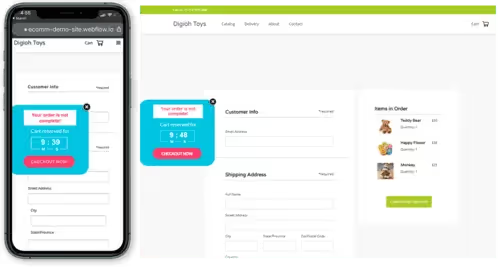
Countdown timers can be displayed in announcement bars, pop-ups, or exit-intent messages, keeping the offer visible throughout the shopping journey. They're particularly effective during seasonal promotions, holiday sales, product launches, and other campaigns with a genuine expiration date.
As with any onsite promotion, authenticity matters. Countdown timers should reflect real deadlines rather than artificial urgency, helping build customer trust while increasing conversions.
Not every shopper abandons their cart because of price or shipping costs. Sometimes they simply aren't ready to buy.
Giving customers the option to save their cart to their email makes it easy for them to pick up where they left off without having to restart their shopping journey. At the same time, it gives your brand permission to continue the conversation after they leave your site.

Digioh's Save Cart to Email feature captures a shopper's cart contents or browsing history and sends a personalized email with the products they viewed, making it easy to return to and complete the purchase later.
For ecommerce brands, this creates two valuable opportunities:
Once a shopper has joined your email list, you can continue to nurture them with personalized follow-up campaigns, such as cart reminders, limited-time free shipping offers, product recommendations, or replenishment emails. These targeted messages help recover sales that might otherwise be lost while creating additional opportunities to build long-term customer relationships.
A well-planned free shipping threshold can do more than reduce shipping costs; it can increase average order value, improve conversion rates, and encourage more shoppers to complete their purchases. The key is pairing the right threshold with onsite experiences that keep the offer visible and motivate customers to reach it.
Digioh helps ecommerce brands optimize every stage of that journey with dynamic free shipping banners, cart progress messaging, targeted pop-ups, personalized product recommendations, product recommendation quizzes, dynamic coupon codes, and other onsite personalization tools. Because every experience can be targeted, personalized, and A/B tested, brands can continuously refine their free shipping strategy to maximize revenue without sacrificing profitability.
If you're looking for a better way to convert more visitors into customers, explore Digioh's onsite personalization platform and see how personalized free-shipping experiences can help grow your ecommerce business.
Don’t settle for siloed tools. With Digioh, you get one powerful platform for pop-ups, product quizzes, onsite identification, and more—everything you need to personalize every step of the customer journey. Identify more traffic. Collect more zero-party data. Turn insights into revenue.