March 24, 2026
Build Your Own Product Quiz For Free Right Now
Simply give us your website URL and we will build you a completely on-brand product recommendation quiz for free.
Most ecommerce brands are running a couple onsite campaigns (think: a welcome pop-up and an exit-intent offer), but they often each one as a standalone tactic rather than part of a connected system.
The brands getting the strongest results from Digioh are doing something different. They're running five core campaign types together, each one serving a distinct role in the onsite experience, and each one feeding data into the next.
The campaigns themselves aren't complicated, and they’re all built with native Digioh features. The biggest advantage comes from how they work as a system. Here's what that looks like.
This is the foundation of most high-performing Digioh setups, and for good reason. A welcome offer pop-up shown to first-time visitors (a discount, free shipping, or another clear incentive) converts cold traffic into an owned audience you can market to for months.
That means more revenue from welcome flows, abandoned cart sequences, and long-term retention campaigns. The welcome offer is where that entire chain starts.
The brands that do this well keep the experience simple with one or two form fields and a clear incentive. But the format doesn't have to be a standard pop-up.
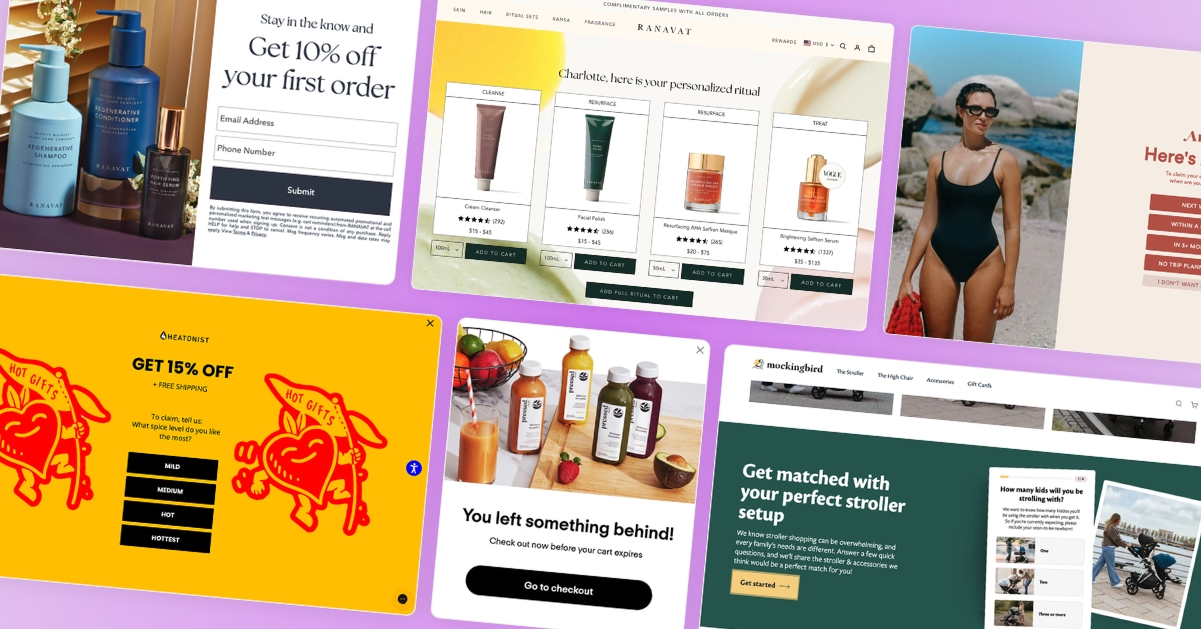
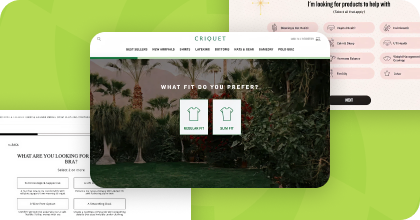
Some brands see strong results with gamified opt-ins like spin-to-win or slot machine-style experiences (Criquet Shirts runs a fun one) that make the sign-up moment feel more interactive. Whether gamification fits depends on your brand personality, but for the right audience it can meaningfully lift opt-in rates.
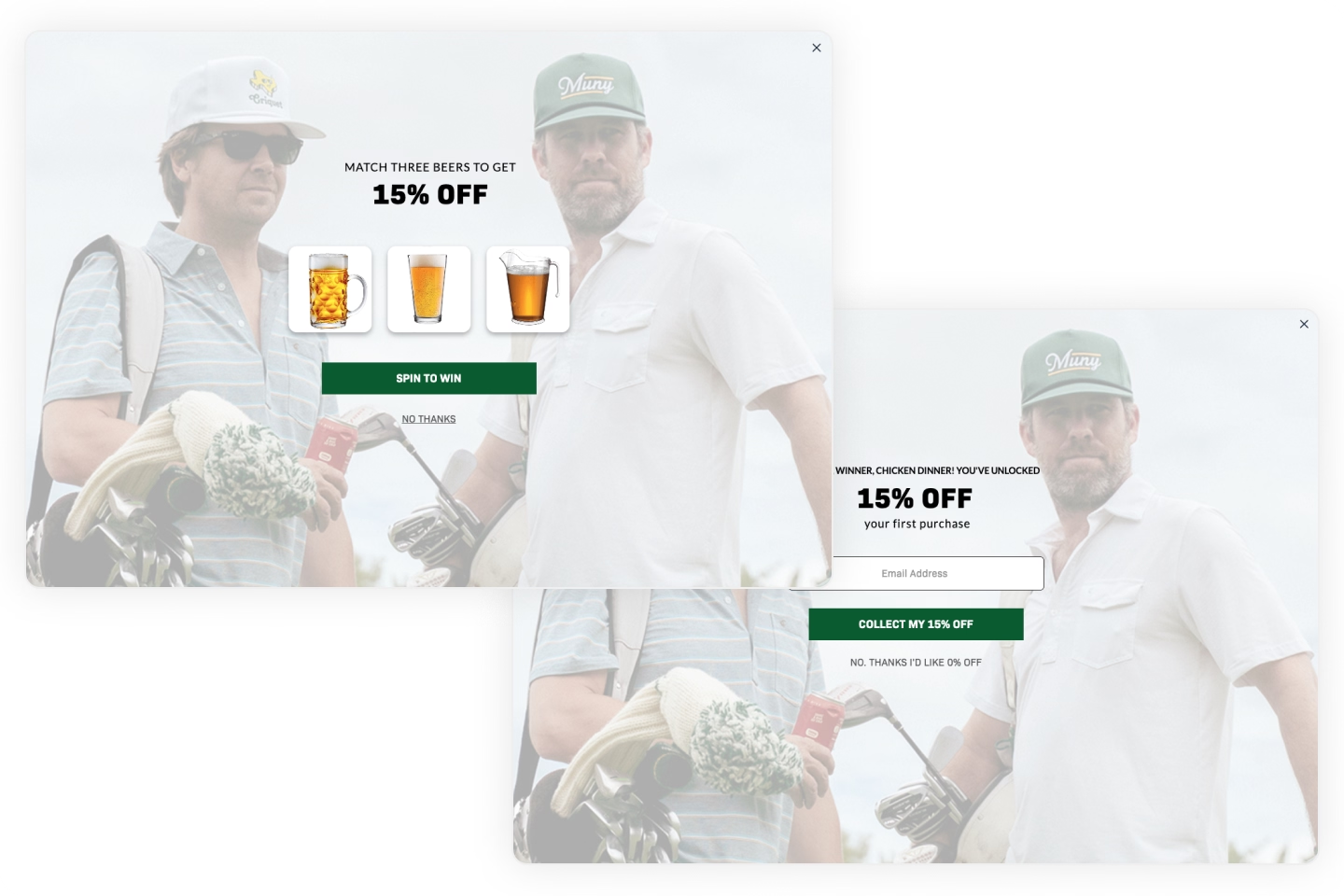
One detail that's easy to overlook but makes a real difference: Digioh Passport’s capabilities let you suppress the welcome offer for visitors who've already submitted it, even if they return on a different device or after their cookies have cleared. That means your most engaged shoppers aren't seeing a sign-up form they've already completed, and your opt-in data stays clean.
If the welcome offer starts the relationship, exit-intent is the recovery layer. It fires when a shopper is about to leave your site, catching the visitors who dismissed the initial pop-up, browsed without converting, or simply ran out of momentum.
But the best exit-intent strategies aren't one-size-fits-all. The experience should change based on what you already know about the shopper.
For an unknown visitor with something in their cart, the play is straightforward: offer a discount in exchange for their email. You're recovering both the potential sale and the lead. For an unknown visitor without a cart, the incentive might shift toward a softer offer or a reason to come back later.
Known shoppers need a completely different approach. You already have their email, so showing them a sign-up form is a wasted touchpoint. Instead, the exit experience can focus on what's most likely to keep them engaged: a cart reminder, a product they viewed, free shipping on their current order, or a nudge toward a quiz if they haven't taken one yet.
Pressed Juicery has a segmented exit strategy that adapts the experience based on shopper identity status and cart activity.
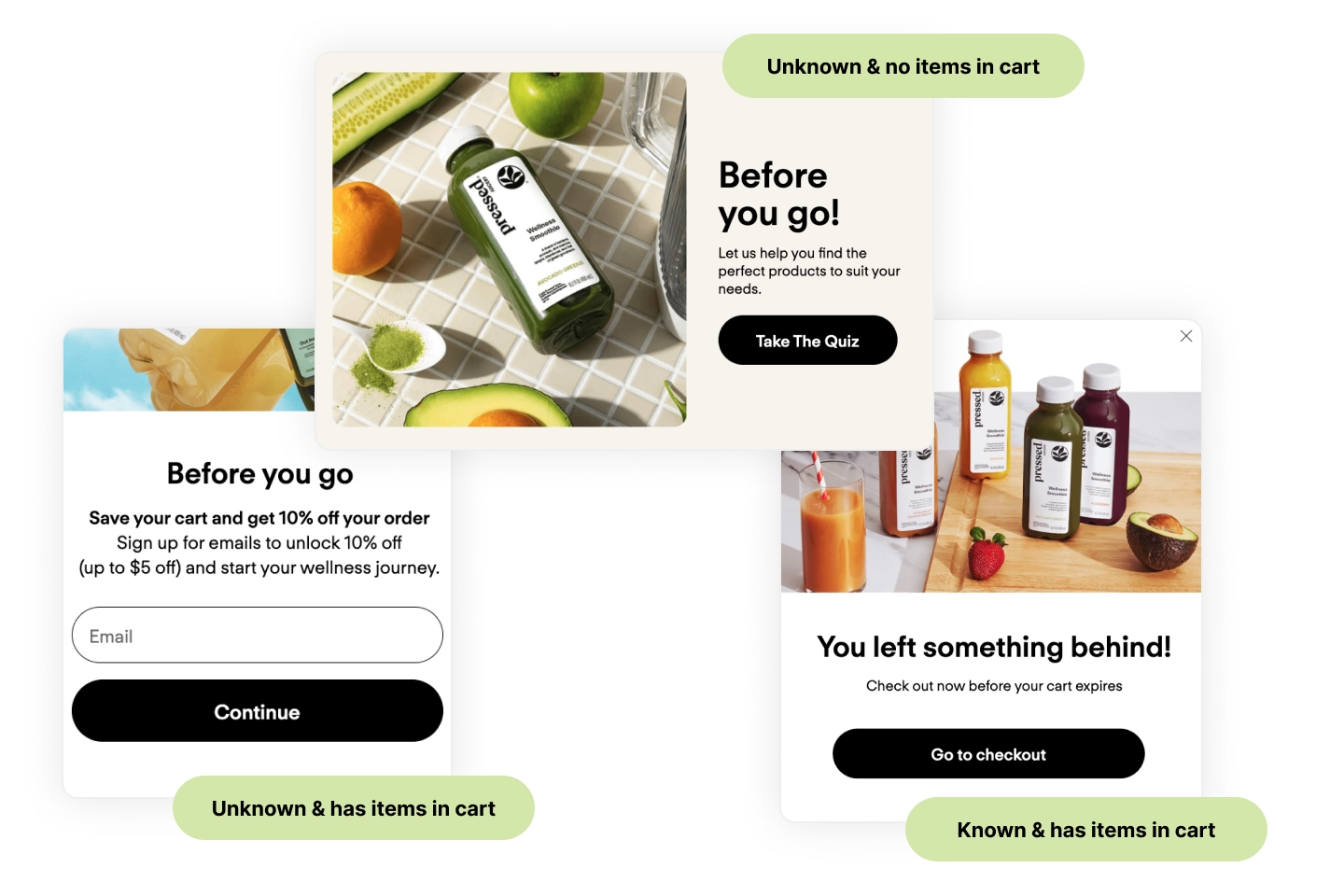
This is where Digioh's identification and targeting conditions work together. When you can distinguish between known and unknown visitors, and layer on behavioral signals like cart status, exit-intent stops being a generic last-ditch discount and starts functioning as a personalized recovery engine.
Your welcome offer and exit-intent campaigns capture leads. Your quiz tells you what those leads actually want.
This is consistently the highest-impact campaign brands add after their core pop-ups are running. A guided quiz asks a few questions, recommends products based on the answers, and generates the zero-party data that makes everything else in this playbook work harder.
The preference data shoppers share in a quiz (their skin type, fitness goals, who they're shopping for, what problem they're trying to solve) flows directly into the campaigns around it.
It's what allows your exit-intent offer to reference a product category instead of showing a generic discount. That same data makes your behavioral targeting smarter by layering intent on top of browsing behavior, and gives your ESP the segmentation depth to send lifecycle emails that feel super relevant.
The onsite conversion lift matters too. Shoppers who take a quiz tend to convert at higher rates and spend more per order, because they've been guided to a product that fits rather than left to browse and hope for the best.
RANAVAT saw a 33% increase in AOV from Digioh-powered campaigns after launching their "Find Your Royal Ritual" quiz, which helps shoppers navigate an Ayurvedic skincare line where the right routine is deeply personal. The quiz data also flows into Klaviyo to power segmented lifecycle content, so the value compounds well beyond that first purchase.

The key to making a quiz perform is visibility. It needs to live in your site navigation, on product pages, inside pop-ups, and in your email and SMS campaigns. A quiz buried on a page no one visits won't generate the volume of data or conversions it's capable of.
The first three campaigns in this stack capture visitors and collect data. Behavioral targeting is where you start using that information to personalize what shoppers see in real time.
Instead of showing every visitor the same experience, behavioral targeting campaigns adapt based on what a shopper is doing on your site and what you already know about them. The specifics matter here, so a few examples of what this looks like in practice:
Heatonist takes this approach seriously. Their cart abandonment pop-ups alone are tiered across three audiences: unknown shoppers see an intro offer, known-but-first-time buyers get a friendly nudge, and past purchasers get redirected into the flavor quiz funnel to find their next favorite sauce.
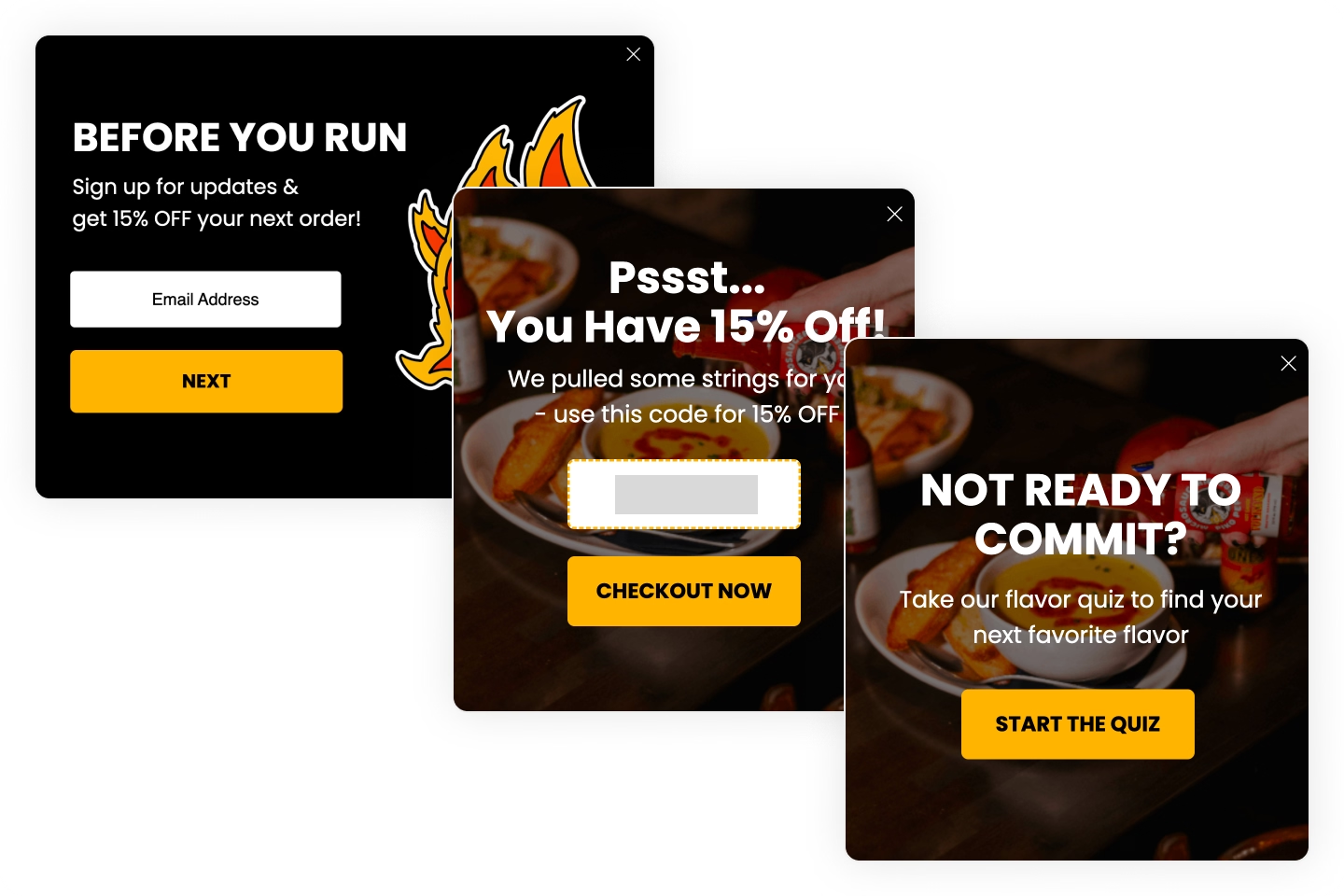
Each of these is a conversion opportunity that a static, one-size-fits-all pop-up would miss entirely. And none of them require custom code. Digioh's built-in conditions (page views, past visits, pages navigated, referrer data) let you build these scenarios by layering a few targeting rules together.
The more data you're collecting upstream through quizzes and multi-step pop-ups, the more precise these campaigns become. That's the compounding effect of running these five campaigns as a system rather than in isolation.
Every campaign above has a natural gap. Pop-ups often get closed on instinct. Exit-intent doesn't fire on mobile the same way (generally relies on idle time on page vs. exit actions). Quizzes require a click-through. Banners fill those gaps.
A persistent top or bottom banner stays visible without interrupting the shopping experience, and it catches the visitors your other campaigns missed: the mobile shoppers, the instinctive pop-up closers, the casual browsers who aren't ready for a full-screen takeover but might opt in through a less intrusive format.
Banners work well for newsletter sign-ups and promo reminders, but another valuable use case is making it a personalized touchpoint that adapts based on what you know about the visitor.
Mockingbird does this really well. If a shopper hasn't taken the stroller quiz yet, the banner invites them to start. After they complete it, the banner changes to let them know their recommended stroller setup has been saved, with a link to jump back to their results anytime.
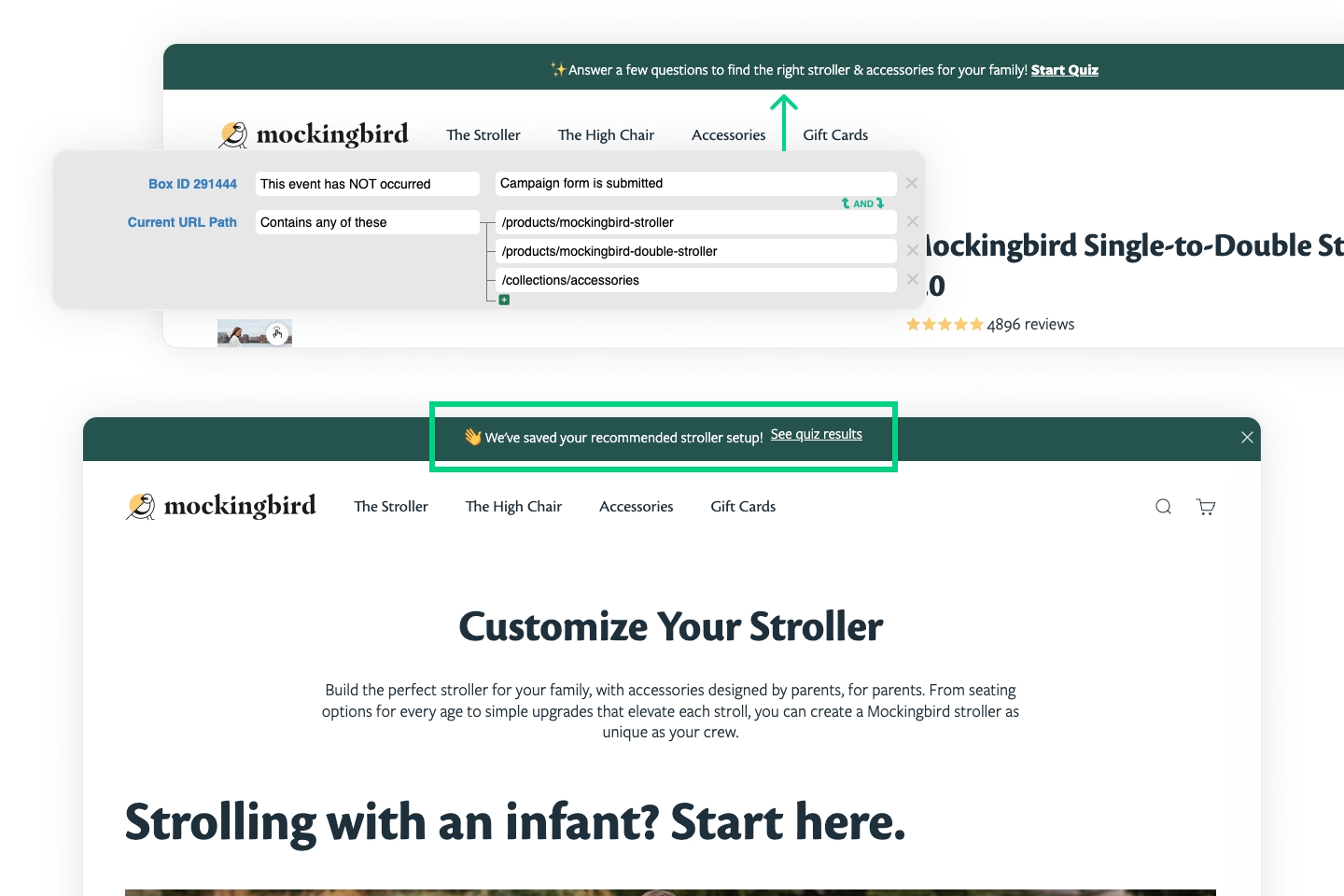
And because Digioh remembers the visitor across sessions, that personalized banner follows them on return visits too, making the path from quiz to cart frictionless without ever asking them to retake it.
That's the difference between a banner as a static sign-up form and a banner as an active part of a personalized onsite experience. The format is simple by design, but what it communicates can be as specific as your data allows.
Once the core five are in place, these two add-ons can sharpen your targeting and improve conversion rates further.
Different traffic sources carry different intent. A visitor arriving from a paid ad is in a different headspace than someone clicking through from an email. Matching your onsite messaging to the traffic source (stronger discount for paid, softer CTA for organic, skipping the sign-up form entirely for existing subscribers) makes the experience feel intentional rather than generic.
A multi-step pop-up turns a single touchpoint into a data collection opportunity. Instead of jumping straight to an email field, the first step can ask a question that's genuinely useful for personalization: what are you shopping for, what's your skin type, who are you buying for.
Andie Swim uses this approach and collects preference data upfront that feeds into their segmentation and product recommendation strategy. They ask questions like When are you off on a trip? What’s the most important thing you look for in new swimwear?
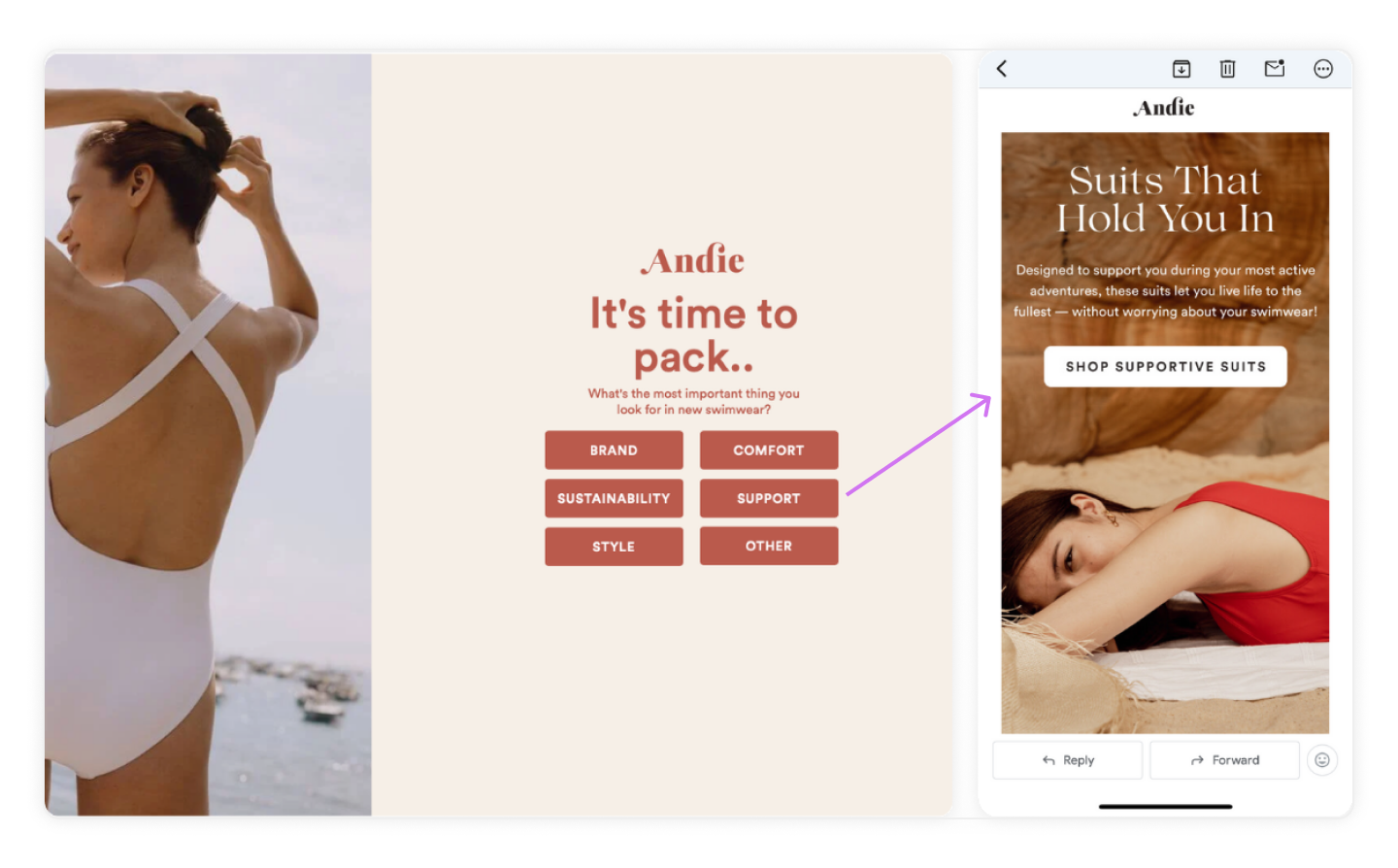
The format works because each step feels low-commitment on its own, which keeps shoppers moving through the flow. And even if someone drops off before completing every step, Digioh saves whatever they've already shared to their identity profile. So a visitor who answers your first question but bounces before entering their email still gives you data you can act on if they return or are identified later.
This also functions as a lightweight entry point into a quiz-style experience without requiring a full quiz build. If you want to test whether zero-party data collection resonates with your audience before investing in a dedicated quiz, a multi-step pop-up is a good place to start.
Across Digioh customers, the highest-performing setups tend to include the same five campaigns working together:
Not every brand needs all five on day one. Some of these will be a better fit depending on your product catalog, traffic volume, and marketing maturity.
What really ties these campaigns together is the identity layer underneath them. Digioh recognizes visitors across devices and sessions, even after cookies expire.
That’s what allows you to suppress a welcome offer for someone who’s already opted in (even if it was months ago), show a known shopper a different exit experience than an unknown one, and carry quiz data forward so a returning visitor picks up where they left off. The zero-party data collected in one campaign flows into your ESP and back into every other onsite experience. It's the connective tissue that makes five separate campaigns function as one system.
Once the baseline stack is running, you're no longer asking "what campaigns should I launch?" You start looking at which segments convert best after taking the quiz, where repeat visitors drop off, which traffic sources justify a stronger incentive, what new data points would make your lifecycle flows sharper.
That's the real unlock. Five campaigns give you a foundation. The data they generate together gives you a roadmap for what to optimize next.
If you're a Digioh customer, our team can walk through your account and help you identify the highest-impact next step. If you're still exploring, check out our interactive product tour to see how Digioh works.
Don’t settle for siloed tools. With Digioh, you get one powerful platform for pop-ups, product quizzes, onsite identification, and more—everything you need to personalize every step of the customer journey. Identify more traffic. Collect more zero-party data. Turn insights into revenue.