July 7, 2026
Boost your conversions by integrating onsite data with email and SMS engagement. Discover effective strategies to enhance your marketing efforts.

Build Your Own Product Quiz For Free Right Now
Simply give us your website URL and we will build you a completely on-brand product recommendation quiz for free.
Every interaction on your website adds another piece to the customer journey. Product views, searches, quiz responses, form submissions, and purchases all create valuable customer data. The challenge is that this data often ends up scattered across your marketing stack. Your website captures behavioral data, your email platform tracks email engagement, and your SMS tools manage text messages, but each system only sees part of the picture.
A single customer view brings all of that information together. By unifying onsite data with email and SMS engagement, marketers can build a customer profile that reflects how the same person interacts across every touchpoint. Instead of treating email, SMS, and onsite behavior as separate channels, brands can use unified data to create more relevant customer experiences, improve marketing campaigns, and drive more revenue.
This article shows how to build a single customer view using first-party data, why identity resolution matters, and how to activate unified customer data across your email and SMS marketing efforts. You'll also see practical examples of how that unified customer view helps marketers deliver the right message at the right moment without relying on third-party cookies.
A unified customer view helps you:
Before you can personalize email and SMS marketing, you need a complete picture of each customer. That starts by connecting onsite behavior with engagement data from your marketing channels, creating a customer profile that reflects every meaningful interaction. Here's what that looks like in practice.
Every visit to your website generates valuable first-party data. Customers browse products, search for specific items, complete quizzes, add products to their cart, start checkout, and sometimes leave before making a purchase. Each of those actions reveals something about their interests and intent.
The challenge is that this information rarely lives in one place.
On-site behavioral data often stays within analytics platforms, while email marketing platforms track opens and clicks, and SMS tools manage text-message engagement by phone number. Each platform sees only part of the customer journey, but none sees the full picture.
Imagine a shopper who browses several product pages, signs up for your email list, ignores a welcome email, and later clicks an SMS reminder before completing a purchase.
Without unified data, those interactions may appear to belong to different customers across your marketing stack. As a result, marketing teams miss opportunities to deliver more relevant messages, coordinate campaigns across channels, and better understand customer behavior.
Building a single customer view solves that problem by integrating anonymous browsing sessions, known customer information, email engagement, and SMS activity into a single customer profile.
Identity resolution gives marketers a unified view of how the same person moves through the customer journey. That foundation enables more personalized marketing campaigns, better coordination between email and SMS messaging, and stronger customer experiences at every stage.
Siloed data vs. a unified customer view
Siloed data:
Unified customer view:
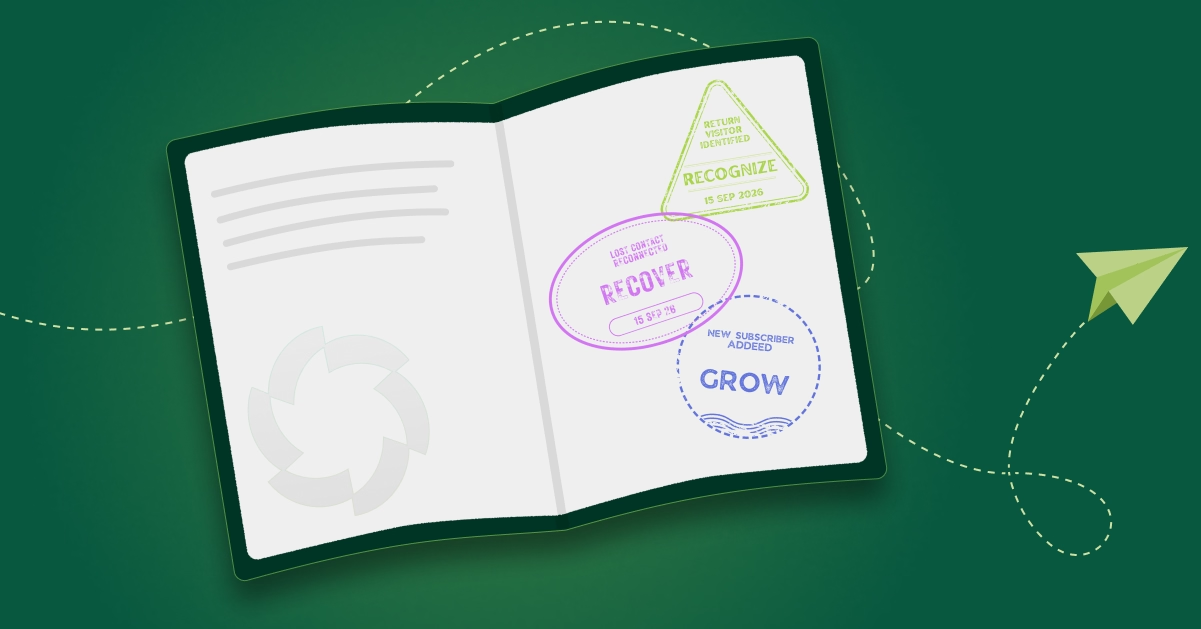
Identity resolution with Digioh Passport is the process of recognizing that multiple interactions belong to the same person. It connects identifiers such as cookies, device IDs, email addresses, and phone numbers into a single customer profile, giving marketers a complete view of the customer journey rather than isolated sessions.
Here's what that looks like in practice:
Email addresses and phone numbers remain the most reliable identifiers because they persist across devices and sessions. If a customer uses multiple email addresses, identity resolution helps detect and merge duplicate records, keeping all your customer data organized under a single customer profile.
Digioh automates much of this process by integrating on-site behavioral data with information from GA4, Shopify, Klaviyo, and existing customer data platforms. For brands already using a CDP, Digioh helps unify customer data across your marketing stack and continuously updates customer profiles in real time. As customers continue to interact with your brand, progressive profiling gradually adds more information to each profile without requiring lengthy forms or repeated requests for the same details.
Compliance note: Every brand must obtain its own explicit consent before sending promotional SMS messages. Identity resolution helps connect customer data, but it doesn't replace the consent requirements established under TCPA.
Not every customer interaction helps you identify a visitor.
The most valuable identity signals are the moments when someone voluntarily shares information that connects anonymous onsite behavior to a known customer profile. Prioritizing these touchpoints helps marketing teams build richer customer data and create more personalized experiences across email and SMS.
Some of the most important identity signals include:
Capturing the identifier is only part of the process.
It's equally important to record the context surrounding each interaction, including when it occurred, where the customer signed up, which communication channels they opted into, and the version of your privacy policy or consent language they accepted.
This metadata supports data security, compliance, and more accurate customer profiles over time.
Once you've connected customer identities, the next step is organizing that data so every interaction contributes to a single customer profile.
Customer data is most useful when it's organized around people, not channels. Bringing together website activity, email engagement, SMS interactions, and purchase history creates a more complete view of each customer.
Every customer profile should include three core components:
Consistency is just as important as the data itself. Standardize event names and properties across your marketing stack so every platform speaks the same language.
For example, choose a single naming convention for product views rather than mixing labels such as product_view, pdp_view, and view_product. Likewise, capture the same supporting details for each event, such as product ID, category, price, device type, session ID, and traffic source.
When onsite behavioral data, email engagement, and SMS activity all live within the same customer profile, marketing teams can build more accurate segments, trigger cross-channel campaigns, and deliver more personalized customer experiences based on a complete view of the customer journey.
Every onsite interaction should capture enough context to tell the complete story of what happened. The more consistent your event data is, the easier it becomes to build accurate customer profiles, understand customer behavior, and trigger email and SMS campaigns at the right moment.
For each onsite event, capture:
Capturing these fields consistently enables you to reconstruct the customer journey, understand customer behavior across sessions, and trigger more relevant email and SMS marketing campaigns.
With a unified customer view, marketing teams can personalize customer experiences, optimize send times, and deliver the right message through the right channel.
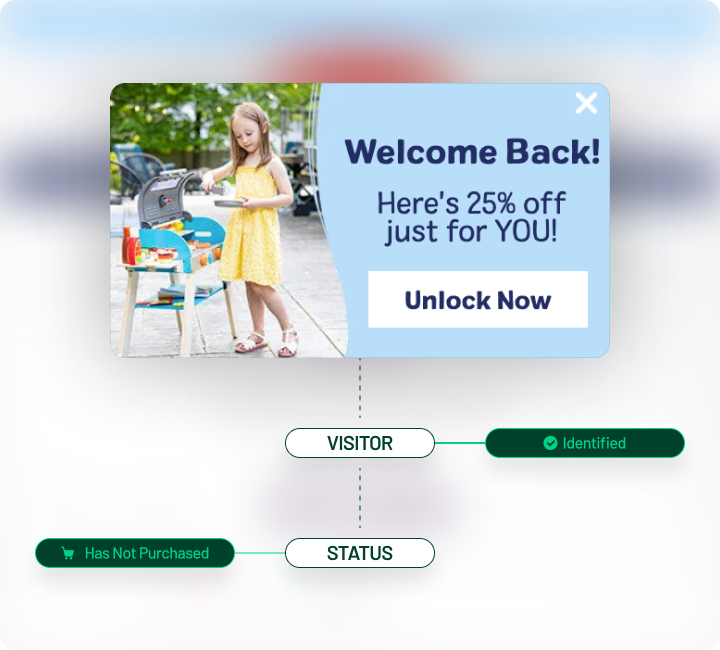
Collecting onsite behavioral data is only the first step. The real value comes from connecting that data with email engagement and SMS activity to create a complete timeline of every customer interaction.
A unified customer view connects website visits, email campaigns, and text messages into a single timeline.
Marketing teams can see what customers viewed before opening an email, whether an SMS message led to additional browsing, or how many touchpoints happened before a purchase. That complete view makes it easier to personalize customer experiences and deliver more relevant messages throughout the customer journey.
With real-time data flowing into a single customer profile, brands can:
A unified customer view helps marketing teams do two things: deliver more personalized experiences and measure performance across every channel.
By connecting email, SMS, and onsite behavior, you can better understand how customers move through the customer journey.
Industry benchmarks reinforce the value of a unified approach.
SMS typically generates a higher average click-through rate (18%) than email (2.5%), making it an effective channel for time-sensitive messages. At the same time, subscribers who receive both email and SMS are 2.4x more likely to make a purchase than those who engage with a single channel.
A unified customer view helps marketing teams understand how each channel contributes to the customer journey, enabling them to deliver the right message at the right moment.
A unified customer view gives marketers far more than a complete record of customer interactions. It also enables the creation of smarter audience segments based on real customer behavior rather than broad assumptions.
AI makes those insights even more actionable.
By analyzing data from sources such as GA4, Shopify, Klaviyo, and on-site customer interactions, tools like Digioh AI can identify opportunities to improve segmentation, personalization, and revenue performance. Rather than requiring marketers to sift through reports manually, Digioh AI surfaces high-impact recommendations, ranks them by potential business impact, and lets your team review and approve every change before it goes live.
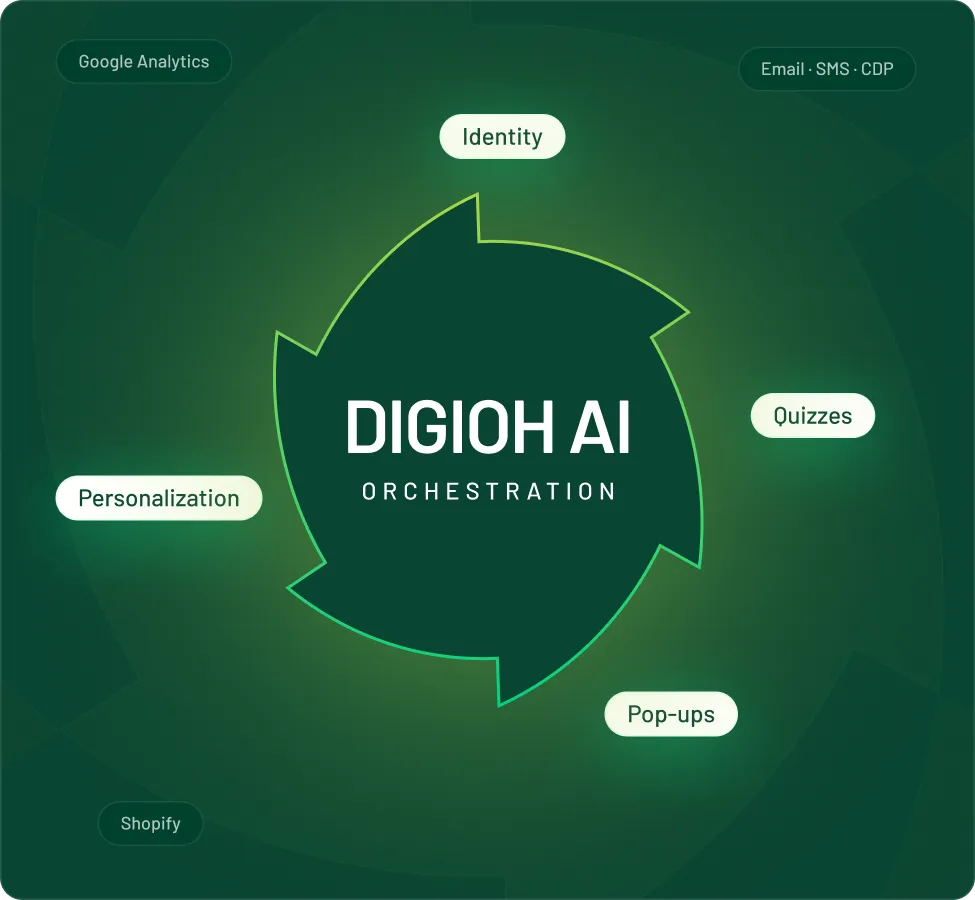
This approach helps marketing teams uncover opportunities they might otherwise miss while maintaining full control over how customer experiences are personalized.
Here are a few examples:
These segments help marketers build more personalized customer experiences across the entire customer journey. They can power cross-channel campaigns for replenishment reminders, early access to product launches, VIP access for loyal customers, and flash sales targeted to customers most likely to convert.
Behavioral data tells you what customers do. Zero-party data tells you why they do it.
While first-party data captures actions like product views, searches, and purchases, zero-party data comes directly from the customer. Quizzes, preference selectors, surveys, and sign-up forms allow shoppers to voluntarily share information about their interests, preferences, and purchase goals, giving marketers context they can't infer from browsing behavior alone.
For example:
When combined with onsite behavioral data, these insights create richer customer profiles and more personalized customer experiences without relying solely on discounts or promotional messages.
Preference centers extend that personalization even further. Customers can choose their preferred communication channels, whether that's email, SMS, or both, along with the types of messages they want to receive. Some may prefer SMS for flash sales, shipping updates, or other time-sensitive messages, while others prefer email for educational content, product recommendations, and new product launches.
Giving customers that level of control improves the experience for everyone. Research shows that 57% of consumers prefer to receive promotions across multiple channels, while 93% of SMS subscribers also subscribe to email. A unified customer view helps marketing teams honor those preferences, deliver the right message through the right channel, and build stronger customer engagement that leads to repeat purchases and higher lifetime value.
A unified customer view helps marketers choose the right communication channel for every interaction. Rather than treating email and SMS as separate marketing channels, you can use onsite behavior and engagement data to determine which channel is most likely to reach each customer at the right moment.
As customers move through the customer journey, every interaction provides another signal. Recent browsing activity, past email engagement, SMS clicks, purchase history, and communication preferences all help determine which message to send and when to send it.
A simple framework looks like this:
The goal isn't to choose one channel over the other.
It's to coordinate both so every message builds on the customer's most recent behavior. That creates more personalized customer experiences, improves customer engagement, and helps marketing teams increase conversion rates without overwhelming customers with duplicate messages.
Unified customer views enable your welcome journey to adapt based on each customer's actions after signing up.
Onsite behavior gives you the context to personalize follow-up messages and coordinate email and SMS campaigns instead of sending every new subscriber through the same sequence.
For example:
The most effective customer journeys aren't fixed. They adapt to customer behavior in real time, delivering the right message through the right channel based on each person's level of engagement. The result is a more personalized experience and a greater likelihood of conversion.

Browse and cart abandonment are some of the strongest opportunities to use unified customer data. By combining on-site behavior with email engagement and SMS activity, marketing teams can determine not only which message to send but also when to send it and through which channel.
A coordinated abandonment journey might look like this:
Customers are more likely to engage when every message reflects where they are in the customer journey.
Email works well for product details, reviews, and brand storytelling, while SMS is often the better choice for urgent reminders, flash sales, and other time-sensitive messages. Coordinating both channels creates a more seamless customer experience and helps improve conversion rates.
The customer journey doesn't end after a purchase. Every return visit, product view, and account login creates new opportunities to strengthen the relationship and encourage repeat purchases.
Unified customer data helps marketers personalize post-purchase communication based on what customers do after they buy.
Using onsite behavior to guide post-purchase journeys helps marketing teams deliver more relevant customer experiences, increase lifetime value, and build long-term loyalty. Instead of treating every customer the same after checkout, brands can continue personalizing every interaction based on real customer behavior.
A unified customer view only works if customers trust how their data is collected, stored, and used. As you bring onsite behavior, email engagement, SMS activity, and purchase history into a single customer profile, strong data governance becomes just as important as personalization.
Every unified customer profile should be built on a foundation of security and transparency. That includes:
Protecting customer data isn't just about compliance. It helps marketing teams maintain accurate customer profiles while giving customers confidence that their information is being handled responsibly.
Collecting consent should be as intentional as collecting customer data. Every opt-in should clearly communicate what customers are signing up for and give them control over how they hear from your brand.
A few best practices include:
Strong consent management improves compliance while helping marketing teams build healthier email and SMS programs with better engagement over time.
The value of a unified customer view becomes clear when brands use it to coordinate customer experiences across every touchpoint.
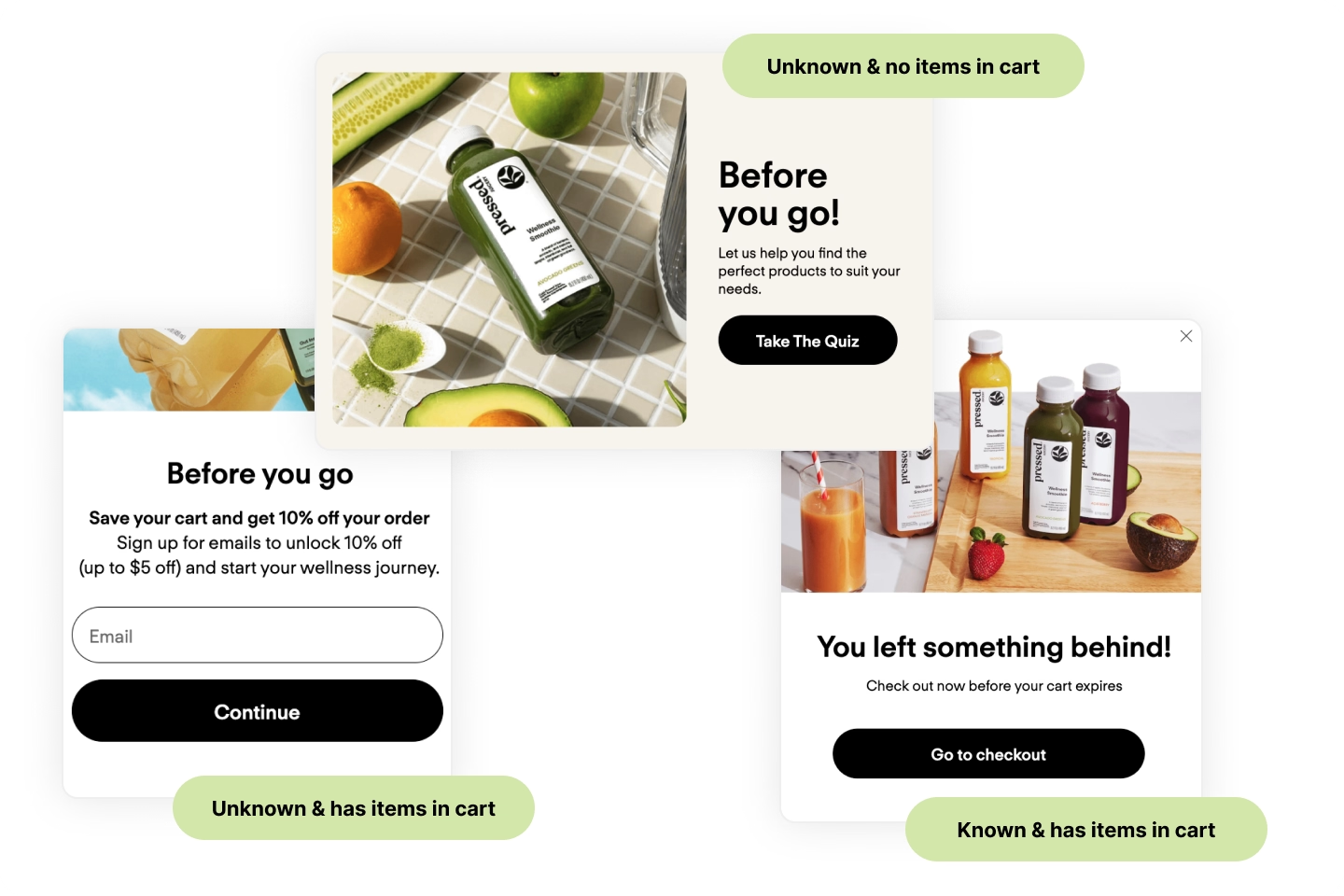
Pressed Juicery used Digioh's identification capabilities to recognize more shoppers, personalize onsite experiences, and activate unified customer data across its marketing channels.
Results included:
While every brand's results will differ, these examples highlight a consistent trend: connecting onsite behavior with email and SMS engagement helps marketers create more relevant customer experiences throughout the customer journey.
Industry research points in the same direction. Fifty-seven percent of consumers prefer coordinated messaging across multiple channels, and subscribers who engage with both email and SMS are 2.4 times more likely to make a purchase than those who engage with only one channel. A unified customer view gives marketing teams the data they need to coordinate those interactions more effectively.
Building a unified customer view doesn't happen overnight, but it also doesn't require rebuilding your entire marketing stack. Start with the customer data you already collect, connect it across your marketing channels, and expand from there.
A practical roadmap looks like this:
Start by understanding what customer data you're already collecting and where it lives.
Create a standardized framework for organizing customer data across your marketing stack.
Bring onsite data, email engagement, and SMS interactions together within a unified customer profile.
Start with one or two high-impact use cases before expanding to additional campaigns.
During your first few months, focus on building a reliable foundation. Successfully connecting customer identities, launching your first cross-channel journey, and measuring performance will provide more value than trying to automate every touchpoint at once.
Most brands already have plenty of customer data. The challenge is connecting it in a way that creates a complete picture of each customer.
When onsite behavior, email engagement, SMS activity, and customer preferences all contribute to the same profile, marketing teams can create more personalized customer experiences, coordinate campaigns across channels, and make better decisions throughout the customer journey.
The result is more relevant messaging, stronger customer engagement, and a marketing strategy built on connected data rather than disconnected systems.
Ready to connect your on-site data with your email and SMS marketing? Explore how Digioh helps brands build unified customer profiles that power more personalized customer journeys.
Don’t settle for siloed tools. With Digioh, you get one powerful platform for pop-ups, product quizzes, onsite identification, and more—everything you need to personalize every step of the customer journey. Identify more traffic. Collect more zero-party data. Turn insights into revenue.