July 6, 2026
Discover how persistent ID tracking enhances marketing strategies and improves customer targeting. Read on to optimize your marketing efforts effectively.


Build Your Own Product Quiz For Free Right Now
Simply give us your website URL and we will build you a completely on-brand product recommendation quiz for free.
If you're an ecommerce marketer, you've probably noticed that identifying website visitors isn't as straightforward as it used to be. Third-party cookies no longer provide the visibility they once did, making it harder to understand customer behavior, measure marketing performance, and reconnect with anonymous visitors across digital channels.
That doesn't mean visitor identification is going away. It just means the strategy has changed.
Today, customer data strategies are increasingly built on first-party data, persistent IDs, and identity resolution. Together, these technologies help businesses connect customer interactions across sessions, devices, and marketing channels while giving them greater control over customer data and supporting compliance with evolving privacy regulations.
In this guide, we'll explain how persistent ID tracking works, how it supports a cookieless future, and how ecommerce brands can create unified customer profiles that power better personalization, stronger customer engagement, and more accurate attribution.
For years, digital marketing relied heavily on third-party cookies to recognize visitors across the web. They made it possible to retarget shoppers after they left your site, measure campaign performance across multiple channels, and build detailed customer profiles based on browsing behavior.
That model has changed.
Over the last several years, browsers and regulators have introduced new privacy protections that limit how customer data can be collected and shared. Safari and Firefox began blocking third-party cookies years ago, and while Google Chrome ultimately changed course on fully eliminating them, the industry has already shifted toward privacy-first approaches built around first-party data and consent.
The result is that brands have far less visibility into anonymous visitors than they once did. Someone who browses your online store on their phone, returns later on a laptop, and eventually makes a purchase may appear as multiple users instead of a single customer. That makes it harder to understand the customer journey, deliver personalized experiences, and accurately measure which marketing efforts are driving revenue.
Here's how that shift unfolded:
2017–2020: Safari's Intelligent Tracking Prevention (ITP) progressively restricted third-party cookies and shortened the lifespan of many first-party cookies created through cross-site tracking.
2019: Firefox enabled Enhanced Tracking Protection by default, blocking many third-party trackers.
2025: Google Chrome abandoned its plan to fully deprecate third-party cookies, though many advertisers had already shifted to first-party strategies in anticipation.
The challenge isn't simply that third-party cookies became less effective. It's that marketers now need new ways to recognize visitors, connect customer interactions across different devices, and create a unified customer profile without relying on cross-site tracking.
That's why persistent IDs and identity resolution have become such important parts of the modern marketing stack.
By collecting first-party data through their own website, forms, quizzes, email signups, and other customer interactions, brands can create a more complete view of their customers while reducing their reliance on third-party cookies.

A persistent ID is a unique identifier that helps you recognize the same customer over time. Instead of treating every visit as a new session, it connects customer interactions across devices, channels, and multiple visits to build a more complete customer profile.
Think about how people actually shop today. A customer might discover your brand on Instagram during their lunch break, browse products on their phone, return later on a laptop to compare options, and finally complete a purchase after clicking a link in an email a few days later.
Without persistent visitor identification, those interactions can appear to be from four different users. With one, they become a single customer journey.
Unlike third-party cookies, which rely on tracking users across unrelated websites, persistent IDs are built on first-party customer data that your business collects directly. That might include an email address collected through a popup, a customer account, a loyalty program, or another authenticated identifier. Because the relationship is based on your own customer information, it's more reliable, easier to maintain, and better aligned with today's privacy expectations.
Persistent IDs also enable identity resolution. As new customer data is collected from your online store, email platform, mobile app, or CRM, those interactions can be linked to a unified customer profile rather than remaining scattered across separate systems.
For marketers, that creates a much clearer picture of customer behavior. Instead of making decisions based on isolated sessions, you can understand how individual customers discover products, engage with your brand, and move through the customer journey over time.
That unified view powers many of the experiences shoppers now expect, including:
It's important to note that persistent IDs are still considered personal data under regulations such as the GDPR and the CCPA. Brands should collect customer information transparently, obtain explicit consent where required, and clearly communicate how that data will be used.
Ultimately, persistent IDs aren't about tracking people around the internet. They're about helping brands better understand the customers who choose to engage with them.
Persistent ID tracking isn't a single technology. It's a process that connects customer interactions over time, allowing brands to build a more complete understanding of each visitor while relying on first-party data instead of third-party cookies.
Here's what that process typically looks like.
Every customer journey starts somewhere. A visitor might arrive through a paid ad, an email campaign, organic search, or a social media post.
At this stage, they're anonymous. You don't know who they are yet, but you can begin collecting first-party behavioral data, such as:
This information creates a picture of the visitor's behavior without requiring personally identifiable information.
The relationship changes when the visitor voluntarily provides identifying information.
That could happen when they:
At this point, your business can associate previously anonymous browsing activity with a known customer using a persistent identifier, such as a customer ID or hashed email address.
For many ecommerce brands, this identification occurs through interactive on-site experiences such as quizzes, popups, and forms. For example, a shopper might complete a skincare quiz to receive personalized product recommendations or submit their email for a first-purchase discount. Those interactions not only identify the visitor but also capture valuable first-party and zero-party data that can be used to personalize future marketing and create a more complete customer profile.
Once a persistent ID exists, identity resolution begins linking customer interactions from different systems into a single customer profile.
Identity resolution creates a unified view of each customer by combining information from sources such as:
This creates a unified view of the customer rather than leaving valuable data scattered across disconnected systems.
Some platforms rely primarily on deterministic matching, such as exact email addresses or customer IDs, while others supplement these connections with machine learning models and probabilistic matching to improve accuracy across multiple devices.
A unified customer profile isn't static. Every interaction helps build a more complete picture of the customer over time.
As shoppers browse new products, make purchases, engage with emails, update their preferences, or return to your site, new customer data is added to their profile.
For many brands, that profile also grows through zero-party data collected during the shopping experience. Quiz responses, product preferences, style selections, wellness goals, or skin concerns can all be added to a customer's profile, giving marketers richer insights than browsing behavior alone.
For instance, skincare brand Ranavat uses a personalized skincare quiz to capture information about concerns, routines, and product preferences, helping build richer customer profiles while guiding shoppers to products that best fit their needs.
Marketers gain a more complete view of customer behavior across touchpoints and throughout the customer journey, rather than seeing each interaction as an isolated session.
That deeper understanding makes it easier to deliver personalized recommendations, build more relevant audience segments, and create marketing experiences that reflect what customers have actually shared about themselves.
The real value of persistent IDs isn't simply recognizing returning visitors. It's using that information to create better customer experiences.
With a unified customer profile, brands can:
Brands are already putting this approach into practice.
For example, women's health brand Bonafide used Digioh to capture richer first-party and zero-party data through personalized onsite experiences. By turning anonymous visitors into known customers and activating that data across the customer journey, the brand achieved a 469% increase in onsite conversion rates, with Digioh experiences driving 6.64% of total online revenue.
Owning first-party customer data allows brands to create more relevant interactions throughout the customer lifecycle while reducing their reliance on third-party cookies.
Here's what persistent ID tracking looks like in practice.
Imagine a shopper clicks on a paid social ad promoting a new fitness supplement. They land on your online store, browse a few products, and leave without making a purchase.
At this point, they're still anonymous. You don't know who they are, but you can begin collecting first-party behavioral data, including:
That information helps you understand how visitors engage with your site, but it isn't yet connected to a customer profile.
Everything changes when the visitor chooses to share their information.
Maybe they:

Supplement brand CrazyBulk uses a product recommendation quiz to collect information about shoppers' fitness goals and desired outcomes. Once a visitor submits the quiz, that zero-party data can be linked to their browsing activity, transforming an anonymous visitor into a known customer with a richer profile for future personalization.
Once they provide an email address or another trusted identifier, you can associate their previous browsing activity with a persistent ID. Instead of treating those interactions as anonymous sessions, they're incorporated into a single customer profile.
This is where first-party data becomes significantly more valuable.
Now imagine that same shopper returns a few days later from a different device.
Without identity resolution, those visits may appear to belong to two different users.
With a persistent ID, both sessions can be connected to the same customer profile, giving marketers a much clearer picture of the customer's journey—from their first visit through purchase and beyond.
With a unified customer view, you can understand:
That unified view leads to more accurate attribution and smarter marketing decisions.
Recognition is what makes personalization possible. Once a shopper is recognized, brands can respond with experiences that reflect what they already know about that customer.
Because brands recognize returning shoppers, they can deliver more relevant interactions across the customer journey, including:
For shoppers, that means less friction and more relevant experiences.
For marketers, it means building stronger customer relationships by using first-party data they own rather than relying on third-party cookies, which were never designed to last.
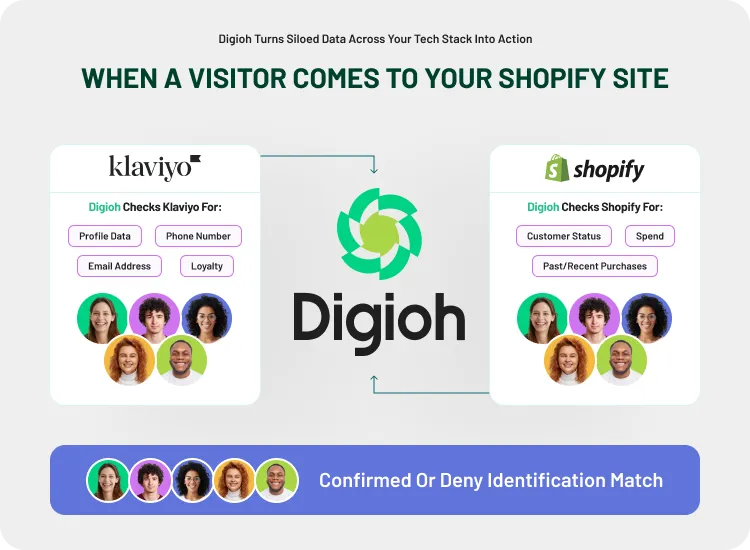
"Cookieless" doesn't mean customer recognition disappears. It means brands have to rely on customer data they collect directly rather than information gathered by third-party data.
For ecommerce brands, that starts with a strong first-party data strategy.
Customer information is collected directly through a brand's digital channels, including website visits, account creation, quizzes, email signups, purchases, preference centers, and other interactions in which customers voluntarily engage.
Those first-party relationships create a foundation for personalization that's more durable, more accurate, and better aligned with today's privacy expectations.
Here are some of the most common approaches.
Traditional browser-based tracking relies on scripts that can be blocked by browsers, ad blockers, or changes to privacy settings.
Server-side tracking shifts much of that data collection to your own infrastructure, enabling important customer events, such as purchases, account creation, and form submissions, to be shared directly with analytics and advertising platforms.
The result is a more reliable measurement and a more complete picture of customer behavior.
First-party cookies still play an important role.
Unlike third-party cookies, they're created by your own website and help remember information such as login status, shopping carts, language preferences, and session activity. They also help reconnect returning visitors within your own domain, making them an important part of a broader first-party data strategy.
Cookies alone can't create a unified customer profile.
Identity resolution brings together customer information from multiple sources, including ecommerce platforms, CRM systems, email providers, loyalty programs, and mobile apps, to link interactions to the same customer.
A unified customer view helps marketers understand behavior across channels and devices without piecing together disconnected data points.
Modern measurement strategies are increasingly built around first-party identifiers and server-to-server integrations rather than third-party cookies.
Solutions like Meta Conversions API and Google Enhanced Conversions allow brands to improve attribution using consented customer information while reducing reliance on browser-based tracking.
Some businesses have explored techniques such as device fingerprinting to replace third-party cookies, but these approaches raise significant privacy concerns and continue to face heightened scrutiny from browsers and regulators.
The most effective customer data strategies begin with first-party relationships. When customers understand the value they're receiving and choose to share their information, brands gain better data, stronger customer profiles, and a more sustainable foundation for personalization.
Technology is only part of the equation. Persistent IDs are most valuable when they're supported by a thoughtful first-party data strategy.
The goal isn't to collect as much customer data as possible. It's about collecting the right information at the right moments and using it to create better customer experiences. Here's where to start.
Before collecting additional customer data, identify what you're trying to improve.
For example, you might want to:
Clear objectives help determine which data points are actually worth collecting.
Every interaction is an opportunity to learn more about your customers. Some of the most valuable first-party and zero-party data comes from everyday interactions like:
Customer relationships develop over time, and your data collection strategy should too. As customers see value in the experience, they're often more willing to share preferences that improve recommendations, speed up shopping, and personalize future offers.
As your business grows, customer information often ends up spread across multiple systems.
Your ecommerce platform, email provider, CRM, customer support software, loyalty platform, and analytics tools may all contain pieces of the same customer's story. Bringing those data sources together creates a more complete customer profile and helps eliminate the data silos that make personalization and attribution more difficult.
For many brands, a customer data platform serves as the central hub for identity resolution and unified customer profiles.
A unified customer profile is only as valuable as the data behind it.
Regularly review your customer information for duplicate records, outdated contact information, and inconsistent naming conventions. Clean, well-organized data leads to more accurate reporting, stronger segmentation, and better personalization across every channel.
Customers are increasingly thoughtful about the information they share. Be transparent about what you're collecting, explain how it improves their experience, and give customers meaningful control over their preferences.
Customers are far more likely to share their information when there's a clear benefit in return. Better recommendations, a faster checkout, or a more personalized shopping experience all create reasons to engage.
Privacy has become an important part of the customer experience. People want to know what information is being collected, why it's being collected, and how it will improve their experience with your brand.
For marketers, that means treating transparency as more than a compliance requirement. It's an opportunity to build trust from the very first interaction.
When asking customers to share information, be upfront about how it will be used.
Whether someone is signing up for your email list, completing a personalized recommendation quiz, or creating an account, explain what they'll receive in return. Clear expectations help customers make informed decisions and support compliance with privacy regulations like GDPR and CCPA.
Customers should be able to manage their preferences without friction.
That includes making it easy to:
Giving target customers control over their information builds confidence and helps strengthen long-term relationships.
Collecting customer data also means protecting it.
Brands should use appropriate security measures, limit access to sensitive information, and establish clear retention policies for customer data. Keeping only the information you need and removing data you no longer use helps reduce risk while supporting privacy compliance.
Customers are more willing to share information when they understand the value they'll receive in return.
Whether that's personalized product recommendations, faster checkout, or content that's more relevant to their interests, a clear value exchange encourages stronger engagement and leads to more accurate first-party data over time.
Rather than viewing privacy as an obstacle to personalization, successful brands treat it as the foundation for better customer relationships.
Moving to a first-party data strategy doesn't have to happen all at once. For most brands, it's an incremental process of improving how customer data is collected, connected, and activated.
Here's a practical roadmap to get started.
Start by understanding what customer data you're already collecting.
Ask questions like:
Understanding your current state makes it easier to identify opportunities for improvement.
Many visitors leave an online store without ever creating an account or making a purchase.
Look for opportunities to encourage visitors to identify themselves before they leave by offering valuable experiences, such as:
Digioh combines these experiences into interactive onsite campaigns that help brands identify visitors earlier in the customer journey while collecting first-party and zero-party data that can be activated across email, SMS, advertising, and personalization platforms.
The earlier a visitor chooses to identify themselves, the more complete their customer journey becomes.
Once customer information is collected, it should be available across the tools your team already uses.
Whether you're using a customer data platform, CRM, ecommerce platform, or email marketing solution, bringing customer data together creates a more complete customer profile and reduces the data silos that make personalization more difficult.
Collecting customer data is only the beginning. Unified customer profiles help marketers gain valuable insights and put that information to work across different segments of the customer journey. You can use them to:
The goal is to create experiences that feel more relevant rather than simply collecting more information.
Customer needs and expectations, privacy regulations, and marketing technology will continue to evolve.
Regularly review your data collection strategy, monitor the quality of your customer profiles, and identify opportunities to create more valuable customer experiences by leveraging first-party data across channels.
Brands that continue investing in customer recognition today will be in a stronger position to personalize experiences, improve attribution, and adapt to whatever comes next.
The shift away from third-party cookies has changed how brands identify and engage customers, but it hasn't changed what matters most: understanding the people who choose to interact with your business.
A strong first-party data strategy gives marketers a more reliable way to connect customer interactions, understand behavior across channels, and build a full picture of each customer. Persistent IDs and identity resolution make that possible by connecting data from various touchpoints, helping brands recognize the same customer over time and deliver cookieless personalization across every stage of the customer journey.
Whether someone returns from a different browser or another user's device, those interactions can still contribute to a more complete customer profile.
As privacy expectations continue to evolve, brands that invest in transparent data collection, unified customer profiles, and meaningful customer experiences will be better positioned to adapt. The goal isn't simply to replace third-party cookies. It's about building stronger customer relationships with first-party data your business owns and that your customers have chosen to share.
Ready to Build a Stronger First-Party Data Strategy?
The shift away from third-party cookies doesn't have to mean losing visibility into your customers. With the right tools, you can identify more visitors, build unified customer profiles, and deliver personalized experiences using first-party data your business owns.
Book a demo to learn how Digioh helps brands build a stronger first-party data strategy.
Yes. First-party cookies remain an important part of a first-party data strategy because they help remember returning visitors, maintain shopping carts, and preserve login sessions within your own website.
What's changed is the role of third-party cookies. Since they can no longer be relied on for cross-site tracking, brands are turning to first-party data, persistent IDs, and identity resolution to recognize customers and build more complete customer profiles.
Not for most businesses.
While device fingerprinting attempts to recognize users based on characteristics of their browser or user's device, it's increasingly restricted by browsers and raises significant privacy concerns. A stronger long-term approach is to collect first-party and zero-party data with customer consent and use persistent IDs to connect customer interactions over time.
Identity resolution can be highly accurate when built on trusted first-party identifiers such as email addresses, customer accounts, or phone numbers.
Some platforms also use machine learning and probabilistic matching to connect customer interactions across multiple devices, but deterministic identifiers generally provide the most reliable results. Combining both approaches helps brands create a more complete and unified customer profile.
Not necessarily.
A customer data platform can make it easier to unify customer information from multiple systems and create a single customer profile, but it's not the only way to implement persistent ID tracking. The most important step is collecting high-quality first-party data and connecting it across the tools your business already uses.
Retention policies should reflect your business needs while complying with applicable user privacy regulations.
A strong data governance strategy includes clear retention guidelines, regular reviews of stored information, and the removal of customer data that's no longer needed. Keeping data current improves quality, supports compliance, and reduces unnecessary risk.
Don’t settle for siloed tools. With Digioh, you get one powerful platform for pop-ups, product quizzes, onsite identification, and more—everything you need to personalize every step of the customer journey. Identify more traffic. Collect more zero-party data. Turn insights into revenue.