July 9, 2026
Discover effective strategies to measure the revenue impact of onsite personalization. Learn best practices to enhance your business results.
Build Your Own Product Quiz For Free Right Now
Simply give us your website URL and we will build you a completely on-brand product recommendation quiz for free.
Your onsite forms and personalized experiences generate plenty of activity.
Visitors complete quizzes, sign up for emails, request demos, and interact with personalized content every day. But when someone asks how much revenue those experiences actually generated, the answer often isn't so clear.
The challenge isn't a lack of customer data. It's connecting that data across the entire customer journey. Website analytics capture page views and form submissions, your CRM tracks leads and opportunities, and your ecommerce or billing platform records revenue. Without a way to connect those systems, it's difficult to measure the true business impact of your website personalization efforts.
The good news is that measuring the revenue impact of onsite personalization is possible. With the right tracking strategy, identity resolution, and unified customer intelligence, you can connect customer interactions to revenue and demonstrate how onsite experiences contribute to higher conversion rates, customer lifetime value, and overall business growth.
In this guide, we'll walk through an eight-step framework for measuring the revenue impact of onsite personalization. You'll learn how to connect customer data across your analytics tools, CRM, and customer data platform, build reliable attribution models, and identify the key metrics that matter most to your business.
Measuring revenue from onsite personalization sounds straightforward: launch an experience, track conversions, and calculate the results. In reality, it's rarely that simple.
Customer data is often spread across analytics tools, CRM records, ecommerce platforms, and billing systems, making it difficult to connect a single onsite interaction to the revenue it ultimately generates. Understanding those gaps is the first step toward building a measurement strategy you can trust.
Most ecommerce teams can tell you how many shoppers completed a quiz, signed up through a pop-up, or clicked a personalized recommendation. Fewer can say how those interactions affected revenue, average order value, repeat purchases, or customer lifetime value.
The challenge usually isn't a lack of customer data. It's that the data lives across separate systems. Your analytics tools track page views, clicks, and form interactions. Your ecommerce platform tracks orders and revenue. Your email and SMS platforms track campaign engagement. Your customer data platform or CRM may store purchase history, customer profiles, and loyalty data. Unless those systems are connected, it's hard to see how one onsite interaction influenced the full customer journey.
Three common challenges get in the way:
Every platform captures a different piece of the story. One system knows which quiz a shopper completed. Another knows what they purchased. Another tracks whether they came back through email or SMS. Without unified profiles and identity resolution, those interactions can look like separate customers instead of one continuous customer journey.
Even when systems are connected, important details can get lost. Form variants, quiz answers, product recommendations, UTM parameters, and personalized content blocks need to follow the customer from onsite interaction to purchase. Without that metadata, you may know revenue happened, but you can't trace it back to the experience that influenced it.
Quiz completions, pop-up signups, and click-through rates are useful engagement metrics, but they don't prove business impact on their own. To measure website personalization efforts properly, ecommerce brands need to connect those interactions to conversion rates, average order value, repeat purchase rate, customer satisfaction, and customer lifetime value.
For example, a product recommendation quiz might generate thousands of completions. But the more important questions are:
That is where connected customer data becomes essential. When quiz responses, browsing history, purchase history, transaction histories, and campaign engagement all contribute to the same customer profile, marketing teams can make more informed decisions about which onsite experiences are actually driving revenue.
The rest of this guide walks through a practical framework for measuring the revenue impact of onsite personalization, connecting customer data across your systems, and tying personalized customer experiences to real business outcomes.
Before you launch a form, quiz, pop-up, or other personalized experience, define what success looks like. Every on-site experience should support a specific business objective and be tied to a measurable revenue outcome. Otherwise, you'll end up tracking activity instead of business impact.
The right goals depend on the type of experience you're creating.
Growing your subscriber list is important, but success shouldn't stop at new subscribers. Measure how those sign-ups contribute to long-term revenue and customer relationships.
Track metrics such as:
Interactive experiences should do more than collect customer data. They should help shoppers discover products they're more likely to purchase while creating personalized customer experiences that increase engagement.
Track metrics including:
Website personalization should encourage visitors to take meaningful action while supporting the overall customer experience.
Measure outcomes such as:
Broad goals like "increase engagement" or "grow our email list" make it difficult to evaluate website personalization efforts. Instead, define targets that are specific and measurable.
For example:
Revenue tells you whether an onsite experience achieved its primary objective, but supporting metrics explain why it performed the way it did.
For example, compare these primary objectives with their counterparts:
Looking at both sets of metrics helps you avoid optimizing for short-term gains at the expense of the overall customer experience.
For example, an aggressive pop-up might generate more email sign-ups while also increasing bounce rates or frustrating visitors to the point that they abandon their shopping session.
The strongest measurement strategies balance immediate business outcomes, such as higher conversion rates and increased revenue, with long-term indicators like customer lifetime value, repeat purchases, and customer loyalty. An on-site experience that drives short-term sales but discourages shoppers from returning isn't creating lasting business value.
To measure the revenue impact of onsite personalization, you first need to understand how shoppers move from their first interaction to a purchase. Every form, quiz, pop-up, or personalized recommendation is one touchpoint in a much larger customer journey.
Rather than measuring each interaction in isolation, map the entire path to see how on-site experiences influence revenue over time.
For many ecommerce brands, the journey looks something like this:
Website visit → Onsite experience → Customer identification → Product discovery → Purchase → Repeat purchase
Each step creates valuable customer data that can be connected to a unified customer profile. The more complete that profile becomes, the easier it is to understand which personalization strategies contribute to revenue, customer lifetime value, and customer loyalty.
Not every shopper follows the same path. Here are three common examples.
First-time visitor discovers the right product
A shopper arrives from a paid search campaign and completes a product recommendation quiz.
Based on their responses, they receive personalized recommendations and purchase later that day. Because quiz responses, browsing history, and orders are linked to the same customer profile, it's possible to measure how the quiz influenced conversion rates and average order value.
Returning visitor joins your email list
A visitor browses several products but leaves without making a purchase.
On a later visit, they subscribed through an email sign-up unit after seeing a personalized offer. They return through an email campaign a week later and complete their first purchase. Connecting those interactions helps you understand how onsite personalization supported the sale rather than giving all the credit to the email.
Loyal customer receives a personalized recommendation
A repeat customer returns to your online store and sees personalized content featuring products that complement previous purchases.
They add an item to their cart and complete another order, increasing both average order value and customer lifetime value.
Each step in the customer journey should generate data that can be analyzed later. Examples include:
Together, these customer interactions provide the context needed to measure the effectiveness of your website personalization efforts and identify which experiences influence purchasing decisions.
Collecting customer data is only part of the process. The real value comes from connecting those interactions into a single customer profile.
When a shopper submits their email address, creates an account, or completes a purchase, identity resolution links that known customer to their previous anonymous browsing history. Instead of treating every visit as a new session, you create persistent unified profiles that connect browsing behavior, purchase history, personalized content, and transaction histories across the entire customer lifetime.
That complete view makes it possible to measure the revenue impact of on-site personalization with far greater accuracy and provides marketing teams with the customer intelligence they need to make more informed business decisions.
RANAVAT, a luxury beauty brand, uses Digioh to personalize product recommendations based on each shopper's responses. Because those onsite interactions are connected to customer purchases, the brand can measure the business impact of personalization more effectively.
The result was a 266% higher conversion rate than the site average and a 33% higher average order value, demonstrating how unified customer data helps brands connect personalized experiences to measurable revenue.
Once you've mapped the customer journey, the next step is making sure every meaningful interaction can be measured. Even the best personalization strategy can't demonstrate business impact if customer interactions aren't captured accurately.
Building a reliable measurement framework comes down to three things: consistent tracking, connected systems, and clean customer data.
Every quiz, sign-up unit, pop-up, banner, or personalized content block should have its own unique identifier. That makes it possible to compare different experiences, measure performance over time, and understand which personalization strategies generate the strongest business results.
For example, if you test two versions of a product recommendation quiz, each variation should be tracked separately so you can compare conversion rates, average order value, and customer lifetime value.
Customer actions are much more valuable when you know what influenced them.
Along with form submissions or quiz responses, capture details such as:
This additional context helps connect customer interactions to the marketing campaigns, website content, and personalization efforts that influenced them.
Customer data becomes far more valuable when it flows between the systems your business already uses.
A typical ecommerce measurement framework might connect:
Website → Analytics tools → Customer data platform → Email platform → Ecommerce platform → Data warehouse
Each system contributes another layer of customer intelligence. Together, they create unified profiles that make it easier to understand how website personalization influences purchasing behavior over time.
Even the best analytics strategy depends on reliable data collection. Tracking issues often appear after website redesigns, platform migrations, or new personalization campaigns, making regular audits an important part of your measurement process.
To maintain clean customer data:
Small tracking gaps can create major blind spots. If browsing behavior, purchases, or personalized experiences aren't connected to the same customer profile, your analytics may underreport the true revenue impact of website personalization.
A reliable measurement framework ensures your customer data supports informed business decisions, giving marketing teams the confidence to optimize personalization strategies based on measurable results rather than assumptions.
A higher conversion rate doesn't always mean your personalization strategy is driving more revenue. To understand the true business impact of an onsite experience, you need to compare it against what would have happened without personalization.
Testing helps separate correlation from causation. Rather than assuming a new quiz, pop-up, or personalized recommendation improved performance, you can measure whether it actually increased revenue, average order value, or customer lifetime value.
There are two common ways to measure incremental lift:
A/B Testing
Split visitors between two experiences. One group sees your personalized experience, while the other sees the original version or a generic alternative. Compare results across key metrics such as:
Holdout Groups
Reserve a small percentage of visitors who don't receive the personalized experience. This control group provides a baseline for measuring long-term business impact and helps determine whether personalization continues to deliver value over time.
Suppose your product recommendation quiz increases completion rates by 20%.
That's a positive signal, but it's only part of the story.
To understand the revenue impact, compare whether shoppers who completed the quiz:
Those metrics provide a much clearer picture of whether your personalization efforts are contributing to business growth.
Reliable experiments require enough traffic and enough time to reach trustworthy conclusions.
As a general rule:
Traditional A/B testing works well when you're comparing fixed experiences. AI-powered personalization engines continuously adapt website content based on real-time customer interactions, browsing history, and behavioral data.
Because those experiences evolve over time, measurement should evolve as well. Continue monitoring conversion rates, average order value, customer lifetime value, and customer satisfaction to confirm your AI initiatives are improving the customer experience while supporting your business goals.
The most valuable insights come from understanding which personalization strategies consistently improve customer experiences while contributing to measurable business results.
Measuring the revenue impact of onsite personalization requires more than counting form submissions or quiz completions. Those metrics indicate that customers engaged with an experience, but they don't show whether that engagement contributed to meaningful business outcomes.
A stronger measurement strategy focuses on the metrics that connect personalization efforts to revenue, customer relationships, and long-term growth.
Conversion rates show how effectively personalized experiences move customers toward a purchase. Instead of looking at a single overall conversion rate, evaluate performance across the customer journey.
For example, you might compare:
Breaking conversion rates into smaller stages helps identify where customers are responding and where friction still exists.
It's also important to look beyond the initial interaction. A quiz that generates more completions doesn't necessarily generate more revenue. The real question is whether those shoppers purchase more often, spend more, or become more valuable customers over time.
Many onsite personalization strategies are designed to help customers discover products that better match their needs. Product recommendation quizzes, personalized bundles, cross-sells, and upsells can all influence average order value when they're relevant to the shopper.
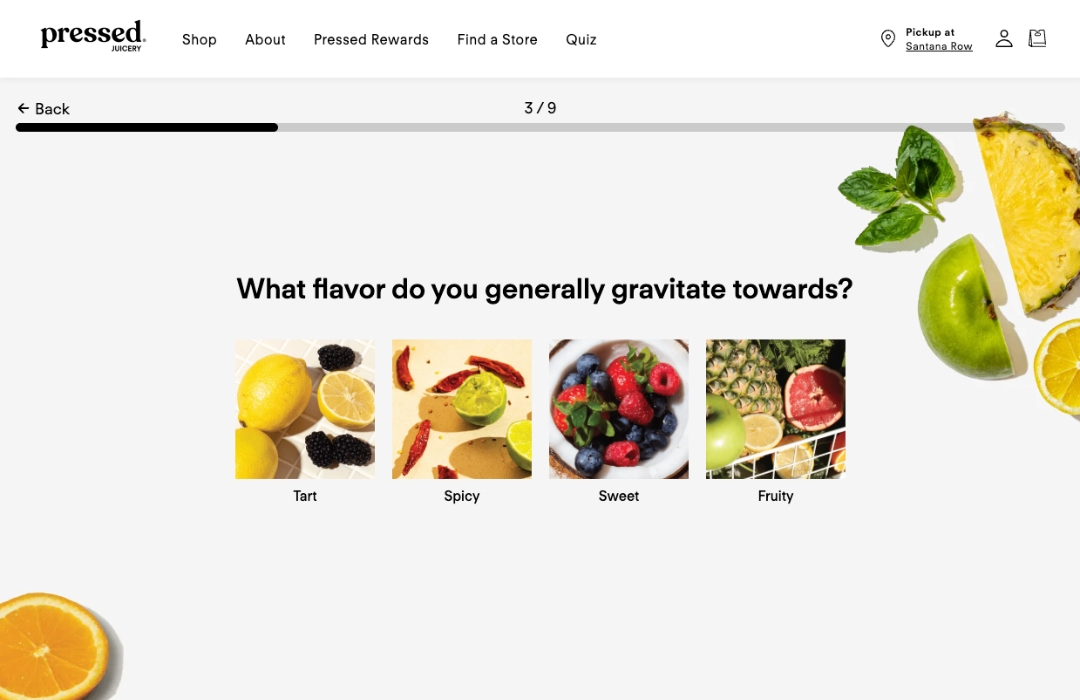
For example, Pressed used Digioh's product recommendation quiz to guide shoppers toward products that matched their goals and preferences, resulting in a 46% increase in average order value. This demonstrates how relevant personalization can help customers feel more confident in their purchases while increasing revenue.
Measure average order value by comparing customers who engaged with a personalized experience against those who did not. You can also evaluate different personalization strategies to understand which experiences consistently encourage larger purchases without sacrificing the overall customer experience.
Even modest improvements in average order value can have a meaningful impact on revenue, especially for ecommerce brands with high order volumes.
Customer lifetime value provides a longer-term view of personalization performance. Instead of focusing only on a customer's first purchase, it measures the value they generate throughout their relationship with your business.
One effective approach is to compare customer lifetime value across different acquisition and engagement paths. For example, you might evaluate whether customers who completed a product recommendation quiz have higher repeat purchase rates or stronger customer loyalty than shoppers who purchased without interacting with personalized experiences.
Tracking customer lifetime value alongside conversion rates and average order value provides a more complete picture of how website personalization influences long-term business growth.
No single metric tells the entire story. Higher conversion rates may not translate into higher revenue if the average order value declines. Likewise, a campaign that increases average order value but discourages repeat purchases may not improve customer lifetime value.
Looking at these metrics together helps marketing teams understand how personalization influences the entire customer journey. That broader perspective leads to more informed business decisions and makes it easier to optimize personalization strategies based on measurable business impact rather than individual performance metrics.
Revenue is the ultimate measure of success, but it doesn't tell the whole story. Engagement metrics help explain how customers interact with your onsite experiences and often reveal opportunities for improvement before changes appear in your revenue data.
A personalized experience should make it easier for customers to discover products, find relevant information, and complete their purchase. When personalization feels disruptive or repetitive, engagement metrics usually show the warning signs first.
Here are a few of the most valuable metrics to monitor alongside revenue.
Bounce rate can indicate whether a personalized experience is meeting visitor expectations. If shoppers consistently leave after encountering a pop-up, quiz, or personalized offer, it's worth evaluating whether the timing, messaging, or placement needs adjustment.
Time spent on your website provides additional context about customer engagement. Visitors who interact with relevant personalized content often spend more time exploring products and categories, while unusually short sessions may suggest the experience isn't resonating.
Compare engagement across different audience segments to understand how personalization affects new visitors, returning customers, and loyal shoppers.
Click-through rates, quiz completion rates, scroll depth, and engagement with personalized content all help measure how customers respond to your website personalization efforts.
These metrics become even more valuable when evaluated alongside conversion rates. High engagement paired with low conversions may indicate friction later in the customer journey, while low engagement often suggests the experience isn't relevant to your target audience.
Analytics explain what customers do. Customer feedback helps explain why they do it.
Short surveys, Net Promoter Score (NPS), customer satisfaction (CSAT) surveys, and open-ended feedback can reveal how shoppers perceive your personalized experiences. Those insights often uncover opportunities that behavioral data alone can't identify.
Personalization works best when it's continuously refined. Review engagement metrics alongside revenue, customer feedback, and business outcomes to identify opportunities for improvement. Small adjustments to messaging, timing, frequency, or personalized content can have a meaningful impact on both the customer experience and your bottom line.

Optimizing based on engagement data produces stronger results over time. Bonafide, for example, continually refined its onsite experiences using Digioh, contributing to a 469% increase in onsite conversion rates while driving 6.64% of total online revenue through Digioh. It's a good reminder that engagement metrics are most valuable when they inform ongoing optimization rather than serving as reporting metrics alone.
The goal is to create personalized experiences that feel helpful, relevant, and timely. When customer engagement and revenue improve together, your personalization strategy is creating value for both your customers and your business.
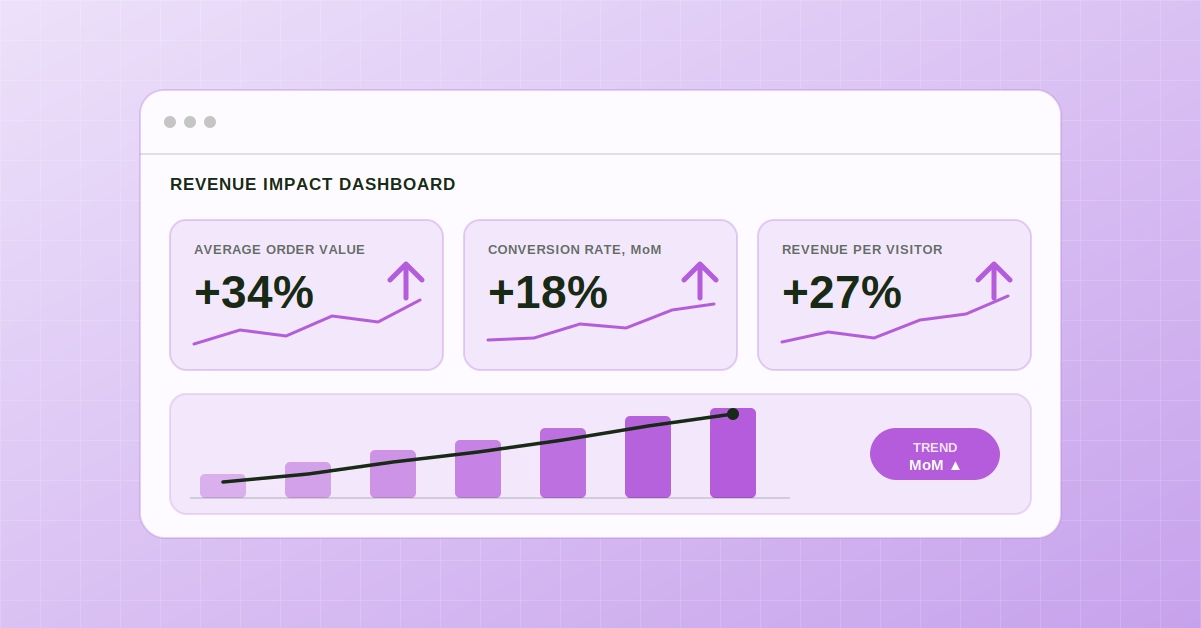
Collecting customer data is only valuable if you can turn it into insights that support better business decisions. A well-designed dashboard should make it easy to understand how website personalization influences revenue, customer behavior, and long-term growth.
Instead of reporting dozens of metrics, focus on the KPIs that demonstrate business impact.
A strong personalization dashboard should include:
Viewing these metrics together makes it easier to understand which personalization strategies are delivering the greatest value.
Looking at one campaign in isolation rarely tells the full story. Compare different forms, quizzes, product-recommendation experiences, or personalized content to identify which consistently outperform others.
For example, compare:
These comparisons help marketing teams understand where website personalization is creating the strongest business impact and where additional optimization may be needed.
Personalization should improve over time, so your dashboards should highlight long-term trends rather than one-time wins.
Review metrics such as:
Trend reporting makes it easier to evaluate whether your personalization strategies continue to support your business goals as customer behavior changes.
Dashboards shouldn't just report performance; they should help your marketing team decide what to do next.
For example, your reporting might show that:
Insights like these help prioritize future website personalization efforts, allocate marketing resources more effectively, and demonstrate the bottom-line impact of personalization across your business.

Once you have a reliable measurement framework in place, AI can help you optimize website personalization more efficiently.
Digioh AI analyzes data from your on-site experiences alongside platforms such as GA4, Shopify, and Klaviyo to surface revenue opportunities ranked by potential impact. Instead of manually searching for patterns or deciding what to test next, marketing teams receive prioritized recommendations they can review and approve before any changes are made.
This approach helps brands focus on the optimization opportunities most likely to improve performance while maintaining full control over their personalization strategy.
AI-powered personalization engines can analyze customer interactions, browsing and purchase histories, and real-time behavior to identify visitors most likely to convert.
For example, AI might recognize that shoppers who view multiple product pages, complete a product recommendation quiz, and return within a few days are more likely to make a purchase. Those visitors can be shown personalized offers, product recommendations, or tailored website content that reflects their interests.
Traditional personalization often relies on fixed audience segments, such as new visitors, returning customers, or loyalty members.
AI can take segmentation a step further by identifying patterns that aren't immediately obvious. By analyzing customer data across multiple interactions, AI systems can group visitors based on shared behaviors, purchase intent, or predicted customer lifetime value, helping marketers create more personalized customer experiences at scale.
AI can also help marketing teams uncover opportunities that might otherwise go unnoticed.
For example, AI-powered analytics tools can identify:
These insights help teams prioritize testing and focus on the experiences most likely to improve business results.
AI speeds up optimization, but it doesn't replace measurement.
Continue monitoring key metrics such as conversion rates, average order value, customer lifetime value, customer satisfaction, and revenue to confirm your AI-powered personalization efforts are delivering meaningful business impact.
The most successful personalization strategies combine AI with ongoing testing, customer analytics, and informed decision-making. As customer expectations evolve, those insights help businesses continue creating personalized experiences that strengthen customer relationships and support long-term growth.
Even with the right tools in place, it's easy to make measurement mistakes that obscure the true business impact of website personalization. Here are some of the most common pitfalls and how to avoid them.
Form submissions, quiz completions, and email sign-ups are valuable indicators of engagement, but they don't tell the whole story. Measure what happens after those interactions by tracking conversion rates, average order value, repeat purchases, and customer lifetime value. Those metrics reveal whether an onsite experience is creating lasting business value.
Customers rarely convert after a single interaction. A shopper might complete a product recommendation quiz, join your email list, be prompted by an email campaign to return, and purchase after seeing a personalized offer.
Focusing on a single touchpoint can make it difficult to understand how personalization influences the entire customer journey. Connecting customer data across your systems provides a more complete view of how different experiences work together.
A personalized offer may increase immediate conversions while reducing customer satisfaction or discouraging repeat visits. Evaluate both short-term performance and long-term outcomes so your personalization strategy supports customer loyalty and customer lifetime value, not just today's revenue.
Personalization should make shopping easier, not more intrusive. Too many pop-ups, repetitive messages, or irrelevant recommendations can frustrate visitors and increase bounce rates. Monitor engagement metrics and customer feedback regularly to ensure personalized experiences continue to feel helpful and relevant.
Customer behavior, marketing campaigns, and business goals change throughout the year. Review your analytics, experiments, and personalization strategies regularly to confirm they're still delivering the results you expect. Continuous optimization leads to better customer experiences and more reliable measurements over time.
The value of onsite personalization isn't measured by the number of forms submitted or quizzes completed. It's measured by how those experiences influence revenue, customer lifetime value, customer loyalty, and the overall customer experience.
When customer data, identity resolution, and analytics work together, ecommerce brands gain a clearer understanding of which personalization strategies create meaningful business impact. That insight makes it easier to optimize future experiences, allocate marketing resources more effectively, and continue improving results over time.
Building that level of visibility doesn't happen overnight. Start by defining clear business goals, connecting your customer data across systems, and measuring the metrics that matter most. As your measurement framework matures, every test, every insight, and every personalized experience becomes another opportunity to strengthen customer relationships and grow revenue.
Ready to measure the revenue impact of your onsite personalization efforts? See how Digioh helps ecommerce brands unify customer data, personalize every visitor experience, and connect onsite interactions to measurable business results.
The timeline depends on your website traffic and the metric you're measuring. Improvements in conversion rates, average order value, and revenue per visitor can often be measured within a few weeks if your site receives enough traffic.
Metrics like repeat purchases and customer lifetime value require a longer view because they measure customer behavior over time. As a general rule, run experiments for at least two to four weeks and continue monitoring long-term metrics as customers move through their lifecycle.
Start with the metrics that have the clearest connection to business impact:
Supporting metrics like bounce rate, click-through rate, quiz completion rate, and customer satisfaction provide valuable context, but they should complement—not replace—revenue-focused measurements.
Yes. Even before a visitor identifies themselves, you can measure how personalized experiences influence aggregate metrics such as conversion rates, average order value, and revenue per visitor.
When visitors eventually share an email address, create an account, or complete a purchase, identity resolution can connect previous anonymous browsing behavior to a unified customer profile. That provides a more complete view of how onsite personalization influenced the customer journey.
Most ecommerce brands already have many of the tools they need. A typical measurement stack includes:
The most important factor isn't the number of tools you use. It's ensuring customer data flows consistently between them so that every interaction contributes to the same customer profile.
A strong measurement strategy should always respect customer consent and applicable privacy regulations.
Using first-party data, clear consent practices, and transparent data collection helps build trust while still providing meaningful customer insights. Even when individual tracking isn't available, aggregated analytics can help measure the impact of website personalization across different audience segments without compromising customer privacy.
Don’t settle for siloed tools. With Digioh, you get one powerful platform for pop-ups, product quizzes, onsite identification, and more—everything you need to personalize every step of the customer journey. Identify more traffic. Collect more zero-party data. Turn insights into revenue.