July 9, 2026
Learn how to effectively push zero party data to Klaviyo profile properties for better personalization. Read the article for practical tips and insights.
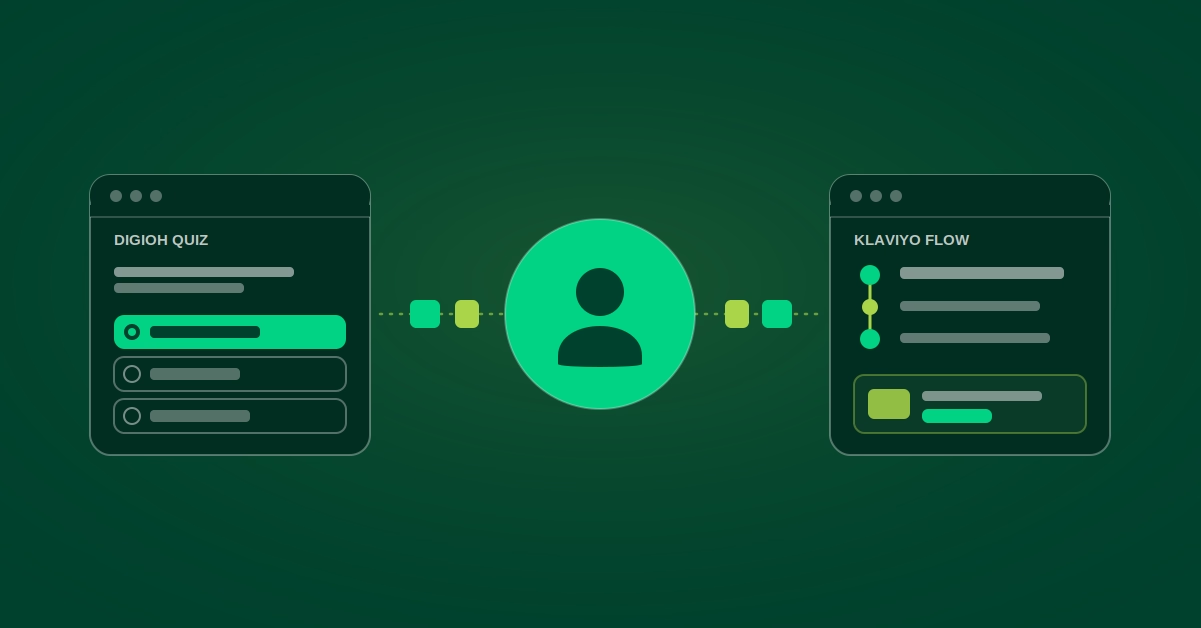
Build Your Own Product Quiz For Free Right Now
Simply give us your website URL and we will build you a completely on-brand product recommendation quiz for free.
The average brand has no shortage of customer data. What they're often missing is a way to activate it.
When quiz responses stay trapped in individual campaigns, brands miss opportunities to personalize future emails, improve segmentation, and create more relevant customer experiences.
Digioh's native integration with Klaviyo, backed by its 2025 Klaviyo Partner of the Year recognition, makes it easy for DTC brands to sync zero-party data at scale and turn shopper preferences into long-term marketing assets that power flows, segments, and personalized experiences throughout the customer lifecycle.
This guide walks through how to push zero-party data to Klaviyo profile properties, trigger personalized flows, and use customer preferences throughout the lifecycle.
Most brands already collect plenty of customer data. The challenge is turning that data into more relevant customer experiences.
Zero-party data is different because it comes directly from the customer. Instead of inferring preferences from clicks, email open rates, purchases, or browsing behavior, brands can ask shoppers what they're looking for and use those responses to personalize future interactions.
For example, luxury Ayurvedic beauty brand Ranavat partnered with Digioh to create two separate quizzes—one focused on skincare and another on fragrance. Both experiences were designed to help shoppers make confident purchasing decisions in categories where products can't be easily evaluated online.
As Ranavat founder Michelle Ranavat explains, "The sheer complexity of creating a routine is really overwhelming for people. We need to find ways to make it easier, like these are the steps you need, customized for you."
By collecting information directly from customers about their needs and preferences, Ranavat can deliver more relevant recommendations than behavioral data alone would provide. These insights are especially valuable because they reflect information that customers intentionally choose to share.
When quiz responses are synced to Klaviyo profile properties, those preferences become part of the customer profile rather than remaining tied to a single campaign or quiz interaction. That means marketers can use them to build targeted segments, personalize email and SMS content, and create automated flows that reflect what customers have actually said.
For example, a customer who indicates they're concerned about acne could receive different product recommendations and educational content than someone focused on anti-aging skincare. Months after taking the quiz, those preferences can still be used to create more relevant experiences.
The result is richer customer profiles that support more relevant segmentation, personalization, and automation.
Zero-party data is information customers intentionally share with your brand. Unlike behavioral data, which is inferred from actions like clicks or purchases, zero-party data comes directly from the source.
For ecommerce brands, that might include quiz responses, product preferences, goals, budget ranges, style selections, or other information shoppers voluntarily provide through quizzes and forms.
Digioh captures this information and stores it as custom properties on the customer profile, making it available for future campaigns and automations.
A quiz completion event is a one-time action. For example, when a customer finishes a product recommendation quiz, Digioh can send a "Digioh Quiz Completed" event to Klaviyo. That event can immediately trigger a quiz results flow, send personalized recommendations, or launch a follow-up sequence.
Profile properties work differently. Instead of representing a single action, they store information on the customer's profile for future use. If a shopper identifies their skin type as dry or selects "anti-aging" as their primary concern, those preferences can be stored as profile properties and referenced in future campaigns, segments, and automations.
Think of it this way: events tell Klaviyo what happened, while profile properties tell Klaviyo who the customer is.
Digioh supports both approaches. Quiz completion events can trigger immediate actions, while mapped quiz responses become long-term customer attributes that power personalization across the customer lifecycle.
Common examples of quiz-based profile properties include persona labels, primary goals, product interests, budget ranges, and recommended product categories. Together, these insights help brands move beyond generic campaigns and create experiences based on information customers actually chose to share.
Connecting Digioh to Klaviyo takes just a few minutes, but it's worth thinking through your list strategy before you start syncing data.
Inside the Digioh dashboard, navigate to Integrations → Add Integration → Klaviyo. You'll need a valid Klaviyo private API key to authenticate the connection.
Once connected, select the Klaviyo list where new quiz subscribers should be added and send a test contact through to verify everything is working correctly.
After setup, any Digioh quiz or form configured to send data to Klaviyo can automatically create new profiles or update existing customer records. Quiz responses, profile properties, and completion events are passed behind the scenes as the customer proceeds to their quiz results page or the next step in the journey.
Before choosing a list, consider how you'll use the data downstream. Many brands keep quiz subscribers separate from general newsletter subscribers to build more targeted welcome flows and reporting.
For example, skincare brand EMUAID uses Digioh quizzes to guide shoppers toward products that best address their individual concerns. Quiz data syncs directly into Klaviyo, unlocking new opportunities for segmentation and lifecycle marketing.
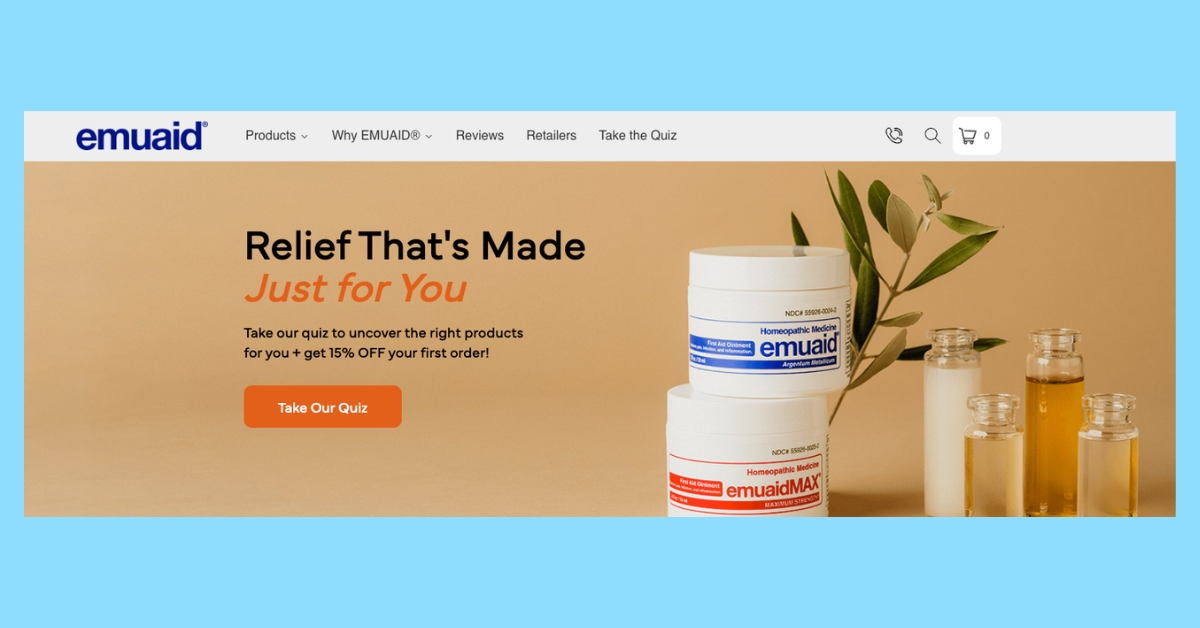
EMUAID uses conditional logic to dynamically personalize email flows based on each shopper's quiz results, delivering more relevant messaging throughout the customer journey. As a result, the brand increased its total Klaviyo recipients by 211.4% and grew net new email and SMS subscribers by 54.5%.
Rather than treating every subscriber the same, EMUAID can use quiz responses to segment audiences, personalize follow-up messaging, and deliver recommendations tailored to each customer's needs.
As your program grows, you can route different Digioh experiences into different lists while maintaining a consistent customer profile inside Klaviyo.
Mapping quiz responses to Klaviyo profile properties is what turns a one-time interaction into a long-term personalization asset.
Inside Digioh's field mapping screen, each quiz question can be connected to a corresponding Klaviyo profile property. For example, a question like "What is your skin type?" might map to a property such as quiz_skin_type, while a question about primary goals could map to quiz_primary_goal.
The same approach works for forms, preference centers, and other zero-party data collection experiences. Once mapped, the information becomes part of the customer's profile and can be used across email, SMS, segmentation, and automation.
Common properties include:
Before mapping every quiz response, consider how you'll actually use the data. The most valuable profile properties are those that enable meaningful personalization and segmentation.
Women's health brand Bonafide uses quizzes to help shoppers identify products based on their symptoms and wellness needs. Information collected during the experience can be mapped to Klaviyo profile properties and later used to personalize product recommendations, educational content, and lifecycle messaging. By helping customers find more relevant solutions, Bonafide achieved a 469% increase in onsite conversion rates, with Digioh influencing 6.64% of total online revenue.
Digioh supports a variety of response types, including single-select answers, multi-select answers, numeric scores, and quiz result tags, giving brands flexibility in how they structure and store customer preferences.
As a best practice, use a consistent naming convention from the beginning. Prefixes like quiz_ or digioh_ make properties easier to manage and help maintain a clean schema as your program grows. For example, quiz_persona is easier to understand and reference than a property name like "Quiz - Persona Result."
Once these properties are established, they become part of the customer's ongoing profile. A shopper who takes a quiz today can still receive personalized recommendations, targeted content, and relevant offers months later based on information they intentionally chose to share through Digioh's product recommendation quiz builder.
As brands collect more customer data, maintaining clean and reliable profiles becomes just as important as gathering new information.
That's why Digioh lets you control exactly which Klaviyo profile properties can be updated via the integration. Rather than writing to every available field, Digioh can be configured to update only the properties you've approved.
This is especially important for brands using multiple platforms to manage customer data. Klaviyo profiles often contain information from ecommerce platforms, loyalty programs, subscription tools, customer service systems, and other integrations. Without clear controls, valuable profile data can become inconsistent or overwritten.
Within Digioh's Klaviyo integration settings, you can create an allowlist of properties Digioh is permitted to update, such as quiz_* or digioh_* fields.
For example, you may want Digioh to update properties such as email address, first name, quiz responses, and customer preferences, while preventing changes to fields managed elsewhere, such as loyalty status, customer source, geographic information, or consent settings.
This approach helps preserve data integrity while still allowing brands to enrich customer profiles with valuable zero-party data. As your customer database grows, clear ownership of profile properties becomes increasingly important for maintaining accurate segmentation, reporting, and personalization.
Collecting customer preferences is only valuable if you can act on them quickly.
In addition to syncing profile properties, Digioh sends a quiz completion event to Klaviyo whenever a customer finishes a quiz. This event triggers personalized quiz result flows, allowing brands to follow up while the interaction is still fresh.
For example, Ranavat could use a quiz completion event to immediately send customers a personalized skincare routine or fragrance recommendation based on their responses. Because the flow is triggered immediately after quiz completion, customers receive recommendations when they're most engaged.
To build a quiz results flow in Klaviyo, navigate to Flows → Create Flow → Metric Trigger and select the Digioh Quiz Completed event. The event payload typically includes information such as the quiz ID, quiz title, results data, and recommended products.
Within the flow, brands can use this information to personalize email and SMS messages with quiz results, recommendation links, educational content, and product suggestions. The result is a more relevant experience than sending the same follow-up campaign to every subscriber's inbox.
It's important to understand the difference between event data and profile data here. Event variables are available within the quiz results flow and can be used to display information specific to that quiz submission. Once the flow is complete, marketers typically rely on stored profile properties to support ongoing segmentation and personalization in future campaigns.
Together, quiz completion events and profile properties create a powerful combination: events drive immediate engagement, while profile data supports long-term customer personalization.
A personalized quiz experience shouldn't end when a customer submits their answers.
One of the biggest advantages of connecting Digioh and Klaviyo is the ability to continue the conversation after quiz completion. Instead of sending a generic follow-up email, brands can deliver personalized recommendations based on the preferences customers just shared.
Adding personalized quiz results to emails doesn't require custom code or complex integrations.
Digioh can pass a quiz_results_url as an event variable and optionally store it as a profile property. This allows marketers to link customers directly back to their quiz results page, recommendation page, or preference center from within an email or SMS message.
Inside Klaviyo's flow editor, you can preview the event payload, identify the appropriate variable, and use it in buttons, links, and personalized content blocks.
Digioh can also pass recommended products generated by the quiz experience. These recommendations can populate dynamic product sections within quiz results emails, helping customers quickly revisit the products that best match their needs.

For example, a customer who completes a skincare quiz might receive an email with a personalized routine tailored to their skin concerns, while a supplement brand could highlight products aligned with their wellness goals. Rather than sending the same recommendations to every subscriber, brands can tailor follow-up messaging to the individual.
Outside of the quiz results flow, stored profile properties can support ongoing personalization. Marketers can use quiz outcomes, product interests, and customer preferences to customize future campaigns, ensuring the insights collected during the quiz continue to create value long after the initial interaction.
The real value of zero-party data comes from how it's used after it's collected.
Once quiz responses are available in Klaviyo, brands can create segments based on customer goals, preferences, interests, and purchase behavior. These profile properties can also power conditional splits within welcome series, quiz results flows, and post-purchase automations.
Zero-party data is particularly powerful when used to personalize automated flows. Rather than sending every subscriber through the same welcome journey, brands can create conditional paths based on the information customers shared.
A customer who selects anti-aging as their primary skincare goal may receive educational content and product recommendations that differ from those of someone focused on acne treatment. Similarly, a haircare brand might guide customers down separate paths based on hair type, concerns, or desired outcomes.
Klaviyo's dynamic content tools also enable personalization of individual messages. Marketers can use show/hide content blocks to display different recommendations, educational resources, offers, and product collections based on stored quiz responses.
The most effective segmentation strategies combine customer preferences with behavioral data. Quiz responses help brands understand what customers are looking for, while purchase history and engagement data reveal how they behave over time.
For brands using Digioh's full platform, this segmentation strategy extends beyond quizzes. PrettyLitter used Digioh's pop-ups and visitor identification tools to push preference and behavioral data into Klaviyo, transforming anonymous website traffic into identifiable, high-value customer segments. The brand generated $1.1 million in revenue while driving a 70% increase in new U.S. email subscribers.

Whether the data comes from quizzes, forms, pop-ups, or visitor identification, the same zero-party and first-party insights can continue shaping segments, automations, and personalized content long after the initial interaction. As a customer base grows, richer customer profiles help brands maintain relevant messaging without relying on broad audience assumptions.
The same preferences that power a quiz results email can continue shaping segments, automations, and personalized content long after the initial interaction. As a customer base grows, zero-party data helps brands maintain relevant messaging without relying on broad audience assumptions.
Unlike tools that rely on Zapier or other third-party connectors, Digioh offers a native Klaviyo integration built for ecommerce teams that need reliable data syncing at scale. Events and profile properties can be sent to Klaviyo in a single submission, making quiz completions, recommendations, and customer preferences easier to activate immediately.
Digioh also provides brands with field restriction controls, helping teams protect data integrity by specifying exactly which Klaviyo properties can be updated. With more than 530 shared mutual customers, Klaviyo is one of Digioh’s most widely used integrations, alongside 300+ total integrations across the platform.
Most Digioh-Klaviyo integrations can be set up in minutes, but it's worth validating your configuration before launching a quiz or form at scale.
Start by checking your API credentials, integration settings, and event configuration. Running a test submission through Digioh's preview mode is often the fastest way to confirm that events are being sent correctly. You should also verify that quiz submission tracking is enabled and that the expected event appears within Klaviyo.
This is usually caused by a field mapping issue. Confirm that each quiz response is mapped to the correct Klaviyo profile property and that naming conventions match exactly. Small differences in property names can prevent data from syncing as expected. If you're using profile field restrictions, make sure the relevant properties are included in your allowlist.
Brands running multiple quizzes should establish a consistent naming strategy from the beginning. Some teams create separate quiz result flows for each experience, while others use a shared property structure and include fields such as quiz_type to identify the origin of responses. The right approach depends on how you plan to segment and personalize customer journeys later.
Before sending traffic to a live quiz, review a handful of test profiles inside Klaviyo to confirm that events, profile properties, and quiz responses are syncing correctly. It's much easier to catch mapping issues, naming inconsistencies, or unexpected values during testing than after thousands of customer records have been created.
A few minutes of upfront validation can help ensure that your segmentation, automations, and personalization strategies work exactly as intended once the experience goes live.
Digioh’s Klaviyo integration is native, so brands do not need to rely on Zapier or other third-party workarounds to sync quiz data. Digioh can pass both quiz completion events and Klaviyo profile properties in a single submission, making it easier to trigger flows and update customer profiles simultaneously.
Brands also get field restriction controls to protect data integrity and manage exactly which Klaviyo properties Digioh can update. As Klaviyo’s 2025 Partner of the Year, Digioh brings deep Klaviyo expertise to quiz, form, and onsite personalization strategies.
Digioh integrates directly with Klaviyo, allowing quiz responses, form submissions, profile properties, and quiz completion events to sync automatically. Once connected, customer data can flow into Klaviyo in real time, making it easy to trigger flows, build segments, and personalize campaigns without manual imports or custom development.
Yes. When an existing subscriber completes a Digioh quiz, their Klaviyo profile is updated with any mapped quiz responses. Those properties can then be used in future segments, automations, and personalized campaigns just like any other profile attribute.
For example, a subscriber who takes a skincare quiz months after joining your list can be added to segments based on their skin type, concerns, or product preferences immediately.
In most implementations, the latest quiz responses replace the existing values stored on the customer profile. This ensures your personalization reflects a customer's most current preferences.
Brands that want to track changes over time can store additional properties such as quiz completion dates, historical quiz outcomes, or quiz version identifiers as part of their data strategy.
Start by identifying the properties you'll actually use for segmentation, personalization, and automation. Focus on the customer preferences that influence marketing decisions rather than storing every quiz response on the profile.
Many brands begin with a small set of high-value properties, such as primary goal, product interest, budget range, or persona type, then expand as new use cases emerge.
Yes. Depending on how your quiz data is mapped, product recommendations and quiz outcomes can be referenced throughout the customer lifecycle, including welcome flows, browse abandonment campaigns, post-purchase automations, replenishment sequences, and promotional sends.
This allows brands to extend the value of quiz data beyond the initial results email and continue personalizing customer experiences over time.
Whether you're building your first product recommendation quiz or scaling advanced lifecycle personalization, Digioh's native Klaviyo integration makes it easy to turn customer preferences into personalized email and SMS experiences. Explore Digioh's Klaviyo integration or download the Digioh x Klaviyo Playbook to see how leading ecommerce brands put zero-party data to work.
Don’t settle for siloed tools. With Digioh, you get one powerful platform for pop-ups, product quizzes, onsite identification, and more—everything you need to personalize every step of the customer journey. Identify more traffic. Collect more zero-party data. Turn insights into revenue.